




 DISCORD
The Power of Habit
Charles Duhigg


 Amazon Best Sellers
 Apple Books


 58 Min Reading Time
 Audio Version Available
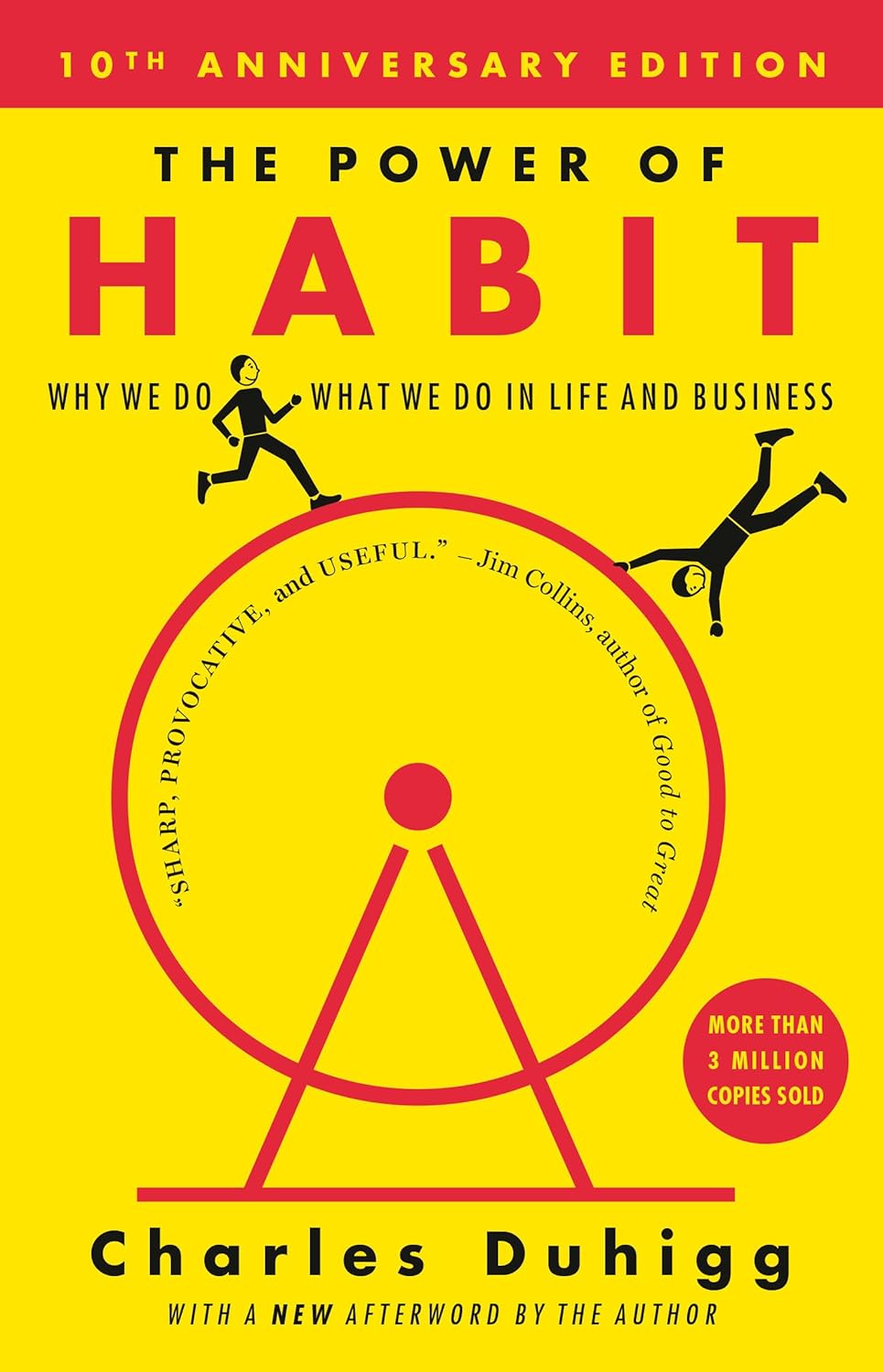
About this book
Why do some people and companies struggle to change, while others seem to transform overnight? In "The Power of Habit," award-winning business reporter Charles Duhigg explores the fascinating science of habit formation, revealing how our habits shape our lives far more than we realize.
Duhigg takes you to the cutting edge of scientific discovery, from the boardrooms of Procter & Gamble to the sidelines of the NFL, and even to the front lines of the civil rights movement, to demonstrate how habits work and how they can be changed. Learn how the right habits were crucial to the success of Olympic swimmer Michael Phelps, Starbucks CEO Howard Schultz, and Martin Luther King, Jr.
Discover the neurological loops that drive our behavior and how understanding these patterns can unlock your potential. Whether it's breaking bad habits, building good ones, or transforming your business, "The Power of Habit" offers a compelling framework for change. Harness the science of habit to revolutionize your life, your community, and your world.
Summary of Key Ideas
- •
Understanding the Habit Loop
The Habit Loop: The cornerstone of understanding habits lies in the Habit Loop, comprising three elements: cue, routine, and reward. The cue is a trigger that initiates the behavior, the routine is the behavior itself, and the reward is the positive reinforcement that reinforces the habit loop. Understanding this loop is crucial for both creating new habits and modifying existing ones. By identifying the cue and reward, one can strategically alter the routine to change the habit.
- •
The Power of Cue Recognition
Identifying Cues: Recognizing the cues that trigger habits is the first step toward changing them. Cues can fall into five categories: location, time, emotional state, other people, or the immediately preceding action. By becoming aware of these cues, individuals can anticipate and prepare for the urge to engage in the habitual behavior. This awareness allows for conscious intervention and the substitution of a different routine.
- •
Rewards: The Brain's Motivator
The Importance of Reward: Rewards are the brain's way of learning which behaviors are worth repeating. They provide a sense of satisfaction or pleasure that reinforces the connection between the cue and the routine. Understanding what cravings the reward satisfies is key to modifying habits. Substituting the reward with a similar but healthier alternative can effectively reshape the habit loop.
- •
The Golden Rule
The Golden Rule of Habit Change: This rule states that to change a habit, you must keep the old cue and deliver the old reward, but insert a new routine. This is because habits provide a sense of normalcy and predictability, and abruptly removing them can lead to failure. By maintaining the cue and reward, the brain can gradually associate the cue with the new, desired routine.
- •
The Role of Belief
Belief as a Catalyst: Belief in the ability to change is a critical component of habit transformation. Whether it's belief in oneself or faith in a community or system, this conviction provides the strength and motivation needed to overcome the challenges of breaking old habits and forming new ones. Belief acts as a buffer against setbacks and reinforces the commitment to change.
- •
Keystone Habits: Catalysts for Change
Keystone Habits: These are habits that have the power to trigger widespread change in other areas of life. They create a cascade of positive effects, influencing not only individual behaviors but also organizational culture and societal norms. Identifying and cultivating keystone habits can lead to significant improvements in productivity, health, and overall well-being.
- •
Organizational Habits
Habits in Organizations: The principles of habit formation extend beyond individual behavior to influence organizational routines and culture. Companies can leverage the power of habit to improve productivity, foster innovation, and enhance employee satisfaction. By understanding the habit loops that drive organizational behavior, leaders can create environments that promote positive change and achieve strategic goals.
- •
Social Habits and Change
Habits in Society: Societal habits, like individual ones, are deeply ingrained and resistant to change. However, by understanding the dynamics of habit formation, social movements and public health initiatives can effectively influence behavior on a large scale. Identifying keystone habits within a community can create a ripple effect, leading to positive social change and improved well-being for all.
Chapter Recap

About The Author
Charles Duhigg
Main Quotes
"Habits are powerful, but delicate."
"This is how willpower becomes a habit: by choosing a certain behavior ahead of time, and then following that routine when an inflection point arrives."
"Change might not be fast and it isn't always easy. But with time and effort, almost any habit can be reshaped."
"Habits are powerful because they create neurological cravings."
"The Golden Rule of Habit Change: You can't extinguish a bad habit, you can only change it."
"Once you understand that habits can be rebuilt, the power of habit becomes easier to grasp and the only option left is to get to work."
"If you believe you can change – if you make it a habit – the change becomes real."
"Small wins are exactly what they sound like, and are part of how keystone habits create widespread changes."
"There are no organizations without institutional habits. There are only places where they are deliberately designed, and places where they are not."
"Willpower isn't just a skill. It's a muscle, like the muscles in your arms or legs, and it gets tired as it works harder, so there's less power left over for other things."
Who Should Read This Book
Individuals interested in self-improvement and personal development
Business professionals and managers seeking to improve organizational productivity
Individuals struggling with bad habits and seeking strategies for change
Anyone curious about the science of habit formation and behavior
Readers interested in psychology and neuroscience
Leaders and policymakers looking to create positive societal change
Marketers and advertisers seeking to understand consumer behavior
Students of business, psychology, or related fields
People seeking to understand how habits impact their health, finances, and relationships
Individuals interested in stories and case studies illustrating the power of habits
Book Summaries Like
The Power of Habit

FAQ

Free Access to LitNotes