




 DISCORD
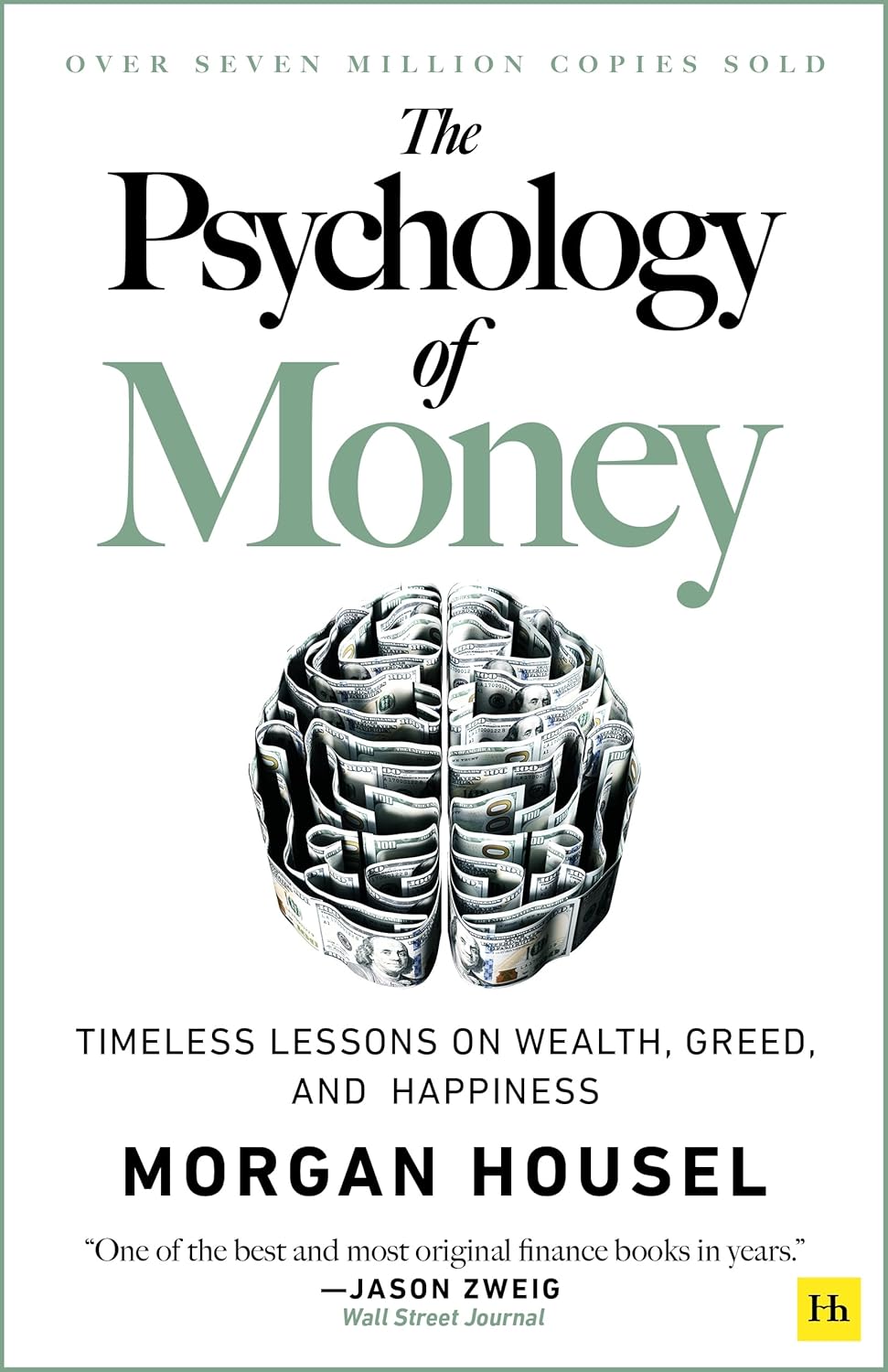
The Psychology of Money
Morgan Housel, Juanita Cochran


 Amazon Best Sellers
 Barnes & Noble Bestsellers


 72 Min Reading Time
 Audio Version Available
About this book
Success with money isn't about mastering formulas; it's about understanding your own behavior. Even the smartest minds can struggle with financial decisions. In The Psychology of Money, award-winning author Morgan Housel dismantles the myth of money management as a purely mathematical endeavor. Through 19 engaging short stories, Housel reveals how our personal histories, egos, and unique worldviews dramatically shape our financial choices, often at the dinner table or in the boardroom, far from the cold logic of spreadsheets. Discover the timeless lessons on wealth, greed, and happiness that will help you make better sense of one of life's most crucial subjects and unlock the door to true financial well-being.
Summary of Key Ideas
- •
The Interplay of Luck and Risk
Luck and Risk are Siblings: This key idea emphasizes that luck and risk are two sides of the same coin. Outcomes in finance are influenced by factors outside of individual control. Recognizing the role of both luck and risk helps in understanding that not all success is due to skill, and not all failure is due to error. This understanding promotes humility and a more balanced perspective when evaluating financial outcomes, both our own and those of others.
- •
The Trap of 'Never Enough'
Never Enough: This highlights the dangerous pursuit of endless wealth accumulation. It cautions against letting social comparisons and the desire for more lead to reckless financial decisions and unhappiness. Understanding when 'enough' is reached is crucial for maintaining financial stability and overall well-being. The book suggests focusing on contentment and gratitude rather than constantly chasing a higher net worth, which can be a never-ending and ultimately unsatisfying quest.
- •
Unlocking Wealth Through Compounding
Compounding: The Power of Time: This idea illustrates the profound impact of compounding over time, turning small, consistent investments into substantial wealth. It stresses the importance of starting early and being patient, allowing investments to grow exponentially. This principle underscores the long-term nature of wealth building and the benefits of avoiding impulsive decisions that can disrupt the compounding process. The key takeaway is that time, rather than spectacular gains, is the greatest ally of an investor.
- •
The Two Sides of Wealth: Accumulation and Preservation
Getting Wealthy vs. Staying Wealthy: This distinction emphasizes that accumulating wealth requires taking risks and being optimistic, while preserving wealth requires humility and fear of loss. The skills and mindset needed for each are different, and often conflicting. The book argues that staying wealthy is more difficult than getting wealthy, as it requires discipline, frugality, and an awareness of one's limitations. Recognizing this difference is essential for long-term financial success.
- •
Redefining Wealth as Freedom
Freedom is the Highest Dividend: This concept argues that the greatest benefit of wealth is the freedom it provides – the ability to control one's time, pursue passions, and make choices aligned with personal values. This freedom is more valuable than material possessions or status symbols. It suggests that financial goals should be oriented towards achieving this sense of autonomy rather than simply accumulating more money. It redefines 'rich' as having control over your time and options.
- •
Building a Financial Safety Net
Room for Error: The Importance of Margin of Safety: This stresses the need for a margin of safety in financial planning. This means budgeting conservatively, avoiding excessive debt, and having an emergency fund to cushion against unexpected events. A margin of safety provides resilience and prevents financial ruin when things go wrong. It acknowledges that predictions are often inaccurate and that having a buffer is crucial for weathering financial storms. It promotes a cautious and realistic approach to financial management.
- •
Adapting to Life's Financial Changes
You Change, Goals Change: This highlights the importance of recognizing that our financial goals and priorities evolve over time. What matters to us in our 20s may be very different from what matters in our 50s. Being adaptable and open to adjusting our financial plans as we age and our circumstances change is crucial for long-term financial well-being. This idea emphasizes the dynamic nature of life and the need for flexibility in financial planning.
- •
The Power of 'Reasonable' Financial Choices
Reasonable > Rational: This challenges the traditional economic view that financial decisions should always be perfectly rational. Instead, it suggests that 'reasonable' decisions, which take into account emotions, personal circumstances, and individual values, are often more sustainable and lead to better long-term outcomes. Trying to be perfectly rational can be stressful and unrealistic, while striving for reasonable allows for flexibility and a more balanced approach to money management.
Chapter Recap

About The Author
Morgan Housel
Main Quotes
"Doing well with money has a little to do with how smart you are and a lot to do with how you behave."
"The highest form of wealth is the ability to wake up every morning and say, “I can do whatever I want today.”"
"Planning is important, but the most important part of every plan is to plan on the plan not going according to plan."
"Luck and risk are both the reality that every outcome in life is guided by forces other than individual effort."
"Wealth is what you don’t see."
"Money's greatest intrinsic value—and this can't be overstated—is its ability to give you control over your time."
"Savings can be created by spending less. You can spend less if you desire less. And you will desire less if you care less about what others think of you."
"Financial success isn't a hard science. It's a soft skill, where how you behave is more important than what you know."
"The world is full of people who look modest but are actually swimming in assets."
"You can be wrong half the time and still make a fortune."
Who Should Read This Book
Young adults starting their financial journey
Individuals seeking to improve their understanding of personal finance
People interested in the behavioral aspects of money management
Those looking for a non-technical and accessible approach to finance
Readers interested in psychology and how it relates to financial decisions
Investors who want to make more rational investment choices
Anyone looking to gain a better understanding of wealth, greed, and happiness in relation to money
Readers seeking timeless lessons on wealth management
Content creators seeking insights into consumer financial behavior
Book Summaries Like
The Psychology of Money


FAQ

Free Access to LitNotes