




 DISCORD
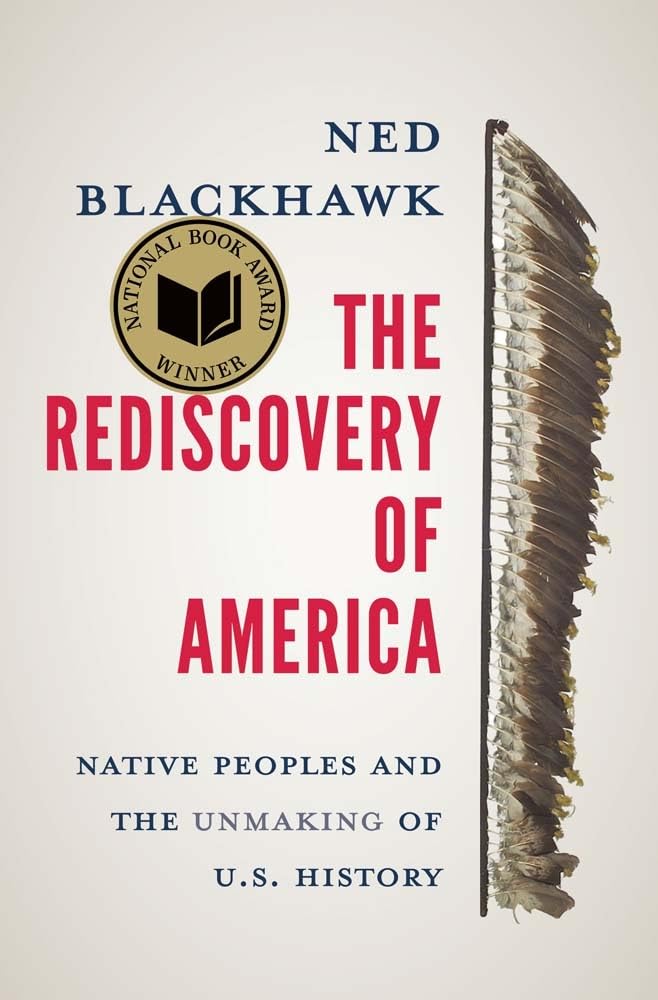
The Rediscovery of America
Ned Blackhawk


 USA Today Best Sellers


 109 Min Reading Time
 Audio Version Available
About this book
Ned Blackhawk's The Rediscovery of America offers a sweeping and essential retelling of U.S. history, one that places Native Americans at the heart of the nation's narrative. For too long, Indigenous peoples have been relegated to the margins, portrayed as obstacles or afterthoughts. Blackhawk interweaves five centuries of Native and non-Native histories, from early Spanish exploration to the rise of Native self-determination, revealing how Indigenous nations shaped pivotal moments: from the crisis of the British Empire and the American Revolution to the Civil War and twentieth-century legal and policy reforms. This transformative synthesis underscores the enduring power, agency, and resilience of Native communities, yielding a more accurate and profound understanding of America itself.
Summary of Key Ideas
- •
Unmaking U.S. History
Challenging Dominant Narratives: This book directly confronts and challenges the traditional, often celebratory, narratives of U.S. history. It argues that these narratives frequently marginalize or completely erase the experiences, perspectives, and contributions of Native peoples. By centering Native voices and histories, Blackhawk seeks to 'unmake' the conventional understanding of American history, revealing a more complex and truthful account.
- •
Indigenous Peoples at the Center
Centering Indigenous Perspectives: A core idea is the re-centering of American history through Indigenous perspectives. Rather than viewing Native Americans as peripheral to the main story, Blackhawk positions them as central actors whose experiences and actions have profoundly shaped the course of U.S. history. This involves examining treaties, conflicts, policies, and cultural exchanges from the viewpoint of Native nations.
- •
The Significance of Land
Land and Dispossession: The book emphasizes the critical role of land dispossession in shaping the relationship between Native peoples and the U.S. government. It explores how the systematic seizure of Native lands, through treaties (often broken), warfare, and legislative actions, has had devastating consequences for Native communities, leading to economic hardship, cultural disruption, and political marginalization. The ongoing struggle for land rights and sovereignty is a central theme.
- •
Agency and Resistance
Native Agency and Resistance: Blackhawk highlights the agency and resilience of Native peoples in the face of colonization and oppression. The book showcases various forms of resistance, from armed conflict to legal challenges, cultural preservation, and political activism. It emphasizes that Native Americans were not passive victims of history but active agents who fought to protect their lands, cultures, and sovereignty.
- •
Federal Indian Policy's Legacy
The Enduring Impact of Federal Indian Policy: The book analyzes the long-lasting effects of federal Indian policy on Native communities. It examines how policies such as allotment, assimilation, and termination have disrupted traditional ways of life, eroded tribal sovereignty, and created significant social and economic challenges. It also looks at how Native nations have resisted and adapted to these policies, working to rebuild their communities and assert their rights.
- •
Upholding Treaty Rights
Treaty Rights and Sovereignty: A key idea revolves around the importance of treaty rights and tribal sovereignty. Blackhawk underscores that treaties are not simply historical documents but legally binding agreements that define the relationship between Native nations and the U.S. government. He emphasizes the ongoing struggle to uphold treaty rights and protect tribal sovereignty, which are essential for self-determination and cultural survival.
- •
Cultural Resilience
Cultural Resilience and Revival: Despite the immense pressures of colonization and assimilation, Native cultures have demonstrated remarkable resilience. The book explores the ways in which Native communities have maintained their cultural traditions, languages, and spiritual practices. It also highlights the revival of Native cultures in recent decades, as Native peoples reclaim their heritage and assert their cultural identities.
- •
Intertwined Histories
Interconnectedness of Native and American History: Blackhawk argues that Native American history is not separate from American history but is deeply intertwined with it. Understanding Native history is essential for a comprehensive understanding of the American past and present. This interconnectedness extends to political, economic, social, and cultural realms, shaping the nation’s identity and development.
- •
Native Recovery
Recovery and Self-Determination in the 20th Century: The later chapters of the book focus on Native recovery and self-determination movements in the 20th century. This includes the fight for civil rights, the assertion of treaty rights, and the development of tribal self-governance. Blackhawk portrays a narrative of resilience and empowerment, demonstrating how Native communities have worked to overcome historical injustices and build a brighter future.
Chapter Recap

About The Author
Ned Blackhawk
Western Shoshone American historian currently on the faculty of Yale University.
Main Quotes
"The worlds of Native peoples became irrevocably disrupted by the most traumatic development in American history: the loss of Indigenous homelands."
"Native dispossession thus represents the central historical drama structuring the last five centuries of North American history."
"American history is fundamentally incomplete without a serious reckoning with the history of Native America."
"The erasure of Native American history from popular consciousness is a form of ongoing colonialism."
"Treaties, though often violated, served as the primary means by which the United States acquired land and asserted its sovereignty."
"Native peoples actively shaped the course of American history, not merely as victims but as agents of change."
"Indian wars were not isolated events but rather a continuous feature of American expansion."
"The concept of "Manifest Destiny" justified the dispossession of Native peoples in the name of progress and civilization."
"Federal Indian policy has swung between assimilation and termination, each with devastating consequences for Native communities."
"The resilience of Native cultures and nations in the face of immense pressure is a testament to their enduring strength."
Who Should Read This Book
Readers interested in Native American history and culture
Academics and students in American history, Native American studies, and related fields
Individuals seeking a more inclusive and nuanced understanding of U.S. history
Readers interested in social justice and Indigenous rights movements
Those involved in public policy and advocacy related to Native American affairs
Readers of non-fiction books that challenge conventional historical narratives
People interested in the history of the American West
Individuals seeking to learn about the impact of colonialism on Indigenous populations in the United States
Book Summaries Like
The Rediscovery of America



FAQ

Free Access to LitNotes