




 DISCORD
The Renaissance
Hourly History


 Apple Books


 11 Min Reading Time
 Audio Version Available
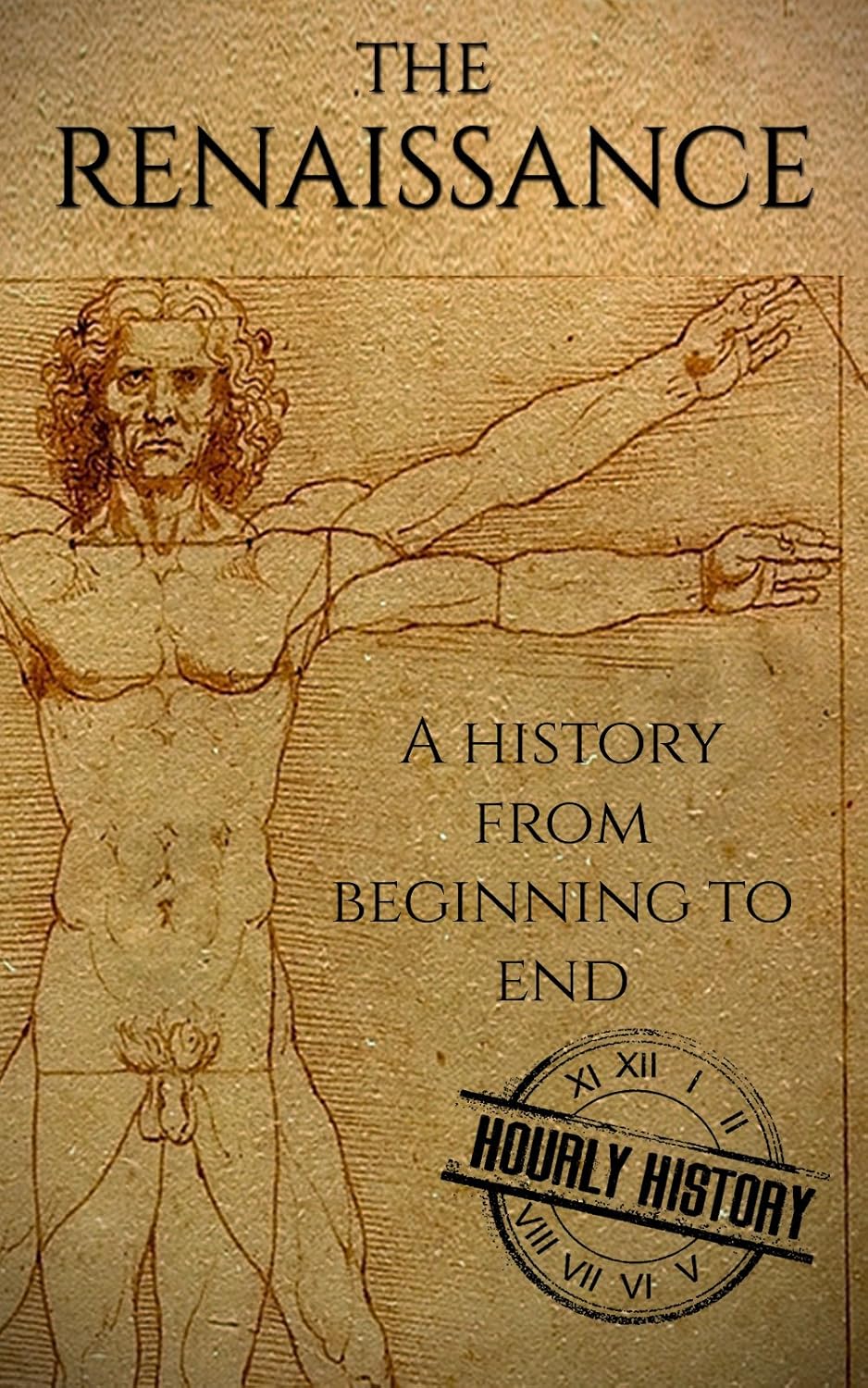
About this book
From the ashes of the Middle Ages, a new dawn broke across Europe: the Renaissance. This "rebirth" was a time of questioning, as Europeans dared to challenge long-held beliefs and seek answers beyond the dictates of the Church.
Explore the explosion of creativity that defined this era, from groundbreaking inventions and scientific discoveries to the timeless art of Michelangelo and the literary genius of Shakespeare and Cervantes. Witness the rise of humanism, a philosophy that celebrated human potential and reshaped the world.
But the Renaissance was not without its dark side. Discover the religious conflicts that ignited across the continent, from the St. Bartholomew's Day Massacre in France to the Spanish Inquisition and the divisions that tore through the Low Countries.
"The Renaissance" delves into:
- The Rebirth of Europe
- The Italian Renaissance
- The French Renaissance
- The Spanish Renaissance
- The German Renaissance
- The Low Countries Renaissance
- The English Renaissance
Uncover the triumphs and tragedies of an era that redefined Western civilization, where the pursuit of knowledge and individual expression came at a profound cost.
Summary of Key Ideas
- •
The Rebirth of Classical Knowledge
The Renaissance, meaning 'rebirth,' signifies a revival of interest in classical Greek and Roman art, literature, and philosophy. This re-engagement marked a departure from the medieval focus on religion and the afterlife, shifting towards humanism and earthly concerns. This rediscovery fueled new artistic and intellectual endeavors, fostering creativity and innovation across Europe. The book likely emphasizes how this rediscovery laid the foundation for subsequent cultural and intellectual developments.
- •
The Rise of Humanism
Humanism, a central tenet of the Renaissance, emphasized human potential and achievement. It championed reason, observation, and individual expression. This intellectual movement encouraged people to explore their capabilities and pursue knowledge in various fields, moving away from solely religious dogma. The book probably highlights key humanist figures and their contributions to literature, art, and science, illustrating how humanism transformed European society.
- •
Artistic and Cultural Flourishing
The Renaissance witnessed a remarkable flourishing of art and culture, producing iconic figures like Leonardo da Vinci, Michelangelo, and Raphael. These artists broke from traditional styles, embracing realism, perspective, and the depiction of human anatomy with unprecedented accuracy. Their masterpieces reflected humanist ideals and celebrated the beauty of the natural world. The book likely explores the artistic innovations of this era and their lasting impact on Western art.
- •
The Printing Revolution
The invention of the printing press by Johannes Gutenberg revolutionized the spread of knowledge during the Renaissance. This technology enabled the mass production of books, making them more accessible and affordable. The increased availability of information fueled intellectual exchange and contributed to the growth of literacy. The book probably discusses the printing revolution's transformative effects on society and its role in disseminating Renaissance ideas.
- •
Scientific and Technological Advancements
The Renaissance spurred significant advancements in science and technology. Thinkers like Nicolaus Copernicus and Galileo Galilei challenged traditional views of the universe, proposing heliocentric models that placed the sun at the center of the solar system. These scientific breakthroughs, although initially met with resistance, laid the groundwork for the Scientific Revolution. The book likely addresses the key scientific discoveries of the Renaissance and their impact on our understanding of the world.
- •
Social and Political Upheaval
The Renaissance was not without its social and political upheaval. The rise of powerful city-states in Italy, such as Florence and Venice, led to intense competition and conflict. Political intrigue, wars, and religious controversies marked this era. The book likely examines the complex social and political landscape of the Renaissance, highlighting the power struggles and the factors that contributed to the decline of the Renaissance in some regions.
- •
The Transition from the Middle Ages
The book likely explores the transition from the Middle Ages to the Renaissance, highlighting the key differences and continuities between these periods. It probably discusses how the decline of feudalism, the rise of trade, and the growth of cities contributed to the emergence of the Renaissance. It may also touch on aspects of medieval thought and culture that persisted during the Renaissance.
- •
The Spread of Renaissance Ideas
The Renaissance’s influence extended far beyond Italy, spreading to other parts of Europe, including France, England, and the Netherlands. Each region developed its unique Renaissance culture, adapting Italian ideas to their local contexts. The book likely examines the spread of the Renaissance across Europe, highlighting the distinctive characteristics of each regional Renaissance and its impact on local art, literature, and thought.
Chapter Recap

About The Author
Hourly History
Main Quotes
"Culturally, the rule of the Comnenians is often compared the Renaissance in Italy."
Who Should Read This Book
Individuals seeking a concise overview of the Renaissance period
Readers interested in accessible historical summaries
Students requiring supplementary material for history courses
Those new to the study of history
People looking for a quick and easy introduction to the Renaissance
Readers of other Hourly History books
Individuals interested in European history
Book Summaries Like
The Renaissance

FAQ

Free Access to LitNotes