




 DISCORD
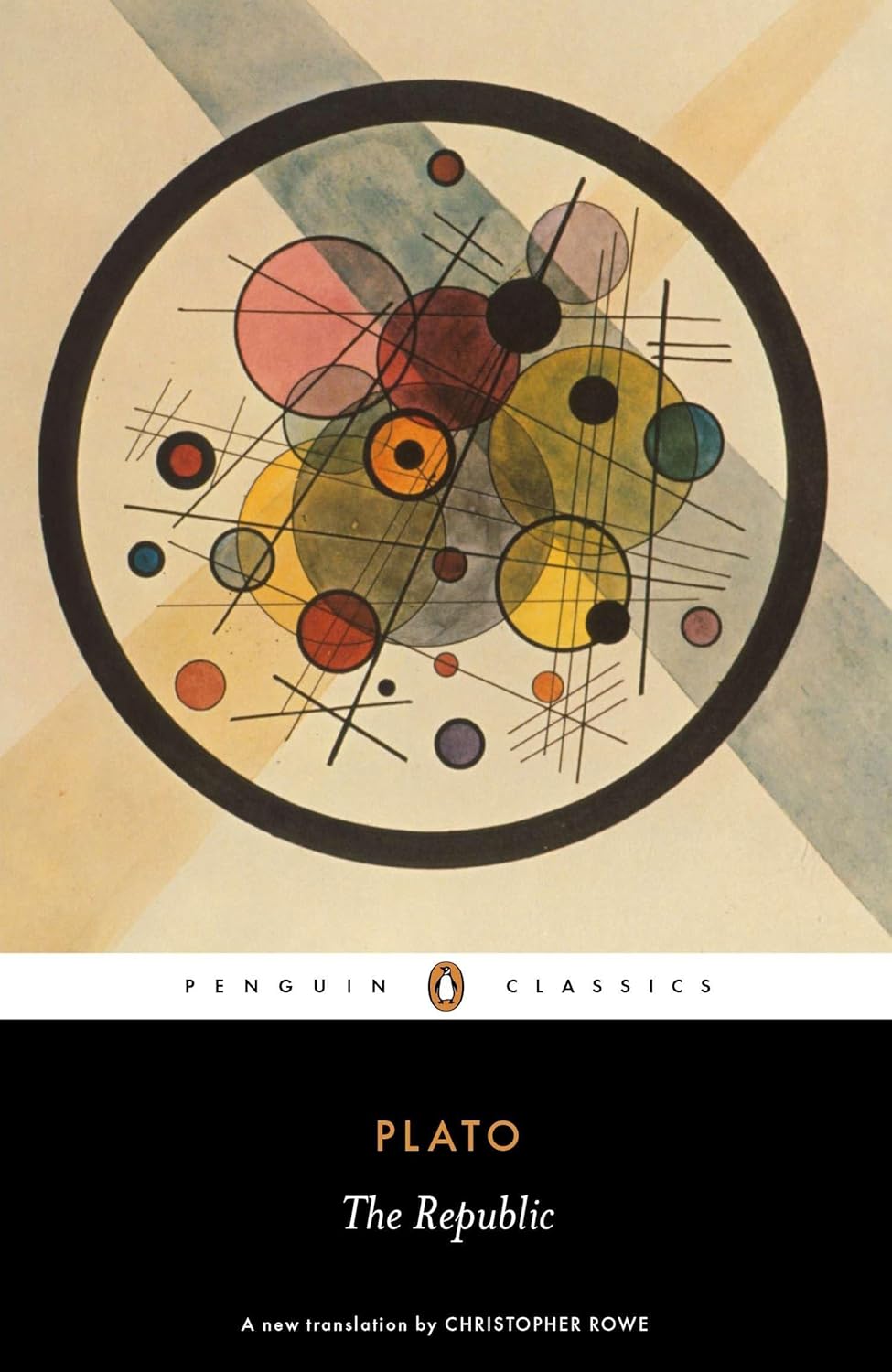
The Republic
Plato


 Apple Books


 62 Min Reading Time
 Audio Version Available
About this book
In Plato's Republic, a timeless exploration of justice, order, and the ideal state, Socrates and his companions delve into profound questions that continue to resonate with readers today. Through engaging dialogues, Plato dissects the nature of justice, both in the individual and in society, envisioning a utopian republic ruled by philosopher-kings.
More than just a political treatise, The Republic investigates fundamental aspects of human existence, including the nature of reality, the power of education, and the pursuit of the good life. Iconic allegories, such as the Allegory of the Cave, illuminate the path from ignorance to enlightenment, challenging our perceptions and urging us towards intellectual and moral awakening.
Discover the enduring wisdom of Plato as he grapples with questions of governance, ethics, and the human soul. The Republic remains a cornerstone of Western thought, inviting readers to contemplate the ideal society and their own place within it.
Summary of Key Ideas
- •
Justice as a Balanced State
Justice as Harmony: Plato argues that justice is not merely adherence to laws or conventions, but a state of harmony within the individual and the city. In the individual, justice exists when reason, spirit, and appetite are properly ordered, with reason ruling. Similarly, in the city, justice prevails when the philosopher-kings (reason), auxiliaries (spirit), and producers (appetite) each fulfill their respective roles without interfering with others. This holistic view of justice emphasizes internal balance and social order, suggesting that a just society mirrors a just soul.
- •
The Philosopher-King's Republic
The Ideal State: Plato outlines an ideal state ruled by philosopher-kings, individuals chosen for their wisdom, virtue, and devotion to truth. These rulers are not motivated by personal gain or ambition but by a desire to promote the common good. The auxiliaries, or soldiers, are responsible for defending the state, while the producers, including farmers and craftsmen, provide for its material needs. This rigid class structure, though controversial, is designed to ensure stability and prevent corruption, with each class performing its designated function for the benefit of the whole.
- •
The Realm of Perfect Forms
The Theory of Forms: At the heart of Plato's metaphysics is the Theory of Forms, which posits that the physical world we perceive is merely a shadow of a higher realm of perfect, eternal Forms. These Forms, such as Justice, Beauty, and Goodness, are the true objects of knowledge. According to Plato, true understanding comes from grasping these Forms through reason and contemplation, rather than relying on sensory experience. This theory has profound implications for education, ethics, and epistemology, suggesting that our ultimate goal should be to ascend to the realm of Forms and apprehend true reality.
- •
Escaping the Cave of Ignorance
The Allegory of the Cave: One of the most famous passages in The Republic, the Allegory of the Cave, illustrates the process of enlightenment and the difficulty of attaining true knowledge. Imagine prisoners chained in a cave, only able to see shadows projected on the wall. One prisoner escapes and ascends to the outside world, where he sees the true forms of objects. When he returns to the cave to share his discovery, the other prisoners reject him, unable to comprehend his descriptions of the outside world. This allegory highlights the importance of education and the challenges faced by those who seek to enlighten others.
- •
The Three Parts of the Soul
The Tripartite Soul: Plato divides the human soul into three parts: reason, spirit, and appetite. Reason is the rational part that seeks truth and knowledge; spirit is the emotional part that drives ambition and courage; and appetite is the desiring part that seeks pleasure and satisfaction. According to Plato, a just individual is one in whom these three parts are properly ordered, with reason ruling over spirit and appetite. This psychological model provides a framework for understanding human behavior and the importance of self-control and moderation.
- •
Education for a Just Society
Education and the Pursuit of Truth: Plato emphasizes the crucial role of education in shaping virtuous citizens and cultivating a just society. Education, in Plato's view, is not merely the acquisition of information but the turning of the soul toward truth and goodness. He advocates for a rigorous curriculum that includes mathematics, philosophy, and physical training, designed to develop both the mind and the body. Through education, individuals can learn to reason effectively, control their desires, and contribute to the common good, ultimately leading to a more just and harmonious society.
- •
Democracy's Shortcomings
Critique of Democracy: While not an outright rejection, Plato expresses reservations about democracy, arguing that it can lead to tyranny and the rule of the unqualified. He suggests that democracies are susceptible to manipulation by demagogues who appeal to the emotions and desires of the masses, rather than to reason and justice. In Plato's view, a well-ordered society requires wise and virtuous leaders who possess the knowledge and skills to govern effectively, which he believes are more likely to be found in an aristocracy of intellect than in a democracy of popular opinion. This critique remains relevant in contemporary discussions about the challenges of democratic governance.
- •
Women's Role in the Ideal State
The Role of Women: Plato challenges conventional views on the role of women in society, arguing that they should have the same opportunities as men to participate in government and warfare. He believes that women are capable of possessing the same virtues and abilities as men and should be educated accordingly. While his views on equality may seem progressive for his time, it is important to note that his argument is based on the idea that women should fulfill the same roles as men in the ideal state, rather than on a belief in inherent gender equality.
Chapter Recap

About The Author
Plato
Main Quotes
"The heaviest penalty for declining to rule is to be ruled by someone inferior to yourself."
"Justice in the life and conduct of the State is possible only as first residing in the hearts and souls of the citizens."
"There will be no end to the troubles of states, or of humanity itself, till philosophers become kings in this world, or till those we now call kings and rulers really and truly become philosophers."
"The direction in which education starts a man will determine his future life."
"The society we have described can never grow into a reality or see the light of day, and there will be no end to the troubles of states, or indeed, my dear Glaucon, of humanity itself, till philosophers become rulers in this world."
"According to me, the one who says what’s not so, whether he’s joking or serious, should be hated even more than the one who’s an enemy."
"I am the wisest man alive, for I know one thing, and that is that I know nothing."
"The beginning is the most important part of the work."
"Human behavior flows from three main sources: desire, emotion, and knowledge."
"There are two things a person should never be angry at: What they can help, and what they cannot."
Who Should Read This Book
Philosophy students and academics
Political science students and academics
Individuals interested in ethics and moral philosophy
Readers interested in utopian literature and political theory
Individuals seeking a deeper understanding of justice and the ideal state
Those interested in ancient Greek philosophy and history
Educators looking for resources on virtue and character development
Readers interested in the history of ideas and Western thought
Anyone curious about the nature of reality, knowledge, and the human soul
Book Summaries Like
The Republic

FAQ

Free Access to LitNotes