




 DISCORD
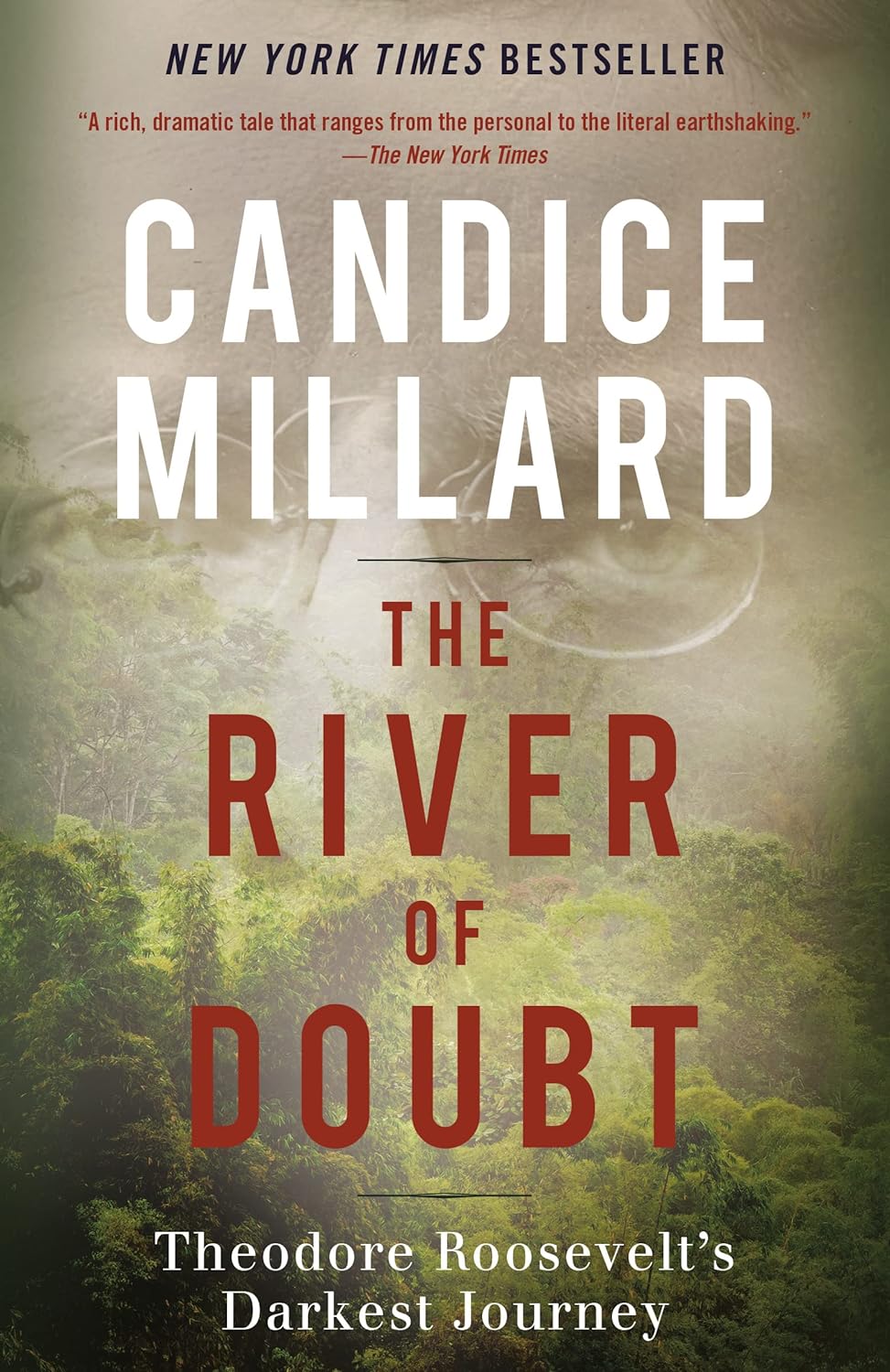
The River of Doubt
Candice Millard


 Apple Books


 133 Min Reading Time
 Audio Version Available
About this book
In 1914, Theodore Roosevelt, driven by a thirst for adventure after a crushing election defeat, plunged into the heart of the Amazon. His goal: to chart the course of the River of Doubt, a treacherous, uncharted tributary teeming with hidden dangers.
This is the true story of that harrowing expedition. Imagine a world of shadowy jungles, where indigenous tribes unleash poison-tipped arrows, piranhas infest the waters, and brutal rapids threaten to swallow men whole. Roosevelt, his son Kermit, and Brazilian explorer Cândido Mariano da Silva Rondon, faced unimaginable hardships: starvation, disease, relentless attacks, and even murder within their own ranks.
The River of Doubt is a gripping adventure and an intimate portrait of a president pushed to his breaking point. Three men perished, and Roosevelt himself teetered on the edge of despair. Yet, from the depths of the Amazon, he emerged having redefined the map and his own legacy, achieving a feat that many deemed impossible. Experience Candice Millard's mesmerizing account of one of history's most daring and perilous journeys.
Summary of Key Ideas
- •
The Call of the Unexplored
The allure of the unknown and the drive to explore uncharted territories serve as a powerful motivator for Theodore Roosevelt. Driven by a thirst for adventure and a desire to map the unmapped, Roosevelt embarks on a perilous journey down the River of Doubt, a largely unexplored tributary of the Amazon. This reflects his broader ambition to leave a lasting mark on the world, pushing the boundaries of geographical knowledge and human endurance. The expedition embodies the spirit of discovery that characterized the age, highlighting the risks and rewards associated with venturing into the unknown. This ambition is not merely personal, but also reflects a desire to contribute to scientific understanding and national pride.
- •
The Amazon's Unforgiving Nature
The expedition faces constant threats from the natural world, including treacherous rapids, dense jungle, dangerous wildlife, and disease. The unforgiving environment tests the limits of human resilience, forcing the explorers to adapt and overcome seemingly insurmountable obstacles. Starvation, exhaustion, and illness become constant companions, pushing the men to the brink of physical and mental collapse. Millard vividly portrays the brutal realities of the Amazon rainforest, emphasizing the vulnerability of humans in the face of nature's power and the constant struggle for survival against the elements. This struggle highlights the physical and mental fortitude required to survive in such a hostile environment.
- •
Roosevelt's Leadership: Strengths and Flaws
The River of Doubt expedition reveals Theodore Roosevelt's extraordinary leadership qualities, as well as his flaws. He displays unwavering courage, determination, and a deep concern for his men, inspiring them to persevere despite overwhelming odds. However, his stubbornness, impulsiveness, and occasional arrogance also contribute to the expedition's difficulties. Millard presents a nuanced portrait of Roosevelt, acknowledging both his strengths and weaknesses as a leader, and demonstrating how his personality shaped the course of the expedition. His leadership is tested to its limits, revealing the complexities of command in extreme circumstances.
- •
The Physical and Emotional Toll
The expedition takes a heavy toll on Roosevelt's health, leaving him physically weakened and emotionally scarred. He contracts a severe infection that nearly claims his life, and suffers lasting injuries from accidents along the river. The experience forces him to confront his own mortality and re-evaluate his priorities. Millard explores the psychological impact of the journey on Roosevelt, showing how it transformed him from a celebrated public figure into a more introspective and vulnerable individual. The river becomes a crucible, forging a new understanding of himself and his place in the world.
- •
Encounters with Indigenous Cultures
The expedition highlights the clash between Western exploration and indigenous cultures. The explorers encounter various indigenous tribes along the river, some of whom are hostile, while others are helpful. Millard examines the ethical implications of the expedition's interactions with these tribes, raising questions about cultural sensitivity, respect for indigenous rights, and the impact of Western expansion on native populations. The encounters reveal the complex dynamics of cultural exchange and the potential for both cooperation and conflict between different societies.
- •
The River as a Metaphor for Life
The journey down the River of Doubt becomes a metaphor for life's unpredictable and challenging nature. The explorers face constant uncertainty, unexpected obstacles, and moments of both triumph and despair. The river's relentless flow mirrors the passage of time and the inevitability of change. Millard uses the expedition as a framework for exploring broader themes of resilience, perseverance, and the human capacity to overcome adversity. The river itself becomes a symbol of the journey of life, with its twists, turns, and ever-present dangers.
Chapter Recap

About The Author
Candice Millard
Main Quotes
"He was determined to prove that he was not ready for the scrap heap."
"He was going to subdue the South American wilderness or die trying."
"The jungle was a world of perpetual twilight, teeming with hidden dangers."
"It was a land of both exquisite beauty and unimaginable peril."
"The river was a relentless enemy, and it was winning."
"He had pushed himself to the very edge of endurance, and beyond."
"He was willing to risk everything for the sake of adventure."
"The line between courage and recklessness is often a thin one."
"He had come face to face with his own mortality."
"He had survived the River of Doubt, but he would never be the same."
Who Should Read This Book
Readers of narrative nonfiction
History enthusiasts, particularly those interested in Theodore Roosevelt and early 20th-century exploration
Adventure and survival story readers
Readers interested in South American history and geography, specifically the Amazon basin
Individuals who enjoy biographies and historical accounts of challenging expeditions
Readers of popular history books
Book clubs focused on non-fiction and historical narratives
Book Summaries Like
The River of Doubt


FAQ

Free Access to LitNotes