




 DISCORD
The Serviceberry
Robin Wall Kimmerer


 Indie Bestsellers


 10 Min Reading Time
 Audio Version Available
About this book
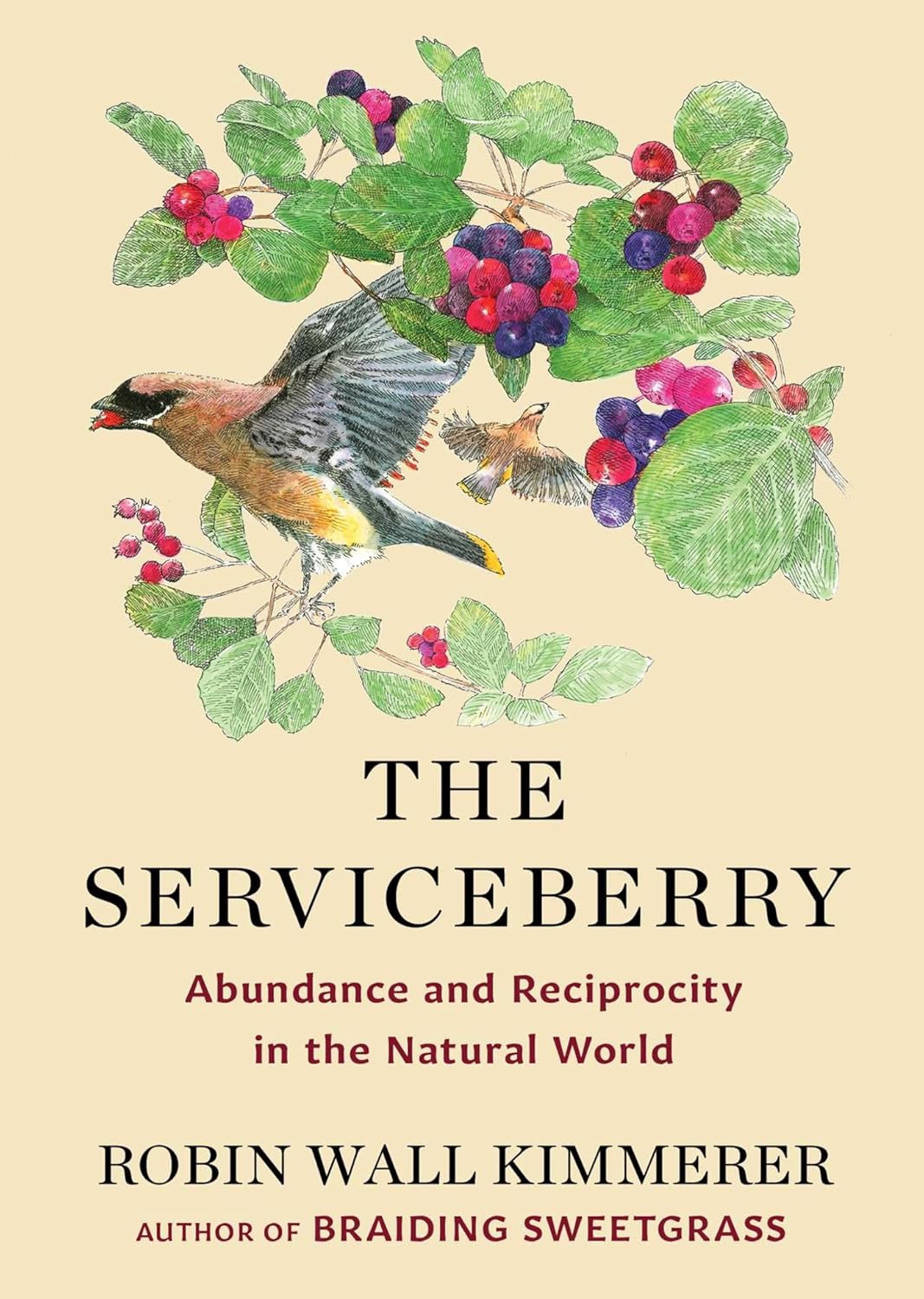
From the celebrated author of Braiding Sweetgrass comes a powerful call to reimagine our relationship with the world. As Robin Wall Kimmerer gathers serviceberries, sharing the harvest with the birds, she contemplates the profound wisdom of the gift economy. In a world driven by scarcity and competition, the serviceberry tree offers a different model: one of reciprocity, gratitude, and interconnectedness. Through Indigenous teachings and the lessons of the natural world, Kimmerer reveals how embracing the serviceberry's way—sharing our gifts and fostering community—can heal our broken relationship with the earth and each other, reminding us that true wealth lies not in hoarding, but in mutual flourishing.
Summary of Key Ideas
- •
Nature's Gift Economy: Serviceberry as a Model
The book's central idea revolves around the concept of the gift economy as it exists in the natural world, contrasting it with the dominant commodity-based economy. Kimmerer uses the serviceberry tree as a central metaphor to illustrate how nature operates on principles of reciprocity, interconnectedness, and abundance. The gift economy, in this context, is not just about bartering or exchange but about a deeper understanding of how all living things contribute to the well-being of the whole ecosystem. It emphasizes the inherent value of giving and receiving, fostering a sense of gratitude and responsibility towards the environment.
- •
The Downfall of Commodification: Exploitation of Nature
Kimmerer argues that the commodification of nature, driven by market forces, leads to exploitation and environmental degradation. By viewing natural resources solely as commodities to be bought and sold, we lose sight of their intrinsic value and the vital role they play in maintaining ecological balance. This perspective encourages overconsumption and unsustainable practices, ultimately harming both the environment and human well-being. The book challenges readers to reconsider their relationship with nature, moving away from a transactional mindset towards one of respect and stewardship.
- •
The Power of Reciprocity: Giving Back to the Earth
Reciprocity is a cornerstone of Kimmerer's philosophy, emphasizing the importance of giving back to the Earth in equal measure to what we take. This involves actively participating in ecological restoration, practicing sustainable harvesting methods, and fostering a sense of gratitude for the gifts of nature. Reciprocity extends beyond mere conservation; it requires a proactive approach to healing damaged ecosystems and ensuring the long-term health of the planet. Kimmerer suggests that by embracing reciprocity, we can move towards a more sustainable and harmonious relationship with the natural world.
- •
Understanding Interconnectedness: The Web of Life
Interconnectedness highlights the intricate web of relationships that bind all living things together. Every organism, from the smallest microbe to the largest tree, plays a vital role in the ecosystem. Disrupting this interconnectedness through habitat destruction, pollution, or species extinction can have cascading effects throughout the entire system. Kimmerer emphasizes the importance of understanding these connections and acting in ways that support the health and resilience of the whole community. This perspective promotes a sense of humility and responsibility, urging us to consider the impact of our actions on all living beings.
- •
Embracing Abundance: Overcoming the Myth of Scarcity
Kimmerer challenges the prevailing notion of scarcity, arguing that nature is inherently abundant. The serviceberry tree, with its generous offering of fruit, serves as a symbol of this abundance. However, our current economic system often creates artificial scarcity through hoarding, unequal distribution, and unsustainable consumption patterns. By recognizing the inherent abundance of nature and embracing principles of sharing and generosity, we can move towards a more equitable and sustainable society. This involves rethinking our priorities, reducing our consumption, and working towards a more just distribution of resources.
- •
Bridging Knowledge Systems: Indigenous Wisdom and Science
The book advocates for integrating Indigenous knowledge and Western science to gain a more holistic understanding of the natural world. Indigenous cultures often possess deep ecological knowledge accumulated over generations of living in close relationship with the land. By combining this traditional wisdom with scientific methods, we can develop more effective and sustainable solutions to environmental challenges. This interdisciplinary approach recognizes the value of both empirical observation and traditional ecological knowledge, fostering a more inclusive and comprehensive understanding of nature.
- •
Cultivating Gratitude: A Pathway to Respect
Gratitude is presented as a fundamental element in fostering a reciprocal relationship with nature. Recognizing and appreciating the gifts of the Earth cultivates a sense of respect and responsibility. This involves taking time to acknowledge the source of our sustenance and expressing appreciation for the natural world's beauty and bounty. Cultivating gratitude can transform our relationship with nature from one of exploitation to one of reverence and care, motivating us to act as responsible stewards of the environment.
- •
Beyond Anthropocentrism: Valuing All Life
Kimmerer emphasizes the importance of shifting from a human-centered (anthropocentric) worldview to one that recognizes the inherent value of all living beings (biocentric). This involves acknowledging that humans are not the only species that matter and that all organisms have a right to exist and thrive. Moving beyond anthropocentrism requires a fundamental shift in our values and priorities, recognizing that human well-being is inextricably linked to the health and well-being of the entire planet. This perspective encourages us to act with humility and respect for all forms of life.
Chapter Recap

About The Author
Robin Wall Kimmerer
Dr. Robin Wall Kimmerer (also credited as Robin W. Kimmerer) (born 1953) is Associate Professor of Environmental and Forest Biology at the State University of New York College of Environmental Science and Forestry (SUNY-ESF). She is the author of numerous scientific articles and books, including her most famous book, Braiding Sweetgrass. She is Potawatomi and combines her heritage with her scientific and environmental passions.
Main Quotes
"Never take the last."
"Take only what you need."
"Take only that which is given."
"Never take more than half."
"Leave some for others."
"Harvest in a way that minimizes harm."
"The way I see it,” she says, “always value people over things."
"Know the ways of the ones who take care of you, so that you can take care of them."
"You could call them natural resources or ecosystem services, but the Robins and I know them as gifts. We both sing gratitude with our mouths full."
"Why then have we permitted the dominance of economic systems that commoditize everything?"
Who Should Read This Book
Readers of Robin Wall Kimmerer's previous works, particularly "Braiding Sweetgrass"
Individuals interested in ecological topics and environmentalism
Those interested in Indigenous perspectives on nature and economy
People seeking alternative economic models based on reciprocity and gifting
Readers interested in botany and plant life, specifically the serviceberry
Individuals involved in sustainability movements and community building
Those interested in philosophical reflections on nature and human society
Readers of nature writing and essays
People interested in social justice and environmental ethics
Academics and students in environmental studies, Native American studies, and related fields
Book Summaries Like
The Serviceberry




FAQ

Free Access to LitNotes