




 DISCORD
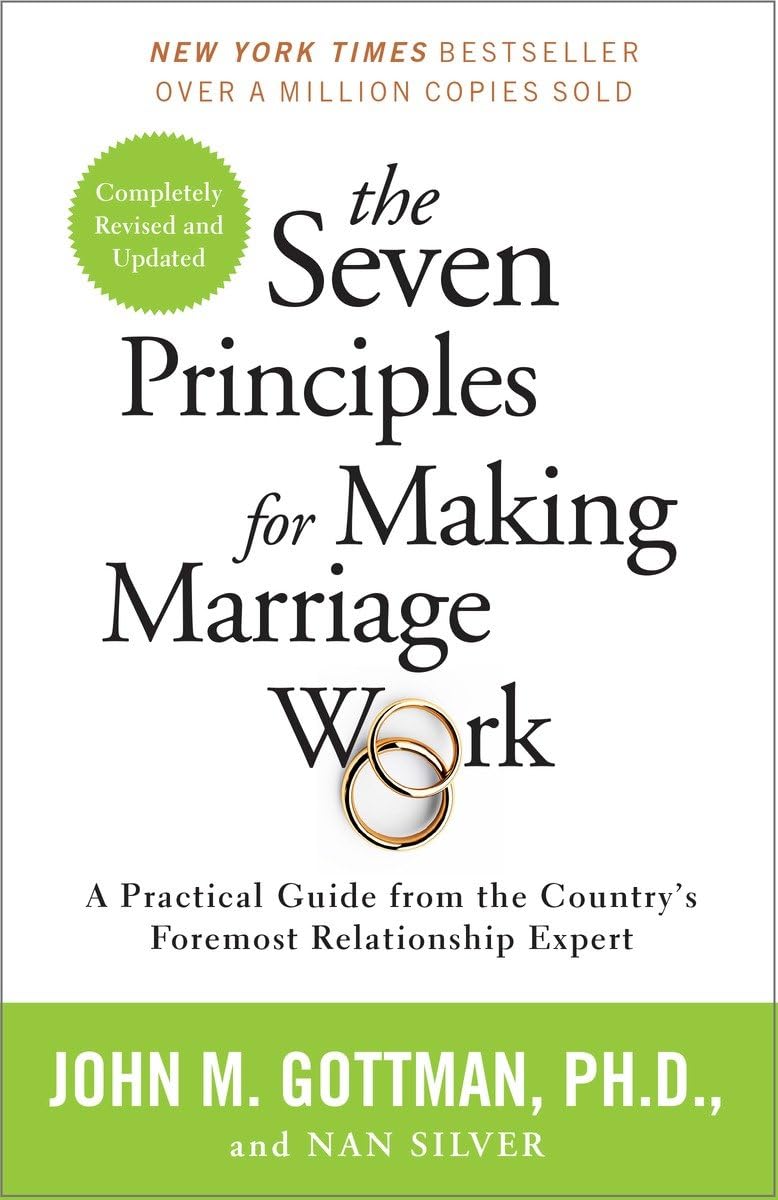
The Seven Principles for Making Marriage Work
John Mordechai Gottman, Nan Silver


 Apple Books


 54 Min Reading Time
 Audio Version Available
About this book
Is your marriage on the rocks, or are you simply striving for a deeper connection? From the renowned relationship expert Dr. John Gottman, The Seven Principles for Making Marriage Work is your guide to building a lasting, fulfilling partnership.
Based on years of groundbreaking research at the Gottman Institute, this New York Times bestseller unveils the seven principles that can transform your relationship. Learn how to resolve conflicts, create shared meaning, and cultivate greater intimacy through practical exercises and insightful strategies.
Discover how to:
- Navigate challenges related to sex, money, family, and more.
- Strengthen your bond by focusing on everyday moments.
- Turn towards each other instead of away, fostering fondness and admiration.
Whether you're newlyweds or have been together for decades, this book offers a proven path to a harmonious and enduring marriage. Unlock your relationship's highest potential and build a love that lasts a lifetime.
Summary of Key Ideas
- •
Share Love Maps: Know Your Partner's World
Enhance your love maps by knowing your partner's world. This principle emphasizes the importance of understanding your partner's inner world – their hopes, dreams, fears, and daily stresses. It involves creating a detailed 'love map' of your partner's life, which allows you to navigate challenges and connect on a deeper level. By actively learning and remembering key aspects of your partner's life, you foster a sense of being known and understood, which strengthens the foundation of your friendship and intimacy. Regularly updating this 'love map' is crucial as individuals evolve and circumstances change over time, ensuring continued empathy and connection.
- •
Nurture Fondness and Admiration: Celebrate Positivity
Cultivate fondness and admiration by appreciating your partner's positive qualities and history together. This principle encourages couples to focus on the positive aspects of their relationship and express appreciation for each other. It involves nurturing a sense of fondness and admiration, even when facing challenges. By actively remembering and cherishing the positive qualities of your partner and your shared history, you create a buffer against negativity and foster a more resilient bond. This practice shifts the focus from complaints to gratitude, creating a more positive and supportive atmosphere within the relationship.
- •
Turn Towards Each Other: Respond to Bids for Connection
Turn towards each other instead of away by responding positively to bids for connection. This highlights the significance of everyday interactions and the importance of responding positively to your partner's attempts to connect. These 'bids' can be small gestures, such as a question, a touch, or a shared interest. By 'turning towards' your partner – acknowledging and responding with interest and support – you strengthen your emotional connection and build trust. Conversely, 'turning away' or ignoring these bids can lead to feelings of rejection and disconnection. Consistently turning towards each other reinforces the bond and fosters a sense of being valued and supported.
- •
Let Your Partner Influence You: Embrace Shared Power
Let your partner influence you by sharing power and decision-making. This principle underscores the importance of equality and mutual respect in a relationship. It involves being open to your partner's perspectives and incorporating their opinions into your decisions. Allowing your partner to influence you demonstrates that you value their input and consider them an equal partner. This shared power dynamic fosters a sense of collaboration and teamwork, leading to greater satisfaction and stability in the relationship. Gottman's research indicates that men accepting influence from their wives is a critical factor in successful heterosexual relationships.
- •
Solve Your Solvable Problems: Tackle Issues Head-On
Solve your solvable problems by identifying and addressing issues that can be resolved through compromise and communication. This principle acknowledges that every relationship has its share of problems, but not all problems are created equal. It distinguishes between solvable and perpetual problems. Solvable problems are specific issues that can be addressed through effective communication, compromise, and problem-solving skills. By focusing on these solvable problems and developing constructive strategies for resolving them, couples can reduce conflict and improve their overall satisfaction. This involves active listening, empathy, and a willingness to find mutually agreeable solutions.
- •
Overcome Gridlock: Explore Underlying Dreams
Overcome gridlock by understanding the underlying dreams and values driving perpetual conflicts. This principle addresses the more challenging, deeply rooted conflicts that stem from differing values or fundamental needs. These 'perpetual problems' are often unsolvable in the traditional sense, but couples can learn to manage them by understanding the underlying dreams and values that fuel the conflict. By exploring and respecting each other's perspectives, couples can find ways to accommodate their differences and minimize the negative impact of these ongoing issues. This involves empathy, acceptance, and a willingness to find common ground, even when complete resolution is not possible.
- •
Create Shared Meaning: Build a Life Together
Create shared meaning by developing rituals, goals, and symbols that reflect your shared values and aspirations. This principle emphasizes the importance of building a life together that is rich in meaning and purpose. It involves creating shared rituals, establishing common goals, and developing symbols that represent your shared values and aspirations. These elements provide a sense of connection, identity, and purpose, strengthening the bond between partners. Shared meaning can be cultivated through traditions, routines, and shared experiences that reinforce your commitment to each other and your shared vision for the future. It is about creating a life narrative together.
Chapter Recap

About The Author
John Mordechai Gottman
Main Quotes
"Friendship fuels the flames of romance because it offers the best protection against feeling adversarial toward your spouse."
"At the heart of the Seven Principles approach is the simple truth that happy marriages are based on a deep friendship."
"If you find yourself keeping score about some issue with your spouse, that suggests it's an area of tension in your marriage."
"Happy marriages are based on a deep friendship."
"Remember what it means to be the listener. You don't react to what you're hearing. Just keep breathing, postpone your own agenda, and..."
"Turn Toward Each Other Instead of Away"
"Forgive often. Overlook much. You'll both be happier. Forget. Become forgetful. No, not about your anniversary. Then you'll need grace again."
"The Sound Relationship House is the framework for what makes relationships work."
"A complaint focuses on a specific action at which your partner failed."
"Criticism is the first horseman of the apocalypse."
Who Should Read This Book
Married couples seeking to improve their relationship
Individuals in long-term committed relationships
Couples contemplating marriage
Marriage therapists and counselors
Individuals interested in relationship psychology
People experiencing difficulties or conflict in their marriage
Those seeking practical, science-based advice on marriage
Readers of self-help books focused on relationships
General adult readers interested in relationship advice
Book Summaries Like
The Seven Principles for Making Marriage Work




FAQ

Free Access to LitNotes