




 DISCORD
The Souls of Black Folk
W. E. B. Du Bois


 Apple Books


 52 Min Reading Time
 Audio Version Available
About this book
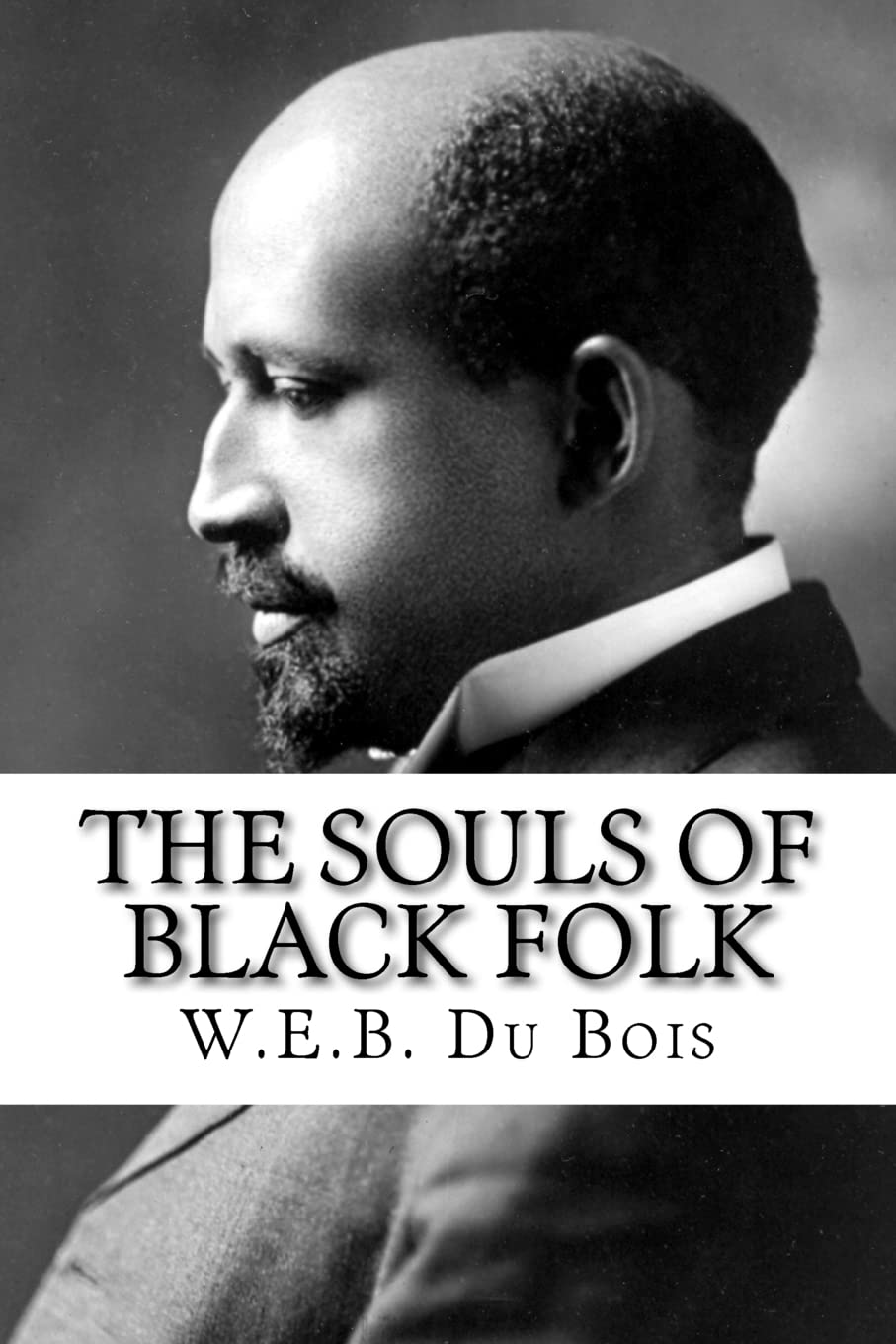
In The Souls of Black Folk, W.E.B. Du Bois, a towering figure in American intellectual history, delivers a profound and enduring exploration of race and identity at the dawn of the 20th century. Through a collection of essays that blend sociology, history, and poignant personal narrative, Du Bois captures the essence of the African American experience, grappling with the complexities of "double consciousness"—the sense of always seeing oneself through the eyes of others.
Published in 1903, this seminal work challenges prevailing attitudes and confronts the deep-seated injustices of a nation struggling to reconcile its ideals with the realities of segregation and discrimination. Du Bois offers a powerful critique of Booker T. Washington's accommodationist stance, advocating instead for aggressive activism and the pursuit of higher education as essential pathways to Black liberation and empowerment.
From reflections on the haunting beauty of Black spirituals to searing accounts of racial prejudice, The Souls of Black Folk remains a vital and essential read, offering timeless insights into the ongoing struggle for civil rights and the enduring quest for identity and belonging in a divided America.
Summary of Key Ideas
- •
The Veil and Double Consciousness
Double Consciousness: Du Bois introduces the concept of double consciousness, a psychological and social experience where Black individuals perceive themselves through their own eyes and simultaneously through the prejudiced gaze of white society. This duality creates an internal conflict, a sense of "two-ness," making it difficult for Black individuals to develop a unified sense of self. The veil metaphor represents the color line and the physical and psychological separation between Black and white communities, obscuring true understanding and perpetuating stereotypes. This concept is central to understanding the Black experience in America, highlighting the constant negotiation of identity in a racially divided society.
- •
The Significance of Education
The Souls of Black Folk emphasizes the importance of education, particularly higher education, for Black Americans. Du Bois critiques the purely vocational training advocated by some, arguing for a curriculum that includes classical studies and intellectual development. He believed that education should not merely prepare Black individuals for manual labor but should empower them to become leaders, thinkers, and agents of social change. This focus on intellectual and cultural advancement was crucial for the progress and upliftment of the Black community, enabling them to challenge racial inequality and contribute fully to American society.
- •
Black Identity and American Identity
Du Bois explores the complex relationship between Black identity and American identity. He questions whether it is possible for Black individuals to be both fully Black and fully American, given the pervasive racism and discrimination they face. He examines the tension between preserving Black cultural heritage and integrating into mainstream American society. Du Bois suggests that Black Americans should strive to maintain their unique cultural identity while also demanding full citizenship rights and equal opportunities. This delicate balance is essential for achieving true freedom and self-determination.
- •
Economic and Social Oppression
The book critiques the economic exploitation and social injustice faced by Black Americans in the post-Reconstruction South. Du Bois highlights the sharecropping system, debt peonage, and other forms of economic oppression that perpetuated Black poverty and limited their opportunities. He also addresses the prevalence of racial violence, disenfranchisement, and segregation, which denied Black individuals their basic human rights. Du Bois argues that true freedom requires not only the abolition of slavery but also the elimination of economic and social inequalities that continue to oppress Black people.
- •
The Role of the Black Church
Du Bois analyzes the role of the Black church in African American life. He emphasizes the church as a center for community, spiritual guidance, and political mobilization. It served as a refuge from the harsh realities of racism and a source of strength and resilience. The Black church also played a crucial role in fostering Black cultural expression, including music, art, and literature. Du Bois recognizes the church's multifaceted role in empowering Black communities and advocating for social justice.
- •
Spiritual Strivings and Cultural Gifts
Du Bois examines the spiritual strivings and cultural contributions of Black people. He emphasizes the unique gifts and talents that Black individuals bring to American society, including their music, art, and literature. He also explores the emotional depth and spiritual resilience of Black people, forged through centuries of suffering and oppression. Du Bois seeks to celebrate Black culture and affirm the inherent worth and dignity of Black individuals, challenging racist stereotypes and promoting a more inclusive vision of American society.
- •
Clash of Ideologies: Washington vs. Du Bois
Du Bois contrasts the philosophies of Booker T. Washington and W.E.B. Du Bois, two prominent Black leaders of the time. Washington advocated for vocational training and economic self-reliance, while Du Bois championed higher education and political activism. The book analyzes the strengths and limitations of both approaches, recognizing the importance of economic empowerment but also emphasizing the need for intellectual and political leadership to challenge racial inequality. The contrasting views highlight different strategies for Black advancement in a racially divided society.
- •
The Legacy of Slavery
The enduring legacy of slavery casts a long shadow over Black life in America. Du Bois argues that emancipation did not bring true freedom, as Black people continued to face systemic discrimination and oppression. He explores the psychological and emotional scars of slavery, passed down through generations, and the ongoing struggle to overcome its legacy. Du Bois emphasizes the need for America to confront its history of slavery and racial injustice to achieve true reconciliation and equality.
Chapter Recap

About The Author
W. E. B. Du Bois
Main Quotes
"The problem of the twentieth century is the problem of the color-line."
"One ever feels his twoness, -- an American, a Negro; two souls, two thoughts, two unreconciled strivings; two warring ideals in one dark body, whose dogged strength alone keeps it from being torn asunder."
"It is a peculiar sensation, this double-consciousness, this sense of always looking at one’s self through the eyes of others, of measuring one’s soul by the tape of a world that looks on in amused contempt and pity."
"After the Egyptian and Indian, the Greek and Roman, the Teuton and Mongolian, the Negro is a sort of seventh son, born with a veil, and gifted with second-sight in this American world, -- a world which yields him no true self-consciousness, but only lets him see himself through the revelation of the other world."
"To be a poor man is hard, but to be a poor race in a land of dollars is the very bottom of hardships."
"Work, culture, liberty, -- all these we need, not singly but together, not successively but together, each growing and aiding each, and all striving toward perfection."
"The history of the American Negro is the history of this strife, -- this longing to attain self-conscious manhood, to merge his double self into a better and truer self."
"We are not more lawless than the white population; we are more arrested."
"Nations reel and stagger on their way; they make hideous mistakes; they commit frightful wrongs; they do great and beautiful things."
"The shadow of a deep disappointment rests upon the Negro people,–a disappointment all the more bitter because the unattained ideal was unbounded save by the simple limitations of humanity."
Who Should Read This Book
African American intellectuals and activists
Scholars of American history, sociology, and literature
Readers interested in race relations and social justice
Students studying African American studies and civil rights
Individuals seeking to understand the historical context of racial inequality in the United States
Readers interested in classic works of American literature and social commentary
Educators looking for texts to teach about race, identity, and social change
People interested in the works and legacy of W. E. B. Du Bois
Book Summaries Like
The Souls of Black Folk




FAQ

Free Access to LitNotes