




 DISCORD
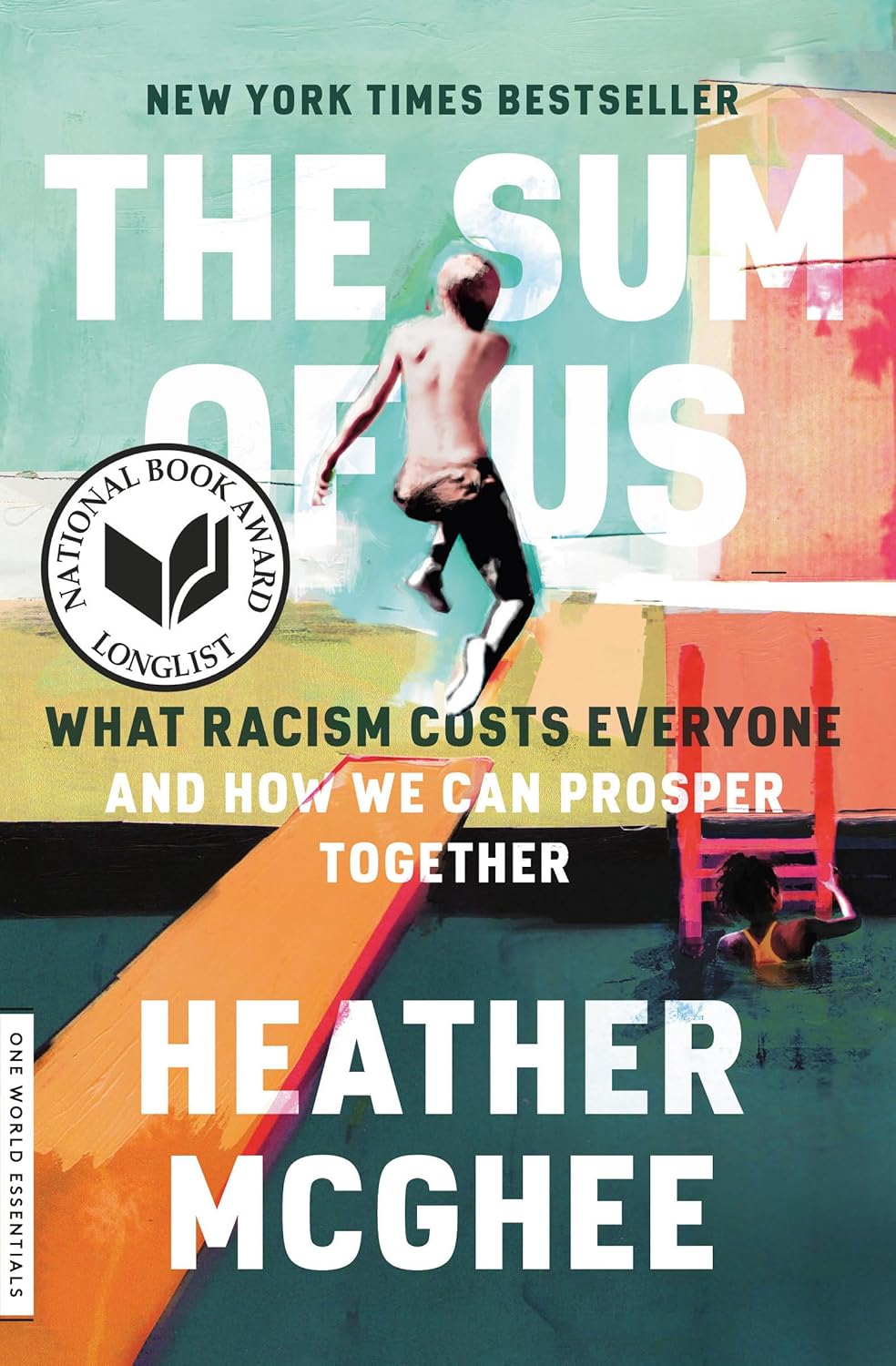
The Sum of Us
Heather McGhee


 Goodreads Choice Awards
 Apple Books


 49 Min Reading Time
 Audio Version Available
About this book
A groundbreaking exploration of inequality, The Sum of Us reveals the hidden costs of racism for everyone.
Heather McGhee, one of today's most influential thinkers, unravels the American economy's persistent failures, tracing them back to a common root: the self-defeating belief that progress for some must come at the expense of others.
Embark on McGhee's deeply personal journey across America, where she confronts the devastating consequences of this zero-sum paradigm. From Maine to Mississippi to California, she uncovers how racism has fueled the decline of public goods, suppressed wages, and hindered access to healthcare, impacting not only people of color but also the white working class.
Yet, amidst the wreckage, McGhee discovers glimmers of hope – the "Solidarity Dividend." In communities where people bridge racial divides, she witnesses the extraordinary benefits of collective action. The Sum of Us is a powerful call to dismantle the false narratives that divide us, offering a vision for a more equitable and prosperous future for all.
Summary of Key Ideas
- •
The Zero-Sum Paradigm: A False Dichotomy
The core argument of 'The Sum of Us' revolves around the concept of the 'zero-sum paradigm,' a deeply ingrained belief that progress for one group must inherently come at the expense of another. McGhee demonstrates how this paradigm, particularly when fueled by racism, has historically led to the dismantling of public goods and the sabotage of collective well-being. This mentality prevents Americans from recognizing shared interests and collaborating on solutions that would benefit everyone, regardless of their racial background. Overcoming this paradigm is essential for building a more equitable and prosperous society.
- •
The Drained-Pool: Self-Inflicted Harm
McGhee explores the concept of the 'drained-pool' phenomenon, using the metaphor of public swimming pools to illustrate how racism has led to the defunding and destruction of public goods. When communities desegregated, many towns chose to close public pools rather than integrate them, depriving everyone of a valuable resource. This serves as a powerful example of how the perceived threat of racial equity can lead to decisions that harm entire communities, highlighting the self-destructive nature of racist policies.
- •
Racism as an Economic Drain
The book argues that racism is not just a moral issue, but also an economic one. By perpetuating inequality and division, racism undermines economic growth and stability. McGhee demonstrates how discriminatory policies and practices have historically disadvantaged not only people of color but also white individuals, limiting opportunities for advancement and hindering overall prosperity. Addressing racism, therefore, becomes an economic imperative for creating a more inclusive and thriving society.
- •
The Power of Solidarity
McGhee emphasizes the importance of cross-racial solidarity and collective action in dismantling systemic racism and building a more just society. She highlights examples of successful movements and initiatives where people from different racial backgrounds have come together to advocate for common goals, such as fair wages, affordable housing, and access to healthcare. Building bridges across racial divides is crucial for challenging the zero-sum paradigm and fostering a sense of shared destiny.
- •
Deconstructing Race: Challenging Hierarchies
The book challenges the notion of a fixed racial hierarchy, arguing that race is a social construct designed to maintain power imbalances. McGhee dismantles the myth of white superiority, revealing how it has been used to justify exploitation and oppression throughout history. By understanding the constructed nature of race, individuals can begin to deconstruct their own biases and work towards a more equitable understanding of human difference.
- •
Empathy as a Bridge
'The Sum of Us' underscores the importance of empathy and understanding in bridging racial divides. McGhee emphasizes the need to listen to and learn from the experiences of people from different racial backgrounds, recognizing the unique challenges and perspectives they bring. By cultivating empathy, individuals can develop a deeper appreciation for the human cost of racism and become more committed to creating a more inclusive and compassionate society.
- •
Policy as a Tool for Equity
McGhee advocates for policy changes that promote racial equity and advance the common good. She highlights examples of policies that have successfully reduced inequality and improved outcomes for all, such as universal healthcare, affordable housing, and progressive taxation. By advocating for such policies, individuals can help create a more just and equitable society that benefits everyone, regardless of their racial background. These policies help dissolve the zero-sum paradigm by demonstrably improving conditions for all.
- •
Shared Humanity: A Common Fate
Throughout the book, McGhee emphasizes the importance of recognizing our shared humanity and common fate. She argues that despite our differences, we are all interconnected and interdependent, and that our well-being is inextricably linked to the well-being of others. By embracing our shared humanity, we can transcend racial divides and work together to create a more just and sustainable world for all.
Chapter Recap

About The Author
Heather McGhee
Main Quotes
"We are so much more, when the we in we the people is not some of us, but all of us. We are greater than and greater for the sum of us."
"The zero-sum is a story sold by wealthy interests for their own profit."
"Racism is a poison first consumed by its concocters."
"I'm fundamentally a hopeful person, because I know that decisions made the world as it is and that better decisions can change it."
"It is a zero sum story that says 'fear your neighbor' instead of joining forces with them."
"The rich are getting richer, and the poor are getting poorer, but we must not blame the outsiders."
"Was it possible that even when we didn't bring up race, it didn't matter?"
"“Why can't we have nice things?”"
"The “we” who can't seem to have nice things is Americans, all Americans."
"We are greater than, and greater for, the sum of us."
Who Should Read This Book
Readers interested in social justice and racial equity.
Individuals seeking to understand the economic impact of racism.
Progressive readers open to exploring systemic issues.
Those interested in policy and social change.
Readers of non-fiction books on sociology, economics, and history.
People looking for solutions to societal problems and ways to build a more inclusive society.
Book clubs focused on current social issues.
Educators and students in fields like sociology, political science, and African American studies.
Readers interested in American history and its impact on the present.
Individuals seeking to understand how racism affects white people as well as people of color.
Book Summaries Like
The Sum of Us



FAQ

Free Access to LitNotes