




 DISCORD
The Time Machine
H. G. Wells

 Apple Books


 42 Min Reading Time
 Audio Version Available
About this book
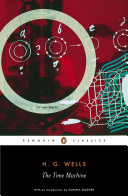
Embark on a thrilling journey through time with H.G. Wells's masterpiece, The Time Machine. A visionary scientist, obsessed with the fourth dimension, constructs a revolutionary device and propels himself into the year 802,701 AD. He arrives in a seemingly utopian world, where the gentle Eloi bask in idyllic harmony.
But this tranquil facade hides a terrifying secret. Beneath the surface, in the dark underbelly of this future Earth, lurks the Morlocks—a sinister, subterranean race. When the Time Traveller's machine vanishes, he must confront the darkness and unravel the mysteries of this evolved world if he ever hopes to return to his own time.
A groundbreaking blend of adventure and social commentary, The Time Machine is not only a cornerstone of science fiction but a chilling reflection on humanity's potential future. Will the Time Traveller escape this terrifying world, or will he become another casualty of a future beyond imagination?
Summary of Key Ideas
- •
Time Travel as a Vehicle for Social Commentary
The core concept of *The Time Machine* revolves around the possibility of time travel itself, presented as a scientific and mechanical endeavor. The Time Traveller, an inventor and scientist, constructs a machine that allows him to journey into the distant future. This idea, revolutionary for its time, allows Wells to explore not only the potential of science and technology but also their implications for society and humanity's future. The machine serves as a vehicle for social commentary, enabling the protagonist (and the reader) to witness the consequences of present-day actions on the world to come. The plausibility, within the context of late 19th-century scientific understanding, makes the social critique all the more effective.
- •
Critique of Victorian Class Structure
One of the most significant themes in *The Time Machine* is the critique of Victorian society's class structure. In the future, the Time Traveller encounters the Eloi and the Morlocks, who represent a stark division of humanity. The Eloi, seemingly gentle and innocent, are the descendants of the upper classes, now devolved into a state of pampered helplessness. The Morlocks, dwelling underground, are the descendants of the working class, forced into labor and now adapted to a subterranean existence. This division serves as a warning about the dangers of unchecked social inequality and the potential for societal collapse if class divisions are not addressed.
- •
Societal Decay and the Decline of Humanity
The novel explores the theme of societal decay and the potential decline of humanity. The future depicted by Wells is not one of progress and advancement but rather one of stagnation and degeneration. The Eloi, while living in a seemingly utopian world, lack intellectual curiosity and any real purpose. The Morlocks, though industrious, are reduced to a cannibalistic and brutish existence. This serves as a cautionary tale about the dangers of complacency, unchecked technological advancement, and the failure to address social and environmental issues. The Time Traveller's journey highlights the fragility of civilization and the potential for its demise.
- •
Devolution as a Consequence of Social Stratification
Evolution, or rather devolution, is a central theme in the book. The Eloi and Morlocks represent divergent paths of human evolution, shaped by their respective environments and social roles. The Eloi have become physically weak and mentally unmotivated, while the Morlocks have adapted to a life of darkness and labor. This distorted view of evolution serves as a commentary on the potential consequences of social stratification and the dangers of ignoring the natural world. It suggests that evolution is not necessarily a linear progression towards improvement but can also lead to decline and adaptation to unfavorable conditions.
- •
The Perils of Unchecked Technological Progress
The narrative explores the dangers of unchecked technological progress. While the Time Machine itself represents a remarkable feat of engineering, the future it reveals is not one where technology has led to a better world. Instead, technology has exacerbated social divisions and contributed to the decline of humanity. The Morlocks, for example, use technology to maintain their control over the Eloi, perpetuating a system of exploitation and inequality. This underscores Wells's concern about the potential for technology to be used for destructive purposes and the importance of ethical considerations in scientific advancement.
- •
Fear, Awe, and the Limits of Human Understanding
The novel touches on themes of fear, awe, and the limits of human understanding. The Time Traveller experiences a range of emotions as he journeys into the future, from initial excitement and curiosity to profound disillusionment and fear. He is awestruck by the vastness of time and the radical changes that have occurred, but he is also terrified by the potential for societal collapse and the loss of humanity's potential. His experiences force him to confront the limits of his own understanding and the uncertainty of the future, highlighting the inherent vulnerability of the human condition.
- •
The Futility of Utopian Ideals
The futility of utopian ideals is a recurring theme in *The Time Machine*. The Eloi initially appear to live in a utopian society, free from labor and want. However, their existence is ultimately shallow and meaningless, as they lack purpose and intellectual curiosity. The Time Traveller's journey reveals that this supposed utopia is built on a foundation of exploitation and decay, sustained by the Morlocks' labor and the Eloi's ignorance. This suggests that true utopia is an unattainable ideal and that any attempt to create a perfect society is likely to be flawed and unsustainable.
- •
The Importance of Action Over Passivity
The contrast between passivity and action is a subtle but important theme. The Eloi exemplify passivity, having lost the drive to shape their own destiny. They are content to live a life of leisure, oblivious to the dangers that lurk beneath the surface. In contrast, the Time Traveller, despite his initial naivety, represents a more active and inquisitive approach to life. He seeks to understand the future and, to some extent, influence it. This contrast suggests the importance of individual agency and the need to confront challenges rather than passively accepting one's fate.
Chapter Recap

About The Author
H. G. Wells
Main Quotes
""It is a law of nature we overlook, that intellectual versatility is the compensation for change, danger, and trouble.""
""I have suspected this in myself, before. Now I know it. That night, in the inn, the silence, and the darkness, had filled me with dread.""
""There is no difference between Time and any of the three dimensions of Space except that our consciousness moves along it.""
""I saw great and splendid architecture rising about me, more massive than any buildings of our own time, and yet it seemed built of shining air.""
""We are kept keen on the alert for pain and trouble, which makes us smarter.""
""Nature never appeals to intelligence until habit and instinct are useless. There is no intelligence where there is no need of change.""
""I grieved to think how brief the dream of the human intellect had been. It had committed suicide.""
""For man had not remained one species, but had differentiated into two distinct races: the beautiful, frail Eloi, and the subterranean, monstrous Morlocks.""
""Face this world. Learn its ways, watch it, be careful of too hasty guesses at its meaning. In the end you will find clues to it all.""
""I felt naked in a strange world. I felt as perhaps a helpless animal might feel in a trap.""
Who Should Read This Book
Science fiction enthusiasts
Readers interested in classic literature
Individuals fascinated by time travel concepts
Readers who enjoy social commentary and dystopian themes
Students studying Victorian literature or science fiction
Fans of H.G. Wells's other works
Readers interested in philosophical explorations of humanity and progress
Young adults exploring classic literature through graphic novel adaptations
Book Summaries Like
The Time Machine



FAQ

Free Access to LitNotes