




 DISCORD
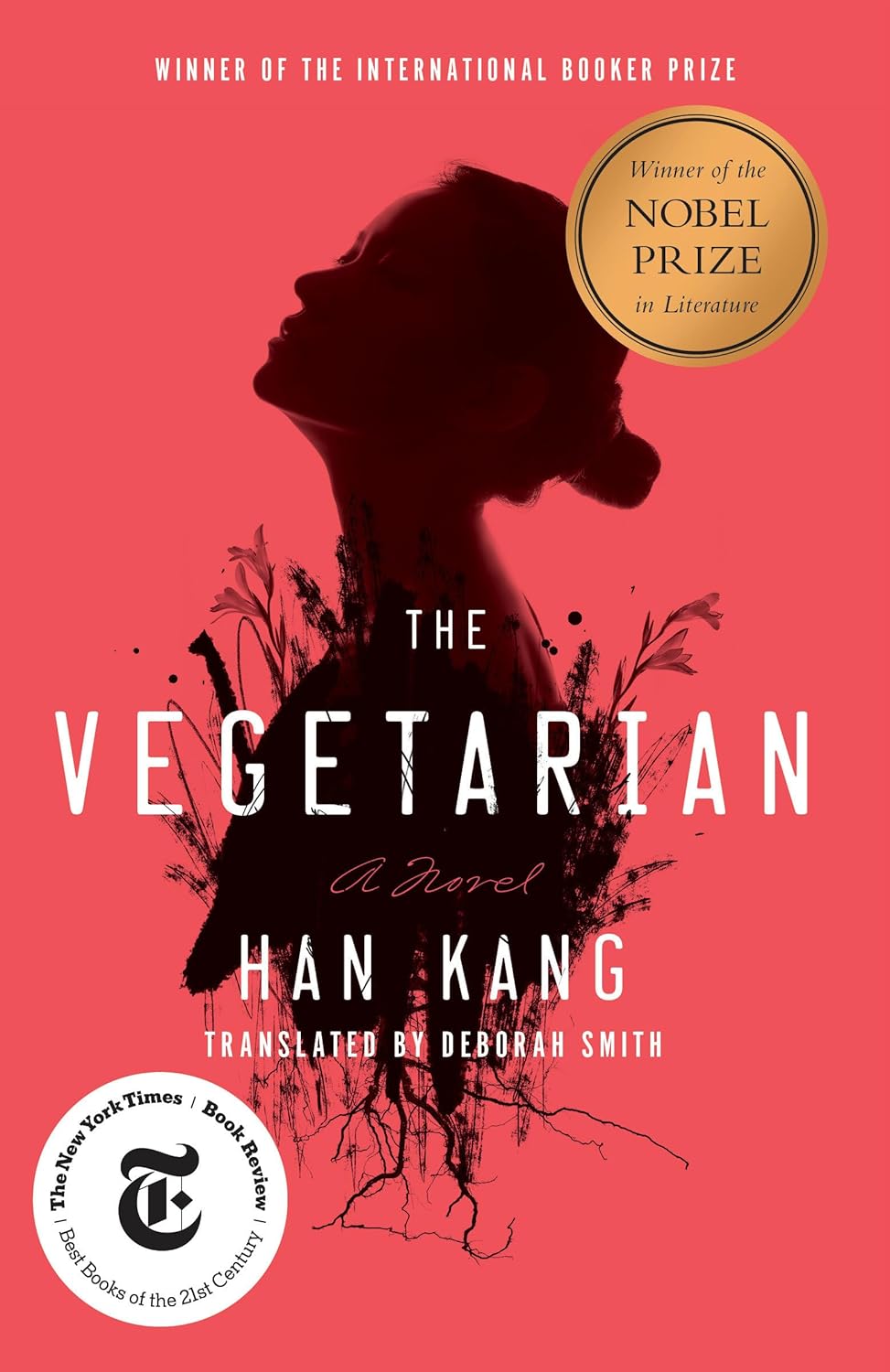
The Vegetarian
Han Kang


 USA Today Best Sellers


 36 Min Reading Time
 Audio Version Available
About this book
In a world where conformity reigns, Yeong-hye awakens from blood-soaked nightmares with a radical act: she abandons meat. This simple choice unravels her ordinary life, shocking her husband and family, who struggle to control her descent. As they attempt to reclaim her, Yeong-hye obsessively defends her increasingly sacred decision, spiraling into a bizarre estrangement from those closest to her and, ultimately, from herself.
Han Kang's The Vegetarian is a darkly allegorical tale of power, obsession, and the struggle to break free. Through invasive violations and perverse desires, Yeong-hye's metamorphosis becomes a haunting exploration of the violence both within and without.
Summary of Key Ideas
- •
Vegetarianism as Rebellion
Yeong-hye's radical vegetarianism is not merely a dietary choice but a profound act of rebellion against societal norms and expectations. In a culture where meat consumption is intertwined with ideas of strength, health, and traditional family roles, her refusal to eat meat is seen as bizarre and unsettling. This act of defiance challenges the patriarchal structure and the expectation that women should conform to prescribed roles. Her vegetarianism becomes a symbol of her struggle for autonomy and self-expression in a society that seeks to control and define her.
- •
The Body as a Site of Control
The novel explores the theme of bodily autonomy through Yeong-hye's increasingly drastic rejection of meat and, eventually, all food. Her body becomes a battleground where she fights for control over her own being. This struggle highlights the societal pressures exerted on women to conform to certain standards of appearance and behavior, often at the expense of their own desires and needs. Yeong-hye's starvation can be interpreted as a desperate attempt to escape these pressures and reclaim ownership of her body.
- •
The Pervasiveness of Violence
Violence, both physical and psychological, permeates Yeong-hye's life, stemming from her family, her husband, and the broader societal context. The graphic imagery and disturbing events in the novel underscore the brutal realities of power dynamics and the ways in which individuals can be subjected to abuse and exploitation. This theme extends beyond overt acts of violence to include subtle forms of coercion and manipulation that contribute to Yeong-hye's mental and physical deterioration.
- •
Questioning Sanity and Madness
The story delves into the themes of sanity and madness, blurring the lines between rational behavior and mental instability. Yeong-hye's increasingly unconventional actions lead others to question her sanity, but the novel also raises questions about the sanity of a society that imposes such rigid expectations on individuals. Her descent into what others perceive as madness can be seen as a form of resistance, a way of rejecting the suffocating constraints of her environment.
- •
The Failure of Communication
The novel examines the limitations of language and the difficulties of truly understanding another person's experiences. The perspectives of Yeong-hye's husband and sister reveal their inability to comprehend her inner world and the motivations behind her actions. This communication breakdown leads to further isolation and misunderstanding, highlighting the barriers that can exist between individuals, even within close relationships. The use of multiple narrators emphasizes the subjective nature of reality and the challenges of empathy.
- •
The Power of Dreams and Surrealism
Dreams and surreal imagery play a significant role in the novel, offering glimpses into Yeong-hye's subconscious and her fragmented mental state. These dreamlike sequences often involve vivid depictions of nature, plants, and the human body, reflecting her growing detachment from the human world and her desire to merge with the natural world. The surreal elements contribute to the novel's unsettling atmosphere and heighten the sense of alienation and psychological distress.
- •
The Quest for Transcendence
The idea of transformation and the desire to transcend the limitations of the physical body are central to Yeong-hye's journey. Her increasingly ascetic lifestyle and her fascination with plants suggest a longing to escape the constraints of her human existence and achieve a state of purity or transcendence. This yearning for transformation can be interpreted as a rejection of the violence and suffering inherent in the human world and a desire to find solace in a more natural or spiritual realm.
- •
Nature as Symbolism
The novel uses the symbolism of plants and nature to represent Yeong-hye's evolving identity and her connection to the non-human world. As she becomes increasingly detached from human society, she identifies more strongly with plants, seeing them as a source of peace and renewal. This symbolic association reflects her desire to escape the violence and corruption of the human world and find solace in the simplicity and purity of nature. The imagery of flowers, trees, and leaves underscores her transformation and her longing for a more harmonious existence.
Chapter Recap

About The Author
Han Kang
Main Quotes
"It's your body, you can treat it however you please. The only area where you're free to do just as you like."
"Her life was no more than a ghostly pageant of exhausted endurance, no more real than a television drama. Death, who now stood by her side, was no more terrifying than a film."
"I like my breasts, nothing can be killed by them. Hand, foot, tongue, gaze, all weapons from which nothing is safe. But not my breasts. With my round breasts, I can feed a baby, or comfort a man."
"I am thirsty for the blood of my body, I want my heart to be impure blood, I want to restore red blood to revive my body."
"Meat-eating is a fundamental human instinct, which means vegetarianism goes against human nature."
"I don't need to eat, not now. I can live without it. All I need is sunlight."
"The pain feels like a hole swallowing her up, a source of intense fear and yet, at the same time, a strange, quiet peace ..."
"She says the flowers painted on her stop the dreams from coming."
"I'm turning into a plant."
"Dreams are what sustain me."
Who Should Read This Book
Readers of literary fiction
Readers interested in South Korean literature
Readers interested in feminist literature
Readers interested in psychological themes
Readers who appreciate surreal or experimental narratives
Readers who enjoy exploring themes of trauma, body autonomy, and mental health
Readers of translated works
Book Summaries Like
The Vegetarian


FAQ

Free Access to LitNotes