




 DISCORD
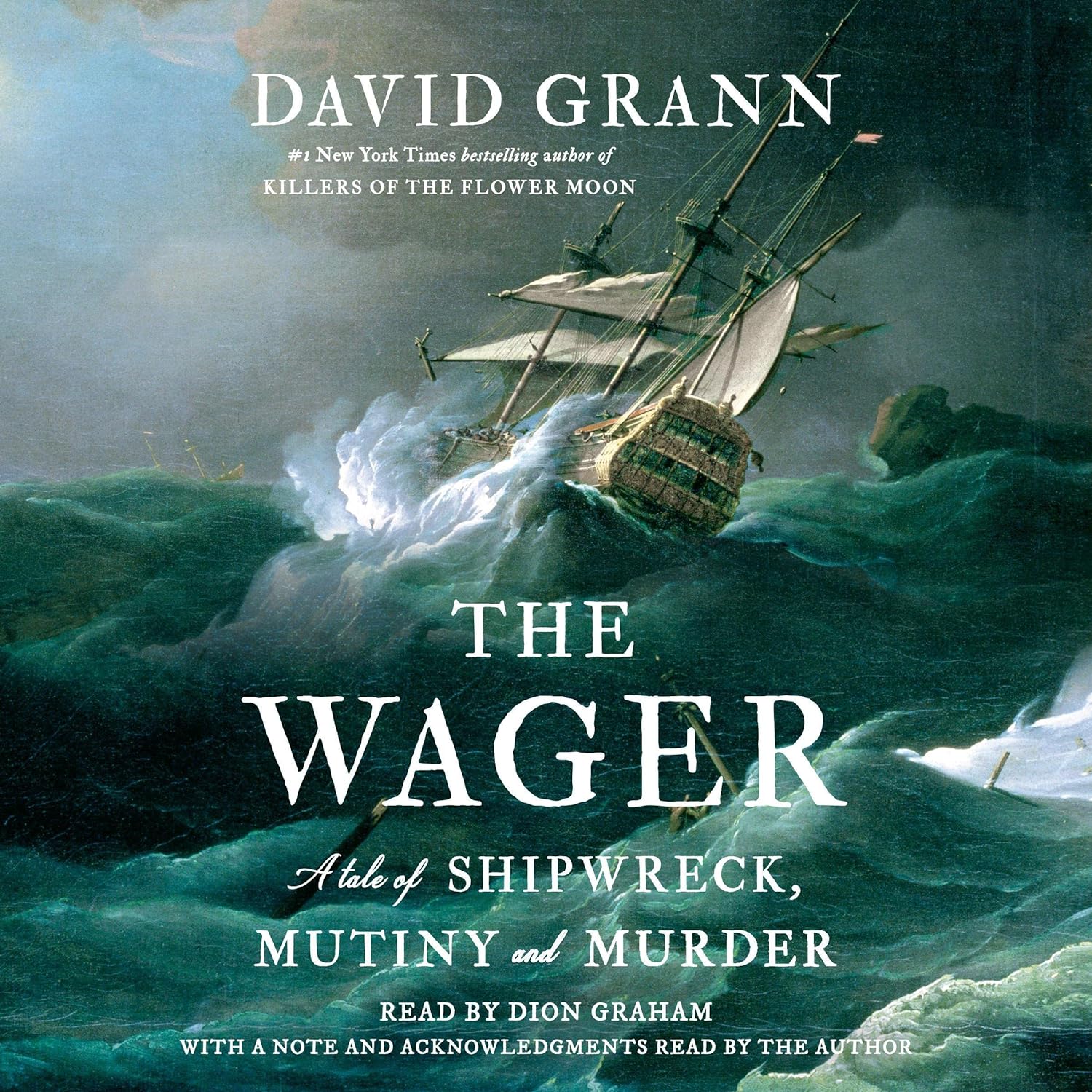
The Wager
David Grann


 Amazon Best Sellers
 The New York Times Best Sellers


 67 Min Reading Time
 Audio Version Available
About this book
From the #1 New York Times bestselling author of Killers of the Flower Moon, comes a thrilling true story of shipwreck, survival, and the dark side of empire.
In 1742, a battered vessel carrying thirty emaciated men washed ashore in Brazil. They were the survivors of the HMS Wager, wrecked off the coast of Patagonia while pursuing a Spanish treasure galleon. Hailed as heroes after enduring months of unimaginable hardship, their tale of survival against all odds captivated the world.
But six months later, another, even more dilapidated boat landed in Chile, carrying a mere three castaways with a far more disturbing story. They claimed the men who arrived in Brazil were not heroes, but mutineers.
Stranded on a desolate island, the crew of the Wager descended into anarchy, splintering into warring factions amidst accusations of tyranny, murder, and betrayal. As the survivors are brought before a court-martial, the truth becomes a desperate battle, with the accused facing the ultimate penalty: the hangman's noose.
The Wager is a gripping account of human behavior pushed to its extremes, raising profound questions about loyalty, morality, and the hidden costs of empire. With the narrative power of a thriller, David Grann exposes not only the harrowing fates of the Wager's crew, but also puts on trial the very foundations of imperial ambition.
Summary of Key Ideas
- •
The Brutal Reality of 18th-Century Naval Life
The Wager explores the brutal realities of 18th-century naval expeditions, highlighting the extreme hardships faced by sailors. The narrative vividly portrays the perils of navigating treacherous waters like Cape Horn, the constant threat of storms, disease, and starvation, and the psychological toll of prolonged isolation and deprivation. This key idea underscores the vulnerability of human life against the backdrop of imperial ambition, demonstrating how ordinary men were subjected to extraordinary suffering in the pursuit of geopolitical power. The book uses the disastrous voyage of the HMS Wager to reveal the dark underbelly of maritime exploration and the human cost of naval warfare during this period.
- •
The Elusive Nature of Truth and Narrative
A central theme in "The Wager" is the subjective nature of truth and the challenges of establishing a definitive account of events. The book presents conflicting narratives from the survivors of the shipwreck, each colored by their own perspectives, biases, and self-interests. Grann masterfully examines how these competing versions of reality emerge, influenced by factors such as personal motivations, social hierarchies, and the desire for self-preservation. The ambiguity surrounding the events on Wager Island forces the reader to question the reliability of historical accounts and the complexities of human memory and perception. Ultimately, the book suggests that truth is often elusive and multifaceted, shaped by individual experiences and the power of storytelling.
- •
Survival, Desperation, and the Collapse of Order
"The Wager" delves into the themes of survival, desperation, and the breakdown of social order in the face of extreme adversity. When the HMS Wager is shipwrecked, the veneer of civilization quickly erodes, and the crew descends into a state of anarchy and violence. The survivors are forced to make impossible choices in order to stay alive, leading to mutiny, theft, and even murder. This key idea explores the psychological and moral consequences of desperation, revealing the darkest aspects of human nature when pushed to the brink. The book raises profound questions about the limits of human endurance and the fragility of social structures in the absence of authority and resources.
- •
Class, Power, and Social Hierarchy at Sea
The book investigates the power dynamics and class divisions within the 18th-century British navy. The officers and gentlemen occupy a privileged position, while the ordinary seamen are subjected to harsh discipline and exploitation. The narrative exposes the systemic inequalities that fueled resentment and contributed to the eventual breakdown of order on Wager Island. The officers' attempts to maintain control are often undermined by their own incompetence and self-interest, further exacerbating the tensions among the crew. This key idea sheds light on the social hierarchies that shaped life at sea and the ways in which these inequalities contributed to the tragedy of the Wager.
- •
Imperial Ambition and its Consequences
"The Wager" serves as a commentary on the broader context of British imperial expansion and its impact on both Europeans and indigenous populations. The voyage of the HMS Wager was part of a larger strategic effort to gain control of vital sea lanes and expand British influence in the Pacific. The book implicitly critiques the ruthlessness and ambition of imperial powers, highlighting the devastating consequences of their actions on the environment and the people they encountered. The story also touches upon the interactions between the shipwrecked crew and indigenous communities, revealing the cultural misunderstandings and conflicts that often arose during this era of colonialism.
- •
The Failures of Leadership in Crisis
A significant aspect of "The Wager" is its exploration of leadership, or lack thereof, in times of crisis. Captain Cheap's decisions and actions following the shipwreck are constantly scrutinized, with the narrative suggesting his incompetence and inability to maintain control contributed significantly to the crew's suffering and the eventual mutiny. The book contrasts his leadership with other figures who emerge, highlighting the qualities necessary for effective leadership in extreme conditions – decisiveness, empathy and the ability to inspire confidence. This examination raises questions about the nature of authority, the burden of command, and the impact of leadership on the fate of individuals and groups.
Chapter Recap

About The Author
David Grann
Main Quotes
"The official chain of command does not always reflect natural leadership."
"Personal stories can both reveal and shape history."
"We all impose some coherence—some meaning—on the chaotic events of our existence."
"A ship was “three sheets to the wind” when the lines to the sails broke and the vessel pitched drunkenly out of control."
"God forbid he should say he was on a ship rather than in one."
"Men-of-war were among the most sophisticated machines yet conceived."
"They were devised to wage war."
"As the ship was ravaged by the winds, the men were ravaged by disease."
"To “toe the line” derives from when boys on a ship were forced to stand still for inspection with their toes on a deck seam."
"The conflict was the result of the endless jockeying among the European powers."
Who Should Read This Book
Readers of historical non-fiction
Fans of adventure and survival stories
Readers interested in maritime history
Those who enjoy true crime narratives
Readers of David Grann's previous books
Individuals fascinated by stories of leadership and mutiny
People interested in the Age of Exploration
Readers who appreciate detailed research and compelling storytelling
Those seeking books about the complexities of human nature under extreme duress
Book Summaries Like
The Wager



FAQ

Free Access to LitNotes