




 DISCORD
The War of the Worlds
H. G. Wells


 Apple Books


 39 Min Reading Time
 Audio Version Available
About this book
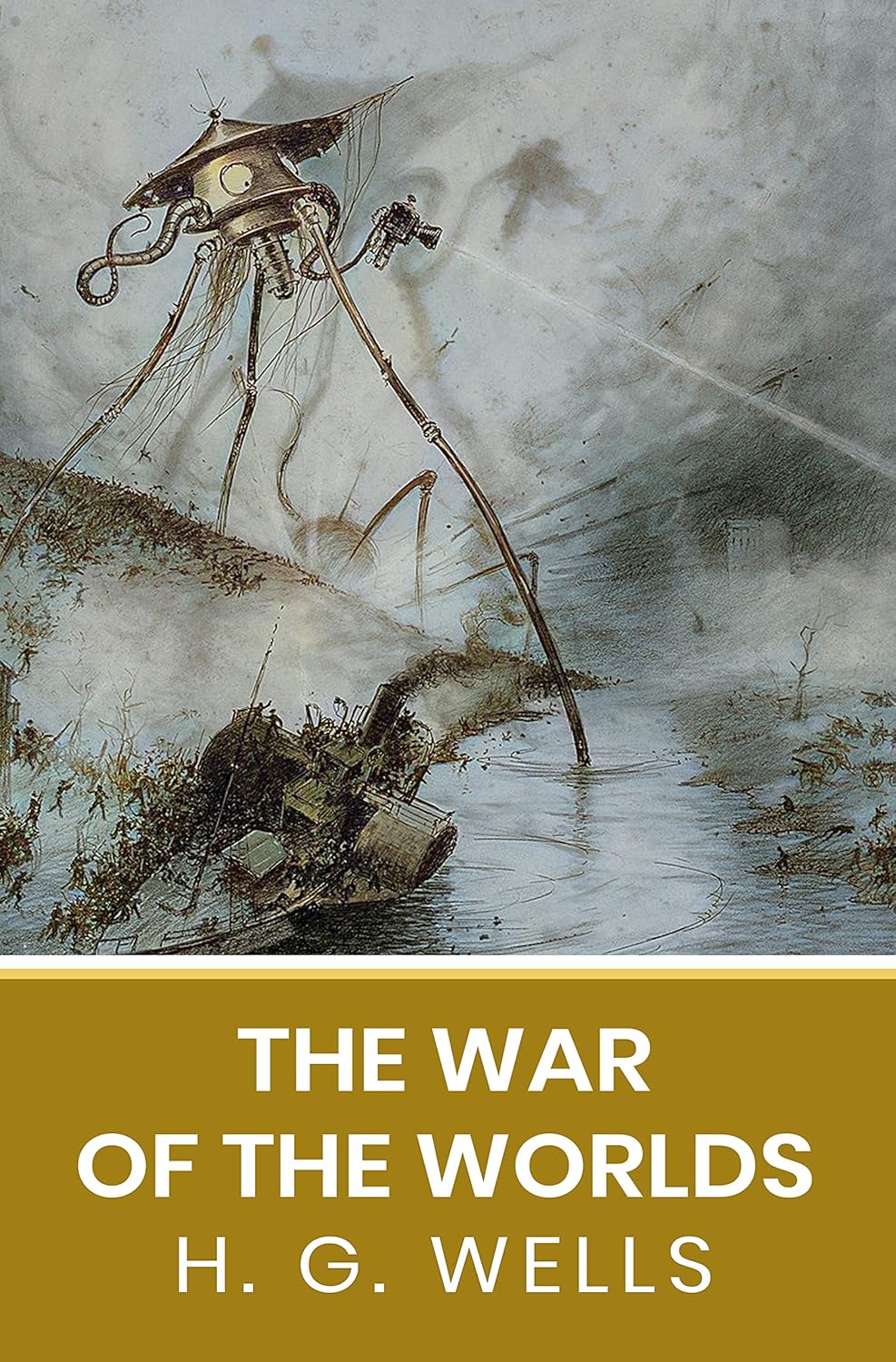
When mysterious cylinders land in the English countryside, unleashing a terrifying invasion force, humanity faces its darkest hour. H.G. Wells's "The War of the Worlds" is a chilling chronicle of a world under siege, as Martians, wielding unimaginable technology, lay waste to Victorian England. Through the eyes of an unnamed narrator, witness the harrowing descent into chaos, the desperate struggle for survival, and the fragility of civilization in the face of an implacable alien threat. A groundbreaking masterpiece of science fiction, this timeless tale explores themes of imperialism, evolution, and the insignificance of mankind in the vast cosmos, forever changing our perception of what lies beyond the stars. Experience the fear, the wonder, and the stark reality of a planet on the brink of annihilation in this seminal work that continues to captivate and terrify readers.
Summary of Key Ideas
- •
Challenging Human Arrogance
The narrative critiques human arrogance by portraying humanity as vulnerable and not necessarily the dominant species. The Martians' initial success highlights the limitations of human technology and understanding, forcing a reassessment of humanity's place in the universe. This theme is developed through the narrator's changing perspectives as he witnesses the destruction and chaos caused by the Martian invasion, and contrasts the perceived invincibility of Victorian society with its actual fragility. Ultimately, the novel suggests that humanity's self-importance is unfounded in the face of truly superior forces. The unexpected defeat of the Martians by earthly bacteria further underscores this point, humbling humanity in an ironic twist.
- •
Imperialism and Colonization
Wells uses the Martian invasion as a commentary on British imperialism, drawing parallels between the Martian conquest of Earth and the European colonization of other lands. The Martians' ruthless exploitation of Earth's resources and disregard for human life mirror the actions of colonizers. By depicting the invasion from the perspective of the invaded, Wells prompts readers to consider the ethical implications of imperial expansion and the suffering inflicted upon colonized populations. This theme encourages a critical examination of power dynamics and the justification of domination in the name of progress or civilization.
- •
The Struggle for Survival
The novel explores the theme of survival under extreme circumstances, depicting the varied responses of individuals and communities to the Martian invasion. Some characters exhibit resourcefulness and resilience, while others succumb to panic and despair. The narrator's journey reflects the psychological toll of the invasion, as he grapples with fear, loss, and the struggle to maintain hope. The fragmented nature of society during the crisis highlights the importance of adaptability and cooperation in the face of overwhelming adversity. Ultimately, the novel suggests that survival depends not only on physical strength but also on mental fortitude and the ability to find meaning in chaos.
- •
The Limits of Technology
Wells explores the limitations of technology and military might through the initial inability of human forces to effectively combat the Martians' advanced weaponry. The seemingly invincible Martian war machines expose the vulnerability of conventional warfare and challenge the prevailing belief in technological progress as a guarantee of security. The unexpected defeat of the Martians by microscopic organisms underscores the idea that even the most advanced technology is not immune to the forces of nature. This theme serves as a cautionary tale about the potential dangers of unchecked technological advancement and the importance of respecting the natural world.
- •
Individual Insignificance
The narrative emphasizes the insignificance of individuals in the face of large-scale events. The narrator's personal experiences are juxtaposed against the backdrop of global catastrophe, highlighting the limited impact of individual actions on the course of the invasion. The destruction of familiar landmarks and the breakdown of social order underscore the fragility of human existence and the insignificance of individual lives in the grand scheme of the universe. This theme invites reflection on the nature of mortality and the importance of finding meaning and purpose in a world where individuals are ultimately powerless against larger forces.
- •
Questioning Religion and Faith
The War of the Worlds subtly examines the role of religion in times of crisis. The initial reactions of some characters involve seeking solace or explanation through faith, but the overwhelming nature of the Martian invasion challenges traditional religious beliefs and institutions. The destruction and suffering witnessed throughout the novel raise questions about the existence of a benevolent God and the efficacy of prayer. While religion provides comfort for some, it ultimately proves inadequate in the face of the Martian onslaught, leading to a questioning of faith and a search for alternative sources of meaning and hope.
Chapter Recap

About The Author
H. G. Wells
Main Quotes
"No one would have believed in the last years of the nineteenth century that human affairs were being watched keenly and closely by intelligences greater than man's and yet as mortal as his own."
"Yet so vain is man, and so blinded by his vanity, that no writer, up to the very end of the nineteenth century, expressed any idea that intelligent life might have developed there far, or indeed at all, beyond its earthly level."
"The planet Mars, I scarcely need remind the reader, revolves about the sun at a mean distance of 140,000,000 miles, and the light and heat it receives from the sun is barely half of that received by this world."
"And before we judge of them too harshly we must remember what ruthless and utter destruction our own species has wrought, not only upon animals, such as the vanished bison and the dodo, but upon its own inferior races."
"By the toll of a billion deaths man has bought his birthright of the earth, and it is his against all comers."
"The fear I felt was no superstitious one, but a tangible, reasonable dread."
"This is a war, no more than there is war between man and ants."
"I felt like a rabbit in front of a rattlesnake."
"It's all over, he said. They have destroyed humanity. It will not be stopped."
"And scattered about it, some in their overturned war-machines, some in the now rigid handling-machines, and a dozen of them stark and silent and laid in a row, were the Martians--dead!--slain by the putrefactive and disease bacteria against which their systems were unprepared; slain as the red weed was being slain; slain, after all man's devices had failed, by the humblest things that God in his wisdom has put upon this earth."
Who Should Read This Book
Science fiction enthusiasts
Readers interested in classic literature
Fans of H.G. Wells
Readers interested in Victorian and Edwardian era literature
Those interested in alien invasion stories
Readers interested in social commentary through science fiction
Students studying science fiction or Victorian literature
People who enjoy stories about societal collapse and survival
Fans of adaptations of "The War of the Worlds" in other media (film, radio, etc.)
Readers interested in the history of science fiction
Book Summaries Like
The War of the Worlds


FAQ

Free Access to LitNotes