




 DISCORD
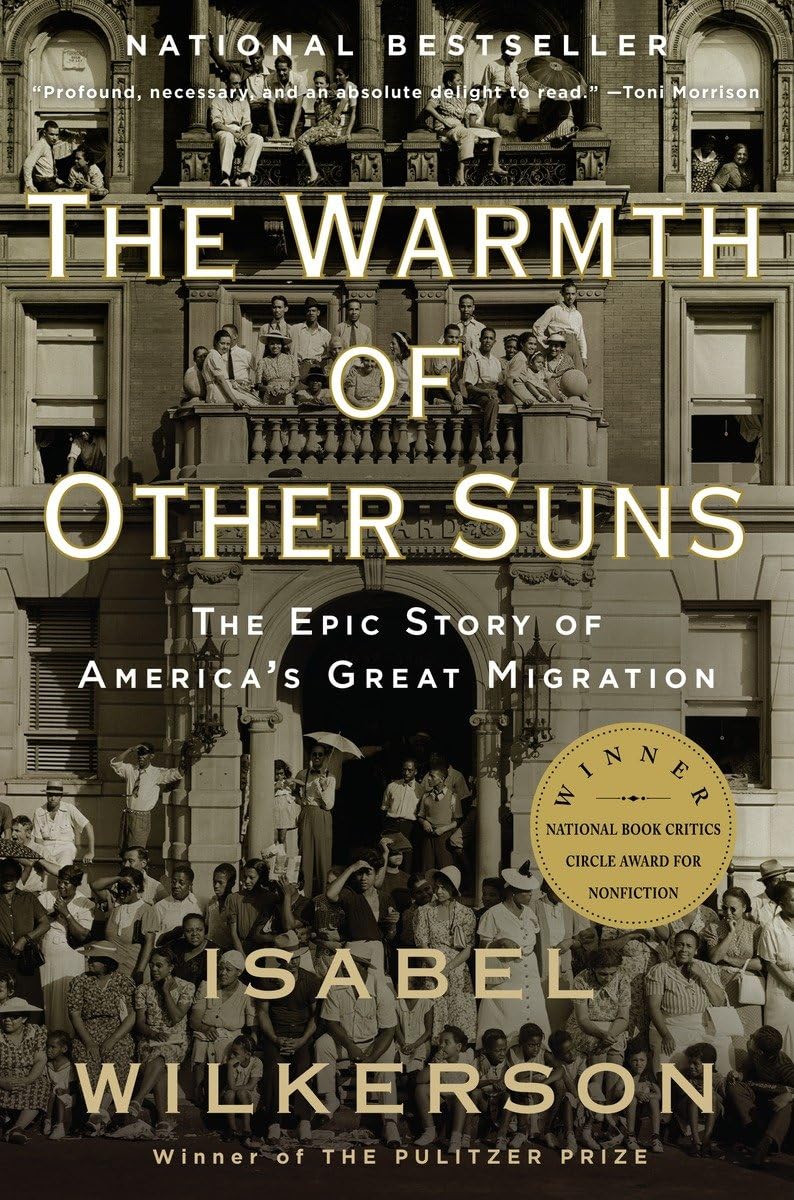
The Warmth of Other Suns
Isabel Wilkerson


 National Book Critics Circle Award
 Apple Books


 127 Min Reading Time
 Audio Version Available
About this book
In this sweeping and deeply human epic, Pulitzer Prize-winning author Isabel Wilkerson unveils one of the most significant, yet overlooked, movements in American history: the Great Migration. From 1915 to 1970, six million Black citizens fled the Jim Crow South, embarking on treacherous journeys to the North and West in search of freedom, opportunity, and a life free from oppression.
Through meticulous research and stunning prose, Wilkerson weaves together the personal stories of three unforgettable individuals: Ida Mae Gladney, who escaped the cotton fields of Mississippi for Chicago; George Starling, a fiery activist who fled Florida for Harlem; and Robert Foster, a driven surgeon who sought his fortune in Los Angeles.
"The Warmth of Other Suns" captures the heartbreak and hope of these courageous migrants as they navigated unfamiliar landscapes, faced unexpected challenges, and ultimately reshaped the cultural and political landscape of a nation. More than just a historical account, this is a timeless story of resilience, reinvention, and the enduring human spirit.
Summary of Key Ideas
- •
The Scale and Significance of the Great Migration
The Great Migration was a pivotal mass movement. This book highlights the sheer scale of the Great Migration, where millions of African Americans fled the Jim Crow South for better opportunities in the North and West. It wasn't just a series of individual decisions but a profound demographic shift that reshaped American society. Wilkerson emphasizes the courage and determination it took for these individuals to leave behind everything they knew in search of a better life, forever altering the cultural and political landscape of the nation.
- •
Escaping the Jim Crow South
Jim Crow South as the Catalyst. Wilkerson vividly portrays the oppressive conditions of the Jim Crow South, detailing the systemic racism, violence, and lack of economic opportunity that fueled the Great Migration. The book explores how these factors created an environment where African Americans felt compelled to leave their homes in search of basic human rights and a chance to live with dignity. This section emphasizes that the migration was not merely a quest for economic advancement but a desperate attempt to escape an unbearable existence.
- •
The Power of Personal Narratives
Individual Stories as Historical Narrative. Rather than relying solely on statistics and broad generalizations, Wilkerson tells the story of the Great Migration through the experiences of three individuals: Ida Mae Gladney, George Starling, and Robert Foster. By interweaving their personal narratives with historical context, she brings the Great Migration to life in a way that is both deeply human and historically informative. These stories provide a powerful lens through which to understand the hopes, dreams, and challenges faced by those who made the journey.
- •
The North as an Unfulfilled Promise
The Illusion of the North. While the North and West promised greater freedom and opportunity, the migrants often faced new forms of discrimination and hardship in their new homes. Wilkerson explores the challenges of adapting to unfamiliar environments, navigating racial prejudice in housing and employment, and maintaining a sense of identity in the face of cultural differences. This section highlights the complexities of the migration experience and the ongoing struggle for equality.
- •
Reshaping the Urban Landscape
Transformation of Northern and Western Cities. The Great Migration had a profound impact on the cities to which African Americans migrated, transforming their cultural, social, and political landscapes. Wilkerson examines how the influx of migrants contributed to the growth of black communities, the rise of black political power, and the emergence of new forms of cultural expression. This section emphasizes the lasting legacy of the Great Migration on American urban life.
- •
A Legacy Shaping Modern America
The Enduring Legacy of Migration. Wilkerson argues that the Great Migration continues to shape American society today, influencing everything from race relations to political alignments to cultural trends. By understanding the history of the Great Migration, we can gain a deeper appreciation for the challenges and opportunities facing African Americans in the 21st century. This section underscores the importance of remembering and learning from this pivotal chapter in American history.
- •
The Migrants' Agency and Resilience
Agency and Self-Determination. Despite facing immense challenges, the migrants were not simply passive victims of circumstance. Wilkerson emphasizes their agency and self-determination, highlighting the choices they made, the risks they took, and the resilience they demonstrated in the face of adversity. They actively sought to improve their lives and create a better future for themselves and their families. This section challenges narratives that portray African Americans as helpless or dependent, instead emphasizing their strength and agency.
- •
The Meaning of Place and Displacement
The Significance of Place. The book underscores the importance of place in shaping identity and opportunity. The decision to leave the South was not just about escaping hardship but also about seeking a place where one could feel safe, respected, and free. Wilkerson explores how the migrants' sense of belonging and connection to place was both disrupted and redefined by the migration experience. This section highlights the psychological and emotional toll of displacement and the search for a new home.
Chapter Recap

About The Author
Isabel Wilkerson
Main Quotes
"They were fleeing a world where they were restricted to the most menial of jobs, underpaid if paid at all, and frequently barred from voting."
"The people from Mississippi, Alabama, and east Arkansas might set out for Chicago or Detroit. Those from Louisiana and Texas and points west might go to California."
"It was the first time they could vote without fear of reprisal. It was the first time some could get skilled work or join a union."
"Migration is an act of faith."
"They did not cross the turnstiles of customs or fill out immigration forms. They were already citizens."
"They were exiles in their own country."
"They were like pilgrims, only instead of journeying to a shrine to pay homage to some sacred relic, they were fleeing the land of their birth for a place that now existed only in their imagination."
"Each left with the hope that life would be better wherever they landed than it had been where they were born."
"In Chicago, they could vote and send their children to better schools."
"The things that drew them were freedom and opportunity."
Who Should Read This Book
Readers interested in American history, particularly the Great Migration
African American studies enthusiasts
Individuals seeking narratives about race, class, and social justice
Readers of historical non-fiction and narrative journalism
Book clubs and discussion groups
People interested in personal stories and family histories
Those who enjoy in-depth, character-driven accounts of historical events
Readers interested in sociological studies of migration and its impact
Educators and students in history, sociology, and African American studies programs
Individuals seeking to understand the complexities of the American South and its legacy
Book Summaries Like
The Warmth of Other Suns


FAQ

Free Access to LitNotes