




 DISCORD
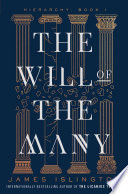
The Will of the Many
James Islington


 Goodreads Choice Awards
 Barnes & Noble Bestsellers


 202 Min Reading Time
 Audio Version Available
About this book
Enter a world of ambition, secrets, and forbidden power. In the Hierarchy, where social order is dictated by the arcane ability to transfer one's very will, the elite Catenan Academy stands as both a training ground and a battleground. Vis, the adopted son of a powerful senator, infiltrates the Academy under orders to uncover its hidden agenda and the truth behind his brother's mysterious death.
But within the Academy's walls, Vis finds himself caught in a web of deadly rivalries and perilous training. The key to success lies in mastering the art of Will—ceding one's energy and ambition to another, creating individuals of terrifying power. As Vis delves deeper into the Academy's secrets, he discovers a conspiracy that threatens to shatter the foundations of the Hierarchy itself. With enemies closing in and the lines between loyalty and betrayal blurring, Vis must decide how far he's willing to go to expose the truth and challenge a system built on the backs of the powerless.
Summary of Key Ideas
- •
The Perils of Concentrated Power
The Hierarchy's Corrupting Influence: The book explores how systems of power, like the Hierarchy, can become inherently corrupt. Despite its initial intentions, the Hierarchy's structure fosters inequality and manipulation, leading to widespread injustice. This is evident through the exploitation of the lower classes and the elite's control over vital resources. The novel questions whether any system of governance can truly remain just and equitable, or if the concentration of power inevitably leads to abuse.
- •
Aether: Power and Social Stratification
Aether as a Source of Power and Inequality: Aether, the energy source in the world, is not just a magical element but also a key factor in social stratification. The ability to manipulate Aether is concentrated within the upper classes, solidifying their dominance and creating a significant power imbalance. This disparity raises questions about the ethics of resource distribution and the consequences of allowing a select few to control essential energies. The narrative uses Aether to highlight real-world issues of access to resources and the perpetuation of inequality.
- •
Navigating Moral Gray Areas
Moral Ambiguity and Difficult Choices: The characters in "The Will of the Many" frequently face morally ambiguous situations where there are no easy answers. They are forced to make difficult choices that often have significant consequences for themselves and others. This exploration of moral complexity challenges the reader to consider the nuances of right and wrong, and to understand the pressures that can lead individuals to compromise their values. The book suggests that true morality lies not in adhering to rigid rules, but in grappling with difficult decisions and accepting the consequences.
- •
Silence as Complicity
The Cost of Complicity: The novel delves into the idea that remaining silent or inactive in the face of injustice is a form of complicity. Characters who are aware of the Hierarchy's corruption but choose not to challenge it are shown to be contributing to the problem. This theme encourages readers to consider their own roles in upholding or dismantling unjust systems, and to recognize the importance of speaking out against wrongdoing, even when it is difficult or uncomfortable.
- •
The Spark of Rebellion
Rebellion and Resistance: The protagonist's journey involves a growing awareness of the Hierarchy's flaws and a subsequent decision to resist its oppressive practices. This theme highlights the importance of rebellion against unjust systems and the potential for individuals to make a difference, even when facing overwhelming odds. The novel explores the challenges and sacrifices involved in resistance, as well as the potential for collective action to bring about meaningful change.
- •
Knowledge as a Weapon
The Power of Knowledge: Access to information and understanding the true nature of the world are crucial elements in the story. The Hierarchy actively suppresses knowledge to maintain its control, while the protagonist seeks to uncover hidden truths. This theme underscores the importance of education, critical thinking, and the pursuit of knowledge as tools for empowerment and liberation. The book suggests that knowledge is not just power, but also a means of challenging established authority and creating a more just society.
Chapter Recap

About The Author
James Islington
Main Quotes
""I will have to smile, and make friends, and pretend to be one of them and win. Because if I cannot, then those who want to control me, who know what I am, will take everything from me.""
""You fight the tyranny of the many, or you are one of them. Silence is a statement, Diago. Inaction picks a side. And when civilization rots from the inside, neutrality is just another word for complicity.""
""The truth is a luxury we can't afford.""
""Anyone can face pain, Diago. It's braving the moments after that define who we are.""
""The past is a guide, not a prison.""
""It's amazing what people will believe if you tell them what they want to hear.""
""Sometimes, the only way to win is to change the rules of the game.""
""Power doesn't corrupt; it reveals.""
""Every choice we make echoes through eternity.""
""The Will of the Many is a dangerous thing, especially when it's misguided.""
Who Should Read This Book
Fans of epic fantasy
Readers who enjoy magic school settings
Readers interested in Roman-inspired world-building
Fans of authors such as Brandon Sanderson and Patrick Rothfuss
Readers who appreciate complex political intrigue
Readers who enjoy coming-of-age stories with a focus on character development
Fans of morally gray characters and morally complex situations
Readers who like books with a fast-paced plot and intricate magic systems
Book Summaries Like
The Will of the Many


FAQ

Free Access to LitNotes