




 DISCORD
The Wise Man's Fear
Patrick Rothfuss


 Goodreads Choice Awards
 Apple Books


 419 Min Reading Time
 Audio Version Available
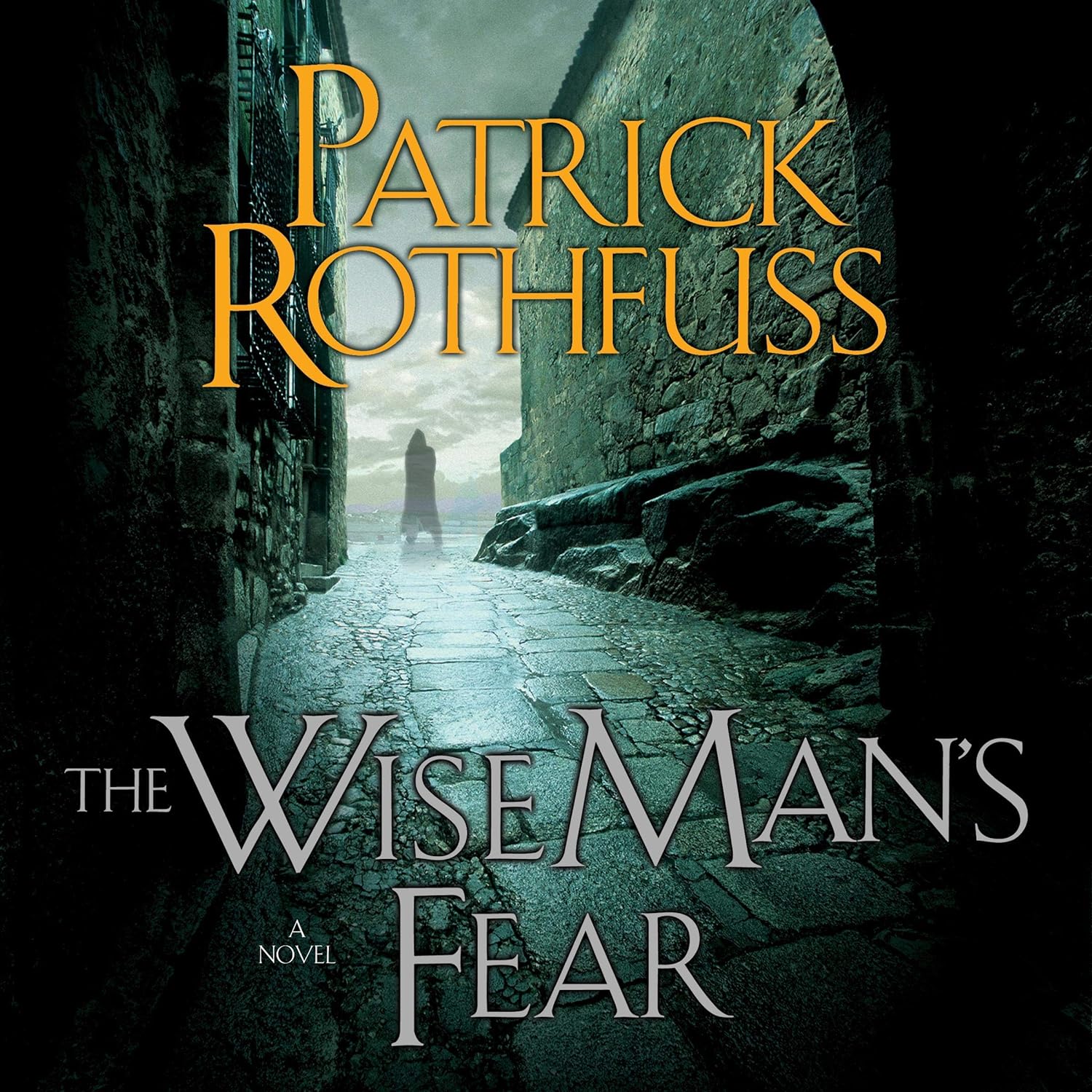
About this book
"There are three things all wise men fear: the sea in storm, a night with no moon, and the anger of a gentle man."
So begins The Wise Man's Fear, the second chapter in Patrick Rothfuss's epic Kingkiller Chronicle. Kvothe, the young arcanist and adventurer, continues his journey, seeking to unravel the mysteries of his past and forge his own legend.
Exiled from the University by a noble's wrath, Kvothe seeks his fortune in the wider world. His travels lead him to the exotic land of Vintas, where he navigates the treacherous currents of courtly politics, uncovers deadly conspiracies, and commands a band of mercenaries on a perilous quest.
But Kvothe's path is fraught with danger. He seeks the truth behind the enigmatic Amyr, the dreaded Chandrian, and the secrets surrounding his parents' murder. His quest will lead him to the legendary Adem mercenaries, force him to reclaim his family's honor among the Edema Ruh, and draw him into the mystical realm of the Fae, where he will face the alluring and deadly Felurian.
In a world of magic, music, and adventure, Kvothe strives to become the hero he was destined to be, even as he discovers the heavy price of legend.
Summary of Key Ideas
- •
The Unquenchable Thirst for Knowledge
The relentless pursuit of knowledge is a central theme, demonstrated through Kvothe's unwavering dedication to mastering various disciplines at the University and beyond. His thirst for understanding leads him to explore arcane arts, languages, music, and martial skills. This pursuit often places him in challenging and dangerous situations, highlighting the sacrifices and risks associated with seeking true knowledge. Kvothe's journey emphasizes that knowledge is not merely academic but a powerful tool that shapes one's identity and destiny, capable of both creation and destruction. His insatiable curiosity underscores the idea that learning is a lifelong endeavor with profound consequences.
- •
The Ever-Shifting Masks of Identity
Kvothe's evolving identity is a key idea, showcasing his transformation from a young Edema Ruh performer to a renowned figure shrouded in legend. His experiences at the University, his travels in the Vintas court, and his time in the Ademre contribute to this complex development. Kvothe grapples with balancing his Ruh heritage with his ambition to become a master arcanist and a figure of influence. The novel portrays the challenges of self-discovery as Kvothe navigates social expectations, personal desires, and the weight of his growing reputation. His evolving identity underscores the idea that our experiences shape who we are, but also that we have the agency to define ourselves.
- •
The Double-Edged Sword of Storytelling
The power and limitations of stories form a critical theme. Kvothe's narrative, framed within the present-day setting of the Waystone Inn, suggests the unreliability of memory and the subjective nature of truth. The stories he tells shape perceptions of him and influence events around him. The novel explores how stories can be manipulated, embellished, or even forgotten, highlighting the responsibility that comes with wielding narrative power. Kvothe's own legend, built upon whispers and rumors, contrasts with the reality he reveals, suggesting that the truth often lies hidden beneath layers of interpretation and bias. The story explores how both the teller and the listener influence the narrative.
- •
Bridging Worlds: Culture and Understanding
The exploration of different cultures and their values is prominent, particularly through Kvothe's interactions with the Adem and his time in the Vintas court. These experiences expose him to contrasting social structures, customs, and belief systems, broadening his understanding of the world. His time with the Adem, in particular, forces him to confront his own preconceived notions and adopt a new perspective on honor, discipline, and self-control. The novel uses these cultural encounters to highlight the diversity of human experience and the importance of empathy and open-mindedness in bridging cultural divides. It also examines the challenges of adapting to unfamiliar environments and the impact of cultural exchange on personal growth.
- •
The Power Hidden in True Names
Kvothe's growing understanding of naming—the ability to perceive and command the true names of things—is a central plot element. This arcane art represents a deeper connection to the world and a mastery over its fundamental forces. Kvothe's studies with Elodin and his own discoveries about naming demonstrate the power of language and perception in shaping reality. The concept of naming extends beyond mere nomenclature, delving into the essence of things and the potential to influence them through understanding. This pursuit of true names reveals the inherent magic within the world and the potential for those who can perceive it to wield extraordinary power. However, it also hints at the dangers of incomplete or misguided knowledge.
- •
Whispers of the Chandrian: Revenge and Mystery
The ever-present threat of the Chandrian and the mystery surrounding their motives continues to drive Kvothe's actions. His desire for revenge against the beings who murdered his family fuels his pursuit of knowledge and power. The Chandrian represent a shadowy force that disrupts the natural order and embodies the dangers of forgotten or suppressed knowledge. Kvothe's investigation into their history and their signs leads him down a perilous path, forcing him to confront powerful enemies and uncover uncomfortable truths. The mystery surrounding the Chandrian adds an element of intrigue and danger, underscoring the idea that some secrets are best left undisturbed.
- •
The Tangled Web of Relationships
Kvothe's relationships, particularly his complex connection with Denna, significantly shape his journey. These relationships highlight themes of love, loss, and the challenges of human connection. The volatile and often frustrating nature of his bond with Denna underscores the difficulty of truly understanding another person. His interactions with other characters, such as Auri and his fellow students, further illustrate the importance of friendship, loyalty, and the impact of human interaction on personal growth. These relationships provide emotional depth and demonstrate the vulnerability that comes with opening oneself to others.
- •
Heroism or Hubris: A Fine Line
The novel explores the blurred line between heroism and hubris through Kvothe's actions. While his intentions are often noble, his ambition and self-confidence sometimes lead him to make reckless decisions with far-reaching consequences. His pursuit of fame and recognition, coupled with his belief in his own abilities, can be interpreted as a form of hubris. The narrative subtly questions whether Kvothe's actions are truly heroic or simply self-serving, prompting readers to consider the motivations and consequences of his choices. This ambiguity adds complexity to his character and challenges the traditional notions of heroism.
- •
The Cthaeh's Shadow: Destiny and Choice
Kvothe's encounters with the Cthaeh, a mythical creature said to know all possible futures, represent a pivotal moment in the narrative. This encounter raises questions about free will, destiny, and the potential consequences of knowledge. The Cthaeh's influence on Kvothe's actions suggests that even seemingly small choices can have profound and unforeseen effects. This encounter introduces a sense of fatalism and raises moral questions about the responsibility of those who possess knowledge of the future. The Cthaeh serves as a cautionary figure, highlighting the dangers of meddling with forces beyond human comprehension.
- •
The Language of Music and Art
The importance of music and art as forms of expression and connection permeates the novel. Kvothe's exceptional musical talent allows him to communicate emotions, forge relationships, and even influence events. Music serves as a universal language that transcends cultural barriers and connects individuals on a deeper level. The novel celebrates the power of art to inspire, heal, and transform both the creator and the audience. Kvothe's lute becomes an extension of himself, allowing him to express his innermost thoughts and feelings in ways that words cannot.
Chapter Recap

About The Author
Patrick Rothfuss
Patrick Rothfuss (born June 6, 1973) is an American author, best known for his epic fantasy series *The Kingkiller Chronicle*. Born in Madison, Wisconsin, he matriculated at the University of Wisconsin-Stevens Point, initially studying chemical engineering before switching to English. Rothfuss spent nearly a decade working on his debut novel, [*The Name of the Wind*][1], which was published in 2007 to critical acclaim. The novel won the Quill Award and became a New York Times Bestseller. The success of his first book allowed him to focus on writing full-time, leading to the publication of the second book in the series, [*The Wise Man's Fear*][2], in 2011, which also topped the New York Times Bestseller list. In addition to his writing, Rothfuss founded Worldbuilders, a charity fundraiser. ([Source][3]) [1]: https://openlibrary.org/works/OL8479867W [2]: https://openlibrary.org/works/OL8479869W [3]: https://patrickrothfuss.com/content/author.html
Main Quotes
"There are three things all wise men fear: the sea in storm, a night with no moon, and the anger of a gentle man."
"Words are pale shadows of forgotten names. As names have power, words have power. Words can light fires in the minds of men. Words can wring tears from the hardest hearts."
"Hesitation is a sign of weakness."
"No man is brave that has never walked a hundred miles. If you want to know the truth of who you are, walk until not a person knows your name."
"Anyone can love a thing because. That’s as easy as putting a penny in your pocket. But to love something despite. That is rare and pure and perfect."
"A sword by itself does not decide anything. It is a tool in the hand of a man."
"It had flaws, but what does that matter when it comes to matters of the heart? We love what we love. Reason does not enter into it."
"The best lies are seasoned with a little truth."
"“Naming is the calling of a thing into being."
"Only a fool worries over what he can’t control."
Who Should Read This Book
Readers of epic fantasy and heroic fantasy.
Young adults and adults (16+) interested in coming-of-age stories.
Readers who enjoy detailed world-building and intricate magic systems.
Those who appreciate lyrical and poetic prose.
Readers interested in stories with elements of adventure, romance, and mystery.
Fans of character-driven narratives with a focus on personal growth.
Individuals who enjoy stories about self-discovery and the exploration of identity.
Readers who like morally grey characters.
Readers who appreciate stories with themes of music, storytelling, and the power of names.
Book Summaries Like
The Wise Man's Fear

FAQ

Free Access to LitNotes