




 DISCORD
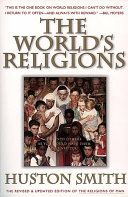
The World's Religions, Revised and Updated
Huston Smith

 Apple Books


 108 Min Reading Time
 Audio Version Available
About this book
For over half a century, Huston Smith's The World's Religions has been the definitive guide to understanding the enduring wisdom of humankind's spiritual traditions. This revised and updated edition explores the essential elements and unique teachings of Hinduism, Buddhism, Confucianism, Taoism, Islam, Judaism, and Christianity, offering a sympathetic and insightful perspective on how these religions function "from the inside."
More than just an objective survey, Smith's masterpiece invites readers to encounter each faith on its own terms, fostering a deeper appreciation for their distinctive values and contributions to the human experience. His clear, engaging prose and profound understanding of the sacred make this book an indispensable resource for students, seekers, and anyone curious about the diverse paths to spiritual enlightenment. Discover the transformative power of faith and gain a new understanding of our shared humanity through this timeless classic.
Summary of Key Ideas
- •
The Underlying Unity of Religions
The Perennial Philosophy: Smith emphasizes the underlying unity of all religions, suggesting that they share a common core of metaphysical truths despite their diverse expressions. This "Perennial Philosophy" posits a universal reality or Godhead, accessible through different paths of devotion and contemplation. He argues that understanding this shared foundation is crucial for interreligious dialogue and fostering mutual respect among different faith traditions. Smith explores how each religion embodies this philosophy in its unique way, providing a framework for appreciating the diversity within unity.
- •
Exploring the Shared Human Condition
The Human Condition: Smith explores fundamental questions about human existence that are central to all religions. This includes the nature of suffering, the search for meaning and purpose, and the potential for spiritual growth and transformation. He illustrates how different religions offer unique perspectives and paths for addressing these existential concerns, from the Buddhist emphasis on overcoming suffering through mindfulness to the Hindu concept of karma and reincarnation. Smith suggests that understanding these diverse approaches can provide valuable insights into the human experience and the quest for transcendence.
- •
Distinguishing the Sacred from the Profane
The Sacred and the Profane: Smith highlights the distinction between the sacred and the profane as a fundamental element in religious experience. He explains how religions create sacred spaces, rituals, and symbols to connect individuals with the divine or ultimate reality. These practices serve to elevate everyday life beyond the mundane and instill a sense of awe, reverence, and meaning. Smith examines how different religions manifest this distinction, from the Islamic emphasis on ritual purity to the Jewish concept of the Sabbath, illustrating the universal human need to create a sense of the sacred.
- •
Diverse Paths to Spiritual Fulfillment
Paths to Enlightenment/Salvation: A core concept is the exploration of various paths that religions offer to achieve enlightenment, salvation, or union with the divine. Smith details the unique practices, disciplines, and beliefs associated with each path, such as the Eightfold Path in Buddhism, the Bhakti Yoga in Hinduism, or the concept of grace in Christianity. He underscores that while the paths differ, they share the common goal of transcending the limitations of the ego and realizing one's true spiritual potential. Understanding these different approaches provides a broader perspective on the human quest for spiritual fulfillment.
- •
The Importance of Mystical Experience
The Role of Mysticism: Smith explores the mystical dimensions of each religion, emphasizing the direct, personal experience of the divine that transcends rational understanding. He showcases how mystics across different traditions have sought to achieve union with God or ultimate reality through practices such as meditation, contemplation, and ecstatic prayer. Smith suggests that mysticism represents the heart of religion, providing a powerful antidote to dogmatism and fostering a deeper appreciation for the mystery and ineffability of the divine. He emphasizes that mystical experience can serve as a bridge between different religious traditions, highlighting their shared spiritual core.
- •
Ethical and Social Dimensions of Religion
Social and Ethical Implications: Smith examines the social and ethical teachings of each religion, illustrating how they provide guidance for moral conduct and social harmony. He discusses the importance of compassion, justice, and service to others as central values in many religious traditions. Smith also addresses the challenges and controversies associated with religion, such as religious intolerance, violence, and social inequality. By critically examining both the positive and negative aspects of religion, he encourages a nuanced and informed understanding of its impact on individuals and societies.
- •
Understanding the Divine Across Religions
The Nature of God/Ultimate Reality: Smith delves into the various conceptions of God or ultimate reality found in different religions. He explores the distinctions between monotheistic, polytheistic, and non-theistic perspectives, examining how each tradition understands the nature of the divine and its relationship to the world. Smith also discusses the use of symbols, metaphors, and myths to represent the ineffable qualities of ultimate reality, recognizing that these representations are necessarily limited and imperfect. By comparing and contrasting different conceptions of the divine, he fosters a deeper appreciation for the diversity and complexity of religious thought.
- •
Rituals and Symbols as Pathways to Meaning
The Significance of Ritual and Symbolism: Smith emphasizes the importance of rituals and symbols in religious practice. He explains how these elements serve to communicate profound spiritual truths, evoke emotional responses, and create a sense of community among believers. Smith explores the diverse forms that rituals and symbols take in different religions, from the sacraments of Christianity to the mantras of Hinduism, illustrating their universal role in shaping religious experience. He suggests that understanding the meaning and function of rituals and symbols is essential for appreciating the richness and depth of religious traditions.
- •
The Power of Comparative Religious Study
Comparative Analysis: Smith consistently employs a comparative approach, drawing parallels and contrasts between different religious traditions. This method allows readers to gain a broader and more nuanced understanding of each religion, as well as to identify common themes and patterns across cultures. By highlighting both the similarities and differences between religions, Smith encourages a spirit of open-mindedness and intellectual curiosity, fostering a deeper appreciation for the diversity of human spiritual expression. This comparative framework makes the book valuable for students and anyone interested in interfaith dialogue.
Chapter Recap

About The Author
Huston Smith
Main Quotes
"What a strange fellowship this is, the God-seekers in every land, lifting their voices in the most disparate ways imaginable to the God of all life."
"We are born in mystery, we live in mystery, and we die in mystery."
"It is not a dead mystery that bogs down in befuddlement. Religious mystery invites."
"As a student of world religions, I see religion as the winnower of the wisdom of the human race."
"Never during its pilgrimage is the human spirit completely adrift and alone. From start to finish its nucleus is the Atman, the god-within."
"Every society and religion has rules, for both have moral laws. And the essence of morality consists, as in art, of drawing the line somewhere."
"The life of religion as a whole is mankind's most important function."
"The essence of education is that it be religious."
"We all carry it within us: supreme strength, the fullness of wisdom, unquenchable joy. It is never thwarted, and cannot be destroyed."
"Love is the movement within life that carries us, that enables us, that causes us to break out of what Alan Watts calls the “skin-encapsulated ego.”"
Who Should Read This Book
Individuals interested in comparative religion
College students taking religious studies courses
Readers seeking a broad overview of different faiths
People exploring their own spirituality
Those interested in interfaith dialogue and understanding
Individuals with a general interest in world cultures and philosophies
Readers looking for an accessible and engaging introduction to religious traditions
Book Summaries Like
The World's Religions, Revised and Updated



FAQ

Free Access to LitNotes