




 DISCORD
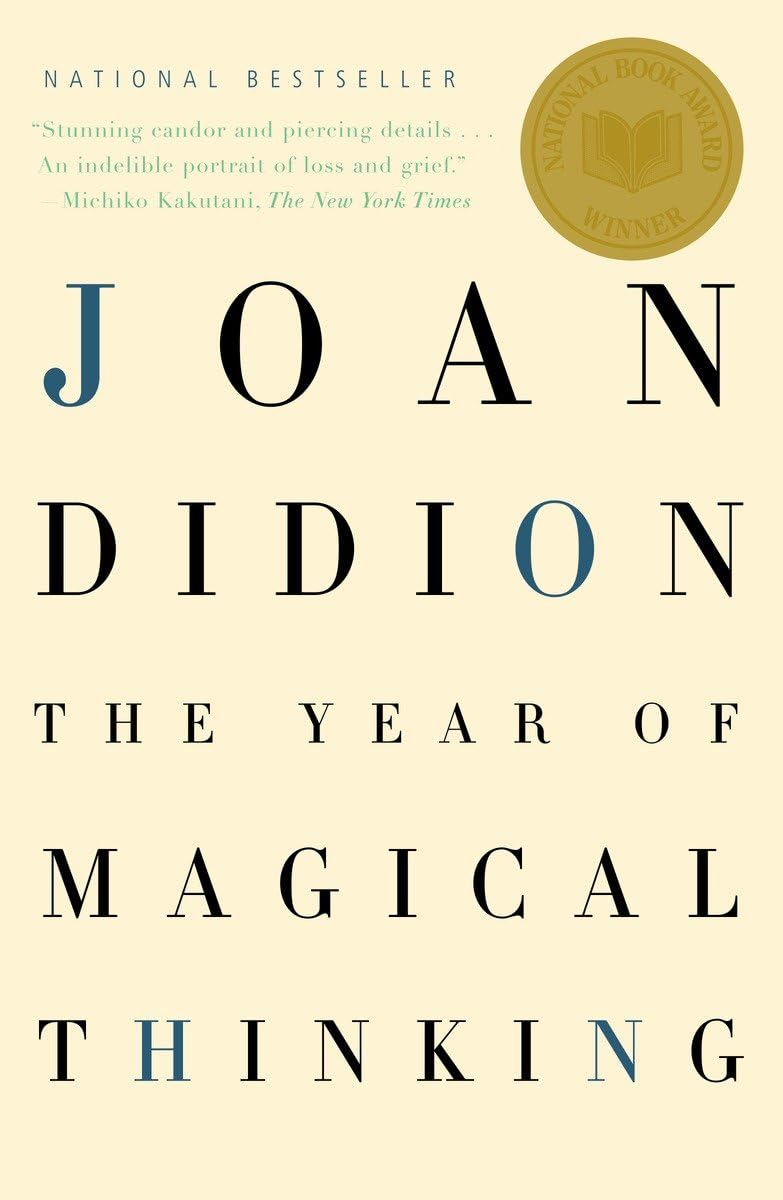
The Year of Magical Thinking
Joan Didion, Barbara Caruso


 National Book Awards
 Apple Books


 72 Min Reading Time
 Audio Version Available
About this book
In the space of a breath, Joan Didion's world shattered. Days before Christmas, her daughter Quintana fell gravely ill. Then, as she and her husband John Gregory Dunne sat down to dinner on New Year's Eve, he suffered a sudden, fatal heart attack. A forty-year partnership, a cornerstone of her life, vanished in an instant.
In The Year of Magical Thinking, Didion grapples with the unthinkable, dissecting a year marked by profound loss and surreal uncertainty. With unflinching honesty and piercing clarity, she explores not only the immediate shock of grief but also the bewildering "magical thinking" that takes hold as she struggles to reconcile a present without her husband with the indelible memories of their shared past.
A memoir of love, marriage, parenthood, and the agonizing process of mourning, Didion's National Book Award-winning masterpiece resonates with anyone who has faced the fragility of life and the enduring power of love. It is a testament to the strength of the human spirit, and a powerful exploration of how we make sense of life when the world as we know it disappears.
Summary of Key Ideas
- •
The Illusion of Control: Magical Thinking as a Coping Mechanism
The core idea of "magical thinking" revolves around Didion's irrational belief that she could somehow reverse her husband's death through her actions. This manifests in various ways, such as her refusal to discard his shoes, as she believed he would need them when he returned. This magical thinking is a coping mechanism, a way for Didion to exert some semblance of control in the face of overwhelming grief and the utter lack of control one has over death. It underscores the human need to find patterns and meaning, even in the most senseless tragedies, and highlights the desperate search for agency when confronted with powerlessness.
- •
Grief as a Disorienting and Cyclical Process
Didion meticulously dissects the experience of grief, portraying it not as a linear progression through stages, but as a cyclical and often chaotic process. She emphasizes the physical and emotional toll grief takes, detailing her own struggles with memory, disorientation, and the profound sense of emptiness. The book challenges conventional notions of mourning, suggesting that grief is a deeply personal and often isolating journey, with no prescribed timeline or set of emotions. It's a raw and honest portrayal of the disorienting landscape of loss.
- •
The Unreliable Nature of Memory in Grief
Memory plays a crucial role in Didion's grieving process. She obsessively revisits memories of her life with John, searching for clues or explanations for his death and attempting to reconstruct their shared past. However, memory is portrayed as unreliable and subjective, colored by emotion and the passage of time. Didion acknowledges the fallibility of memory, recognizing that her recollections may not always be accurate. This exploration of memory highlights the complex relationship between the past and the present, and how grief can distort our perception of both.
- •
The Profound Shock of Sudden Loss
The suddenness and unexpectedness of John's death are central to the book's impact. Didion grapples with the shock of losing her partner of forty years without warning, emphasizing the fragility of life and the unpredictable nature of fate. The narrative underscores how quickly life can change, and how unprepared we often are for the possibility of sudden loss. This element of surprise amplifies the sense of disorientation and disbelief that permeates the book.
- •
Writing as a Means of Processing Grief
Didion's professional identity as a writer is interwoven with her personal experience of grief. She approaches her grief with the same analytical and observational skills she employs in her writing, attempting to make sense of her emotions through language and narrative. Writing becomes a way for her to process her loss, to impose order on chaos, and to create a lasting tribute to her husband. The book itself is a testament to the power of writing as a tool for understanding and coping with profound grief.
- •
The Compounding Effect of Multiple Losses
While primarily focused on her grief over John's death, Didion also confronts the illness and eventual death of their daughter, Quintana. This secondary loss compounds her grief and further complicates her emotional journey. Quintana's illness serves as a reminder of the fragility of life and the inevitability of loss, adding another layer of pain and complexity to Didion's experience. The parallel narratives of loss highlight the interconnectedness of family relationships and the enduring impact of grief on multiple generations.
Chapter Recap

About The Author
Joan Didion
Main Quotes
"Life changes in the instant. The ordinary instant."
"Grief, when it comes, is nothing we expect it to be."
"I know why we try to keep the dead alive: we try to keep them alive in order to keep them with us."
"We are imperfect mortal beings, aware of that mortality even as we push it away, failed by memory, protected by myth."
"Marriage is memory... Marriage is time."
"You sit down to dinner and life as you know it ends."
"I was thinking as small children think, as if my thoughts or wishes had the power to reverse the narrative, change the outcome."
"That was California, where new money join old money, it did not matter if you were the real thing or an imitation."
"Was I deranged? Perhaps. But I was also right."
"Memory is the warper."
Who Should Read This Book
Adult readers
Individuals who have experienced loss or grief
Readers interested in memoirs and personal narratives
Those who appreciate introspective and emotionally honest writing
Fans of Joan Didion's work and her distinctive writing style
Readers interested in themes of marriage, death, and coping with tragedy
Individuals interested in psychological perspectives on grief and mourning
Book Summaries Like
The Year of Magical Thinking


FAQ

Free Access to LitNotes