




 DISCORD
These Truths: A History of the United States
Jill Lepore


 Goodreads Choice Awards
 Apple Books


 233 Min Reading Time
 Audio Version Available
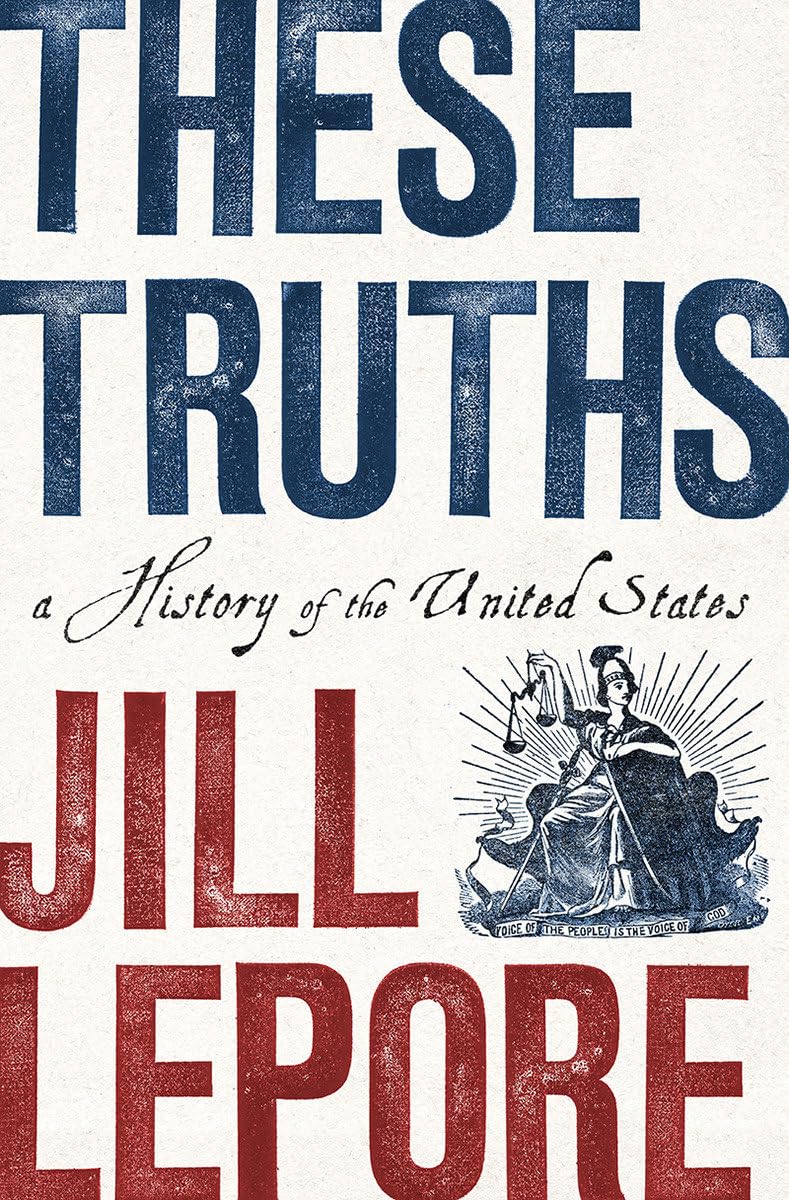
About this book
In this ambitious single-volume history, award-winning historian Jill Lepore delivers a magisterial account of America's origins and its ever-evolving, often contradictory story. These Truths embarks on a groundbreaking exploration, placing the very concept of truth—facts, evidence, and inquiry—at the heart of the American narrative.
Beginning in 1492, Lepore's sweeping chronicle examines whether America has lived up to its founding ideals of political equality, natural rights, and the sovereignty of the people. Through the interwoven histories of politics, law, journalism, and technology, from colonial assemblies to Facebook News, she paints a vibrant and unflinching portrait of a nation wrestling with its identity.
Meet the iconic figures and unsung heroes who shaped the nation, from presidents and political masterminds to Frederick Douglass, Pauli Murray, and Phyllis Schlafly. Lepore confronts the enduring contradictions of a nation born from both liberty and slavery, asking us to grapple with the inheritance of the past. These Truths is a call to engage in the ongoing struggle for America's soul, recognizing that understanding our history is essential to the work of citizenship.
Summary of Key Ideas
- •
The Enduring Significance of "These Truths"
The American experiment rests on the foundational ideas articulated by Thomas Jefferson as “these truths,” emphasizing equality, liberty, and popular sovereignty. Lepore argues that the pursuit and struggle to uphold these ideals have been central to the American story, shaping its political, social, and cultural landscape. She emphasizes that the nation's history is a continuous effort to realize these promises, acknowledging both successes and failures in this ongoing quest. By framing the narrative around these core principles, Lepore provides a lens through which to examine the complexities and contradictions inherent in American identity and governance. The commitment to these truths serves as both a benchmark for progress and a reminder of the nation's historical shortcomings.
- •
The Transformative Power of Technology
Lepore underscores the vital role of technology and innovation in shaping American history, from the printing press and the telegraph to the internet and social media. She illustrates how technological advancements have consistently transformed communication, commerce, and culture, influencing political discourse and social movements. The book explores how new technologies have both democratized access to information and created new forms of inequality and manipulation, influencing elections and shaping public opinion. Lepore suggests that understanding the interplay between technology and society is crucial for comprehending the trajectory of American history and its ongoing challenges.
- •
The Liberty vs. Equality Paradox
A central theme in "These Truths" is the persistent conflict between liberty and equality throughout American history. Lepore argues that while Americans have consistently championed individual liberty, the pursuit of equality has often been fraught with tension and contradiction. She examines how various groups—including enslaved people, women, and minorities—have fought for equal rights and opportunities, challenging existing power structures and social norms. The book highlights the ongoing struggle to reconcile these competing values, revealing the ways in which the pursuit of liberty has sometimes undermined the quest for equality, and vice versa. Understanding this dynamic is crucial for grappling with the complex legacy of American ideals.
- •
The Cycle of Political Polarization
Lepore emphasizes the recurring role of political polarization in shaping American history. She demonstrates how deep divisions over issues such as slavery, immigration, and economic inequality have fueled intense political conflict and shaped the nation's trajectory. The book explores the ways in which partisan divides have influenced policy decisions, electoral outcomes, and social movements, often leading to gridlock and instability. Lepore suggests that understanding the historical roots of political polarization is essential for addressing contemporary challenges and fostering a more unified and cohesive society. She urges readers to recognize the dangers of unchecked partisanship and the importance of finding common ground.
- •
The Enduring Quest for Civil Rights
Throughout "These Truths," Lepore highlights the ongoing struggle for civil rights and social justice in the United States. She examines the efforts of various groups to overcome discrimination and inequality, including the abolitionist movement, the women's suffrage movement, and the civil rights movement of the 20th century. The book explores the legal, political, and social strategies employed by activists to challenge discriminatory laws and practices, and to promote greater inclusivity and equality. Lepore underscores the importance of recognizing the contributions of marginalized groups and the ongoing need to address systemic injustices in American society. She emphasizes that the pursuit of civil rights is an unfinished project, requiring continuous vigilance and action.
- •
America in a Global Context
Lepore's narrative emphasizes the importance of understanding the relationship between the United States and the wider world. She explores how American foreign policy, trade, and cultural exchange have shaped its identity and influenced global affairs. The book examines the impact of wars, treaties, and international organizations on American society, and the ways in which the nation's interactions with other countries have shaped its values and priorities. Lepore underscores the need to recognize the interconnectedness of nations and the importance of responsible global leadership. She urges readers to consider the ethical implications of American foreign policy and its impact on people around the world.
- •
The Enduring Legacy of Race
Lepore addresses the complex and evolving role of race in shaping American identity and history. The legacy of slavery and racial discrimination is a continuous thread throughout the book, examining its profound impact on American institutions, culture, and social relations. She explores the ways in which racial ideologies have been used to justify inequality and oppression, and the ongoing struggle to overcome racism and achieve racial justice. The book highlights the contributions of African Americans and other racial minorities to American society, and the importance of acknowledging and addressing the historical harms caused by racial prejudice.
- •
The Fragility and Resilience of American Democracy
Lepore explores the evolution of American democracy, highlighting both its strengths and weaknesses. She examines the expansion of voting rights, the role of political parties, and the influence of money in politics. The book also addresses challenges such as voter suppression, gerrymandering, and foreign interference in elections. Lepore stresses the importance of civic engagement and the need to protect democratic institutions from corruption and abuse. She urges readers to understand the historical struggles to secure and expand democracy, and to actively participate in shaping its future.
Chapter Recap

About The Author
Jill Lepore
Main Quotes
"The history of the United States is a history of argument."
"Americans are descended from conquerors and from the conquered, from the people held as slaves and from the people who held them, from the Union and from the Confederacy."
"The past isn't dead. It isn't even past."
"The problem wasn't the machine. The problem was the market."
"Information isn't knowledge. Knowledge isn't wisdom."
"The United States rests on a dedication to equality, which is chiefly a moral idea, rooted in Christianity, but it rests, too on a dedication to inquiry, reason, and evidence, which are philosophical ideals, rooted in the Enlightenment."
"Advertising is the genie of democracy."
"The arc of the moral universe is long, but it bends toward justice."
"The old political order was dying, and a new one was struggling to be born."
"We are a rebellious nation; our whole history is treason; our blood was attainted before we were born; our Creeds are infidelity to the Mother Church."
Who Should Read This Book
Readers interested in American history, civics, and political science
Students and educators in history and American studies programs
Individuals seeking a comprehensive and accessible overview of U.S. history
Readers of The New Yorker and other intellectual publications
Lifelong learners interested in understanding the foundations of American society
Those seeking a critical perspective on American history, including its contradictions and struggles
Readers interested in the role of ideas and technology in shaping American history
Individuals looking for a single-volume history of the United States
Book Summaries Like
These Truths: A History of the United States


FAQ

Free Access to LitNotes