




 DISCORD
Thinking for a Change
John C. Maxwell


 Apple Books


 45 Min Reading Time
 Audio Version Available
About this book
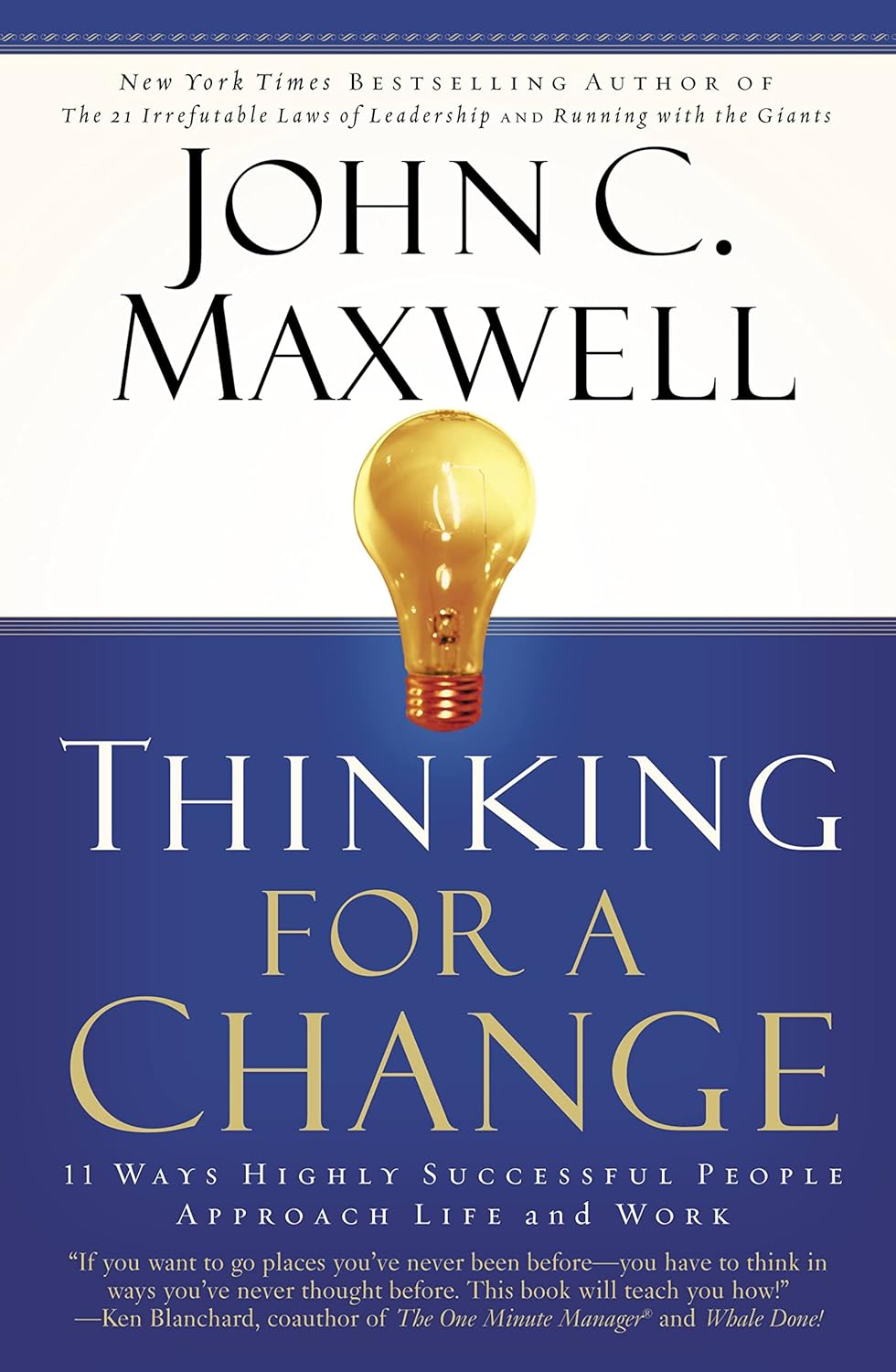
Unlock your potential and revolutionize your life with Thinking for a Change, the Wall Street Journal bestseller by America's leadership expert, John C. Maxwell. The core premise is simple yet profound: to achieve success, you must first learn to think successfully.
This empowering guide provides the keys to cultivate effective thinking habits. Through insightful lessons and interactive quizzes, Maxwell unveils how to assess your current thinking style and transform it with practical techniques. Learn to master:
- Big-Picture Thinking: See beyond your immediate needs to generate innovative ideas.
- Focused Thinking: Eliminate distractions and mental clutter to achieve your full potential.
- Creative Thinking: Break free from conventional thought patterns and unlock breakthroughs.
- Shared Thinking: Collaborate effectively to multiply results.
- Reflective Thinking: Learn from the past to build a brighter future.
Thinking for a Change is your indispensable guide to harnessing the power of your mind, not just telling you what to think, but teaching you how to think for lasting success and self-transformation.
Summary of Key Ideas
- •
Embrace Big-Picture Thinking
Successful people embrace big-picture thinking to identify opportunities and create innovative solutions. This involves stepping back from daily tasks to gain a broader perspective, allowing for the recognition of patterns, trends, and potential avenues for growth. Big-picture thinking encourages individuals to see how their work contributes to overall goals, fostering a sense of purpose and direction. It's about connecting the dots and understanding the interplay of various factors that influence outcomes, ultimately leading to more informed and strategic decision-making and innovative solutions.
- •
Cultivate Focused Thinking
Focused thinking allows individuals to concentrate their mental energy on specific goals, leading to increased productivity and efficiency. By eliminating distractions and honing in on essential tasks, focused thinking helps to clarify priorities and streamline efforts. It involves setting clear objectives, breaking down complex problems into manageable steps, and dedicating concentrated attention to each step. This approach enhances problem-solving abilities and fosters a deeper understanding of the task at hand, contributing to higher-quality work and better results by making progress in small increments.
- •
Foster Creative Thinking
Creative thinking involves generating novel and innovative ideas by challenging conventional wisdom and exploring new perspectives. This type of thinking requires an open mind, a willingness to experiment, and the ability to connect seemingly disparate concepts. It's about pushing the boundaries of what's possible and looking at problems from unconventional angles to uncover fresh solutions. Creative thinking thrives in environments that encourage curiosity, risk-taking, and collaboration, and it is crucial for adapting to change and driving innovation.
- •
Develop Realistic Thinking
Realistic thinking involves assessing situations and opportunities with objectivity and practicality. This means acknowledging both the potential benefits and the inherent challenges, allowing for a balanced and informed approach. Realistic thinkers avoid wishful thinking and instead base their decisions on evidence, data, and past experiences. By understanding the limitations and constraints, they can develop realistic plans and strategies that are more likely to succeed, mitigating risks and ensuring resources are used effectively. This grounded perspective is essential for making sound judgments and achieving sustainable results.
- •
Practice Strategic Thinking
Strategic thinking entails formulating long-term plans and aligning actions with overall goals to achieve a competitive advantage. It involves analyzing the market landscape, identifying key trends, and anticipating future challenges. Strategic thinkers consider the broader context and make proactive decisions to position themselves for success. They understand the importance of resource allocation, risk management, and adaptability in navigating a dynamic environment. This type of thinking requires a clear vision, a deep understanding of the industry, and the ability to anticipate and respond to change effectively.
- •
Embrace Possibility Thinking
Possibility thinking focuses on identifying potential opportunities and believing in the feasibility of achieving ambitious goals. It involves adopting a positive mindset, overcoming limiting beliefs, and envisioning a future filled with possibilities. Possibility thinkers are optimistic, resourceful, and resilient, and they inspire others to pursue their dreams. By focusing on what can be achieved, they unlock creativity, drive innovation, and turn challenges into opportunities. This mindset is crucial for fostering growth, driving progress, and achieving extraordinary results.
- •
Cultivate Reflective Thinking
Reflective thinking involves taking time to analyze past experiences, learn from mistakes, and identify areas for improvement. This process requires introspection, self-awareness, and a willingness to confront one's own biases and assumptions. Reflective thinkers continuously evaluate their performance, seek feedback, and adapt their approaches to enhance their effectiveness. By understanding what works and what doesn't, they can refine their skills, make better decisions, and achieve greater success. This practice promotes continuous growth and fosters a culture of learning and development.
Chapter Recap

About The Author
John C. Maxwell
Main Quotes
"Your life today is a result of your thinking yesterday. Your life tomorrow will be determined by what you think today."
"We cannot become what we need to be by remaining what we are."
"Change is inevitable. Growth is optional."
"The greatest mistake we make is living in constant fear that we will make one."
"You gain influence by adding value to people."
"When you add value, you become valuable to them."
"If we're growing, we're always going to be out of our comfort zone."
"Everything you now do is something you have chosen to do."
"Do not take the agenda that someone else has mapped out for your life."
"Plans rarely stay the same and are scrapped or adjusted as needed. Be stubborn about the vision but flexible with your plan."
Who Should Read This Book
Individuals seeking personal development
Business professionals and leaders
People interested in improving their mindset
Those looking for practical advice on achieving success
Individuals motivated to enhance their problem-solving skills
Readers of self-help and motivational books
People who appreciate John C. Maxwell's leadership teachings
Book Summaries Like
Thinking for a Change


FAQ

Free Access to LitNotes