




 DISCORD
Toxic Empathy
Allie Beth Stuckey


 Apple Books


 37 Min Reading Time
 Audio Version Available
About this book
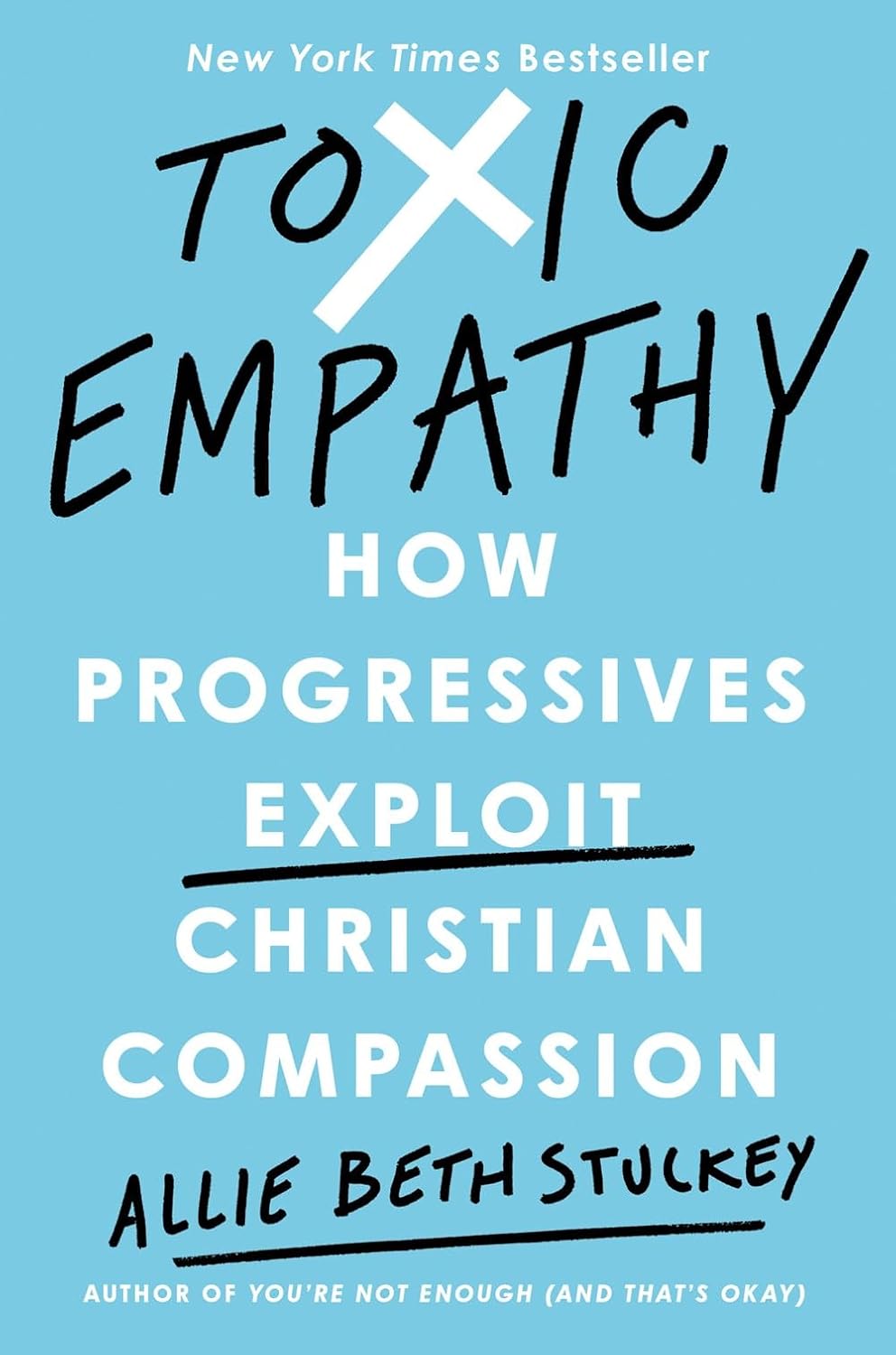
Are you sure you're showing compassion, or are you being manipulated? In Toxic Empathy, Allie Beth Stuckey reveals how progressives exploit the Christian virtue of compassion, twisting it into a dangerous tool that undermines truth and biblical principles. Stuckey dismantles the false notion that empathy should trump all else, exposing how it's used to justify destructive ideologies and silence dissenting voices on today's most divisive issues.
With sharp insight and unwavering conviction, Stuckey tackles the cultural battles surrounding abortion, gender, sexuality, immigration, and social justice, revealing the subtle ways toxic empathy distorts our understanding of right and wrong. Discover how to reclaim true Christian compassion, rooted in both love and truth, and stand firm against the manipulative forces that seek to redefine morality. Toxic Empathy is a call to discernment, urging Christians to think critically, engage compassionately, and defend unwavering truth in an increasingly deceptive world.
Summary of Key Ideas
- •
Empathy as a Tool of Manipulation
The core argument of "Toxic Empathy" is that empathy, while not inherently negative, is frequently weaponized, particularly by those on the left, to manipulate individuals—especially Christians—into adopting specific political and social viewpoints. Stuckey contends that this 'toxic empathy' prioritizes feelings and subjective experiences over objective truth and biblical principles, leading to compromised moral convictions and the acceptance of harmful ideologies. It's a perversion of genuine compassion, where emotional appeals are used to bypass rational thought and critical evaluation, ultimately undermining sound judgment and biblical discernment.
- •
Feelings vs. Objective Truth
Stuckey argues that 'toxic empathy' often elevates individual feelings above objective truth, particularly God's Word. This inversion leads people to prioritize emotional responses over sound judgment and biblical principles. The book emphasizes the importance of grounding decisions and beliefs in a solid, unchanging foundation rather than fleeting emotions. By prioritizing feelings, individuals become susceptible to manipulation and are more likely to compromise their convictions in the name of compassion, which Stuckey argues is a distorted understanding of love and empathy.
- •
The Importance of Discernment
A central theme in "Toxic Empathy" is the call for Christians to exercise discernment and critical thinking when confronted with emotionally charged issues. Stuckey urges readers to evaluate claims and narratives through the lens of biblical truth rather than blindly accepting them based on emotional appeals. She advocates for a balanced approach that combines genuine compassion with a commitment to upholding God's principles, encouraging believers to engage with the world in a way that is both loving and discerning, avoiding the pitfalls of 'toxic empathy' that can lead to compromised values.
- •
Key Issues Exploited by Toxic Empathy
The book identifies several key issues where 'toxic empathy' is commonly deployed, including abortion, gender, sexuality, immigration, and social justice. Stuckey delves into each of these topics, illustrating how emotional manipulation is used to advance specific agendas. By dissecting the rhetoric and tactics employed, she aims to equip readers with the ability to recognize and resist these manipulative strategies, fostering a more informed and biblically grounded perspective on these complex and often divisive issues. Each issue serves as a case study demonstrating how empathy can be twisted to promote views contrary to Christian values.
- •
Love Rooted in Truth
Stuckey underscores the necessity of love being rooted in truth, contrasting it with the distorted version promoted by 'toxic empathy.' She argues that genuine love, as defined by Scripture, involves both compassion and a commitment to upholding God's moral standards. 'Toxic empathy,' on the other hand, often prioritizes compassion to the exclusion of truth, leading to the acceptance of harmful behaviors and ideologies. Stuckey advocates for a balanced approach where love is expressed through both kindness and a firm adherence to biblical principles, guiding believers to engage with others in a way that is both compassionate and uncompromising.
- •
Resisting Worldly Compassion
The book warns against the dangers of conforming to the world's standards of compassion, which often conflict with biblical teachings. Stuckey encourages Christians to resist the pressure to compromise their beliefs in order to be seen as loving or tolerant by society. She advocates for a counter-cultural approach that prioritizes obedience to God's Word, even when it is unpopular or socially unacceptable. By standing firm on biblical principles, believers can offer a more authentic and transformative form of love to the world, one that is grounded in truth and leads to genuine flourishing.
Chapter Recap

About The Author
Allie Beth Stuckey
Main Quotes
"Toxic empathy says we must not only share their feelings, but affirm their feelings and choices as valid, justified, and good."
"The truth is, this toxic empathy is a dangerous guide for our decisions, behavior, and public policy. What someone wants or feels can't tell us what's morally right."
"Toxic Empathy urges us to feel the feelings of a particular “victim” while ignoring those on the other side of the moral equation."
"It becomes toxic when the meaning of empathy is changed, it is used to contradict God's Word, exclusively for political ends."
"Empathy is the ability to place yourself in someone else's spot to understand their perspective."
"Toxic empathy... like Jesus dying on the cross for the sins of the world, begging God to have mercy on those who killed Him."
"In Toxic Empathy, Allie Beth Stuckey argues that empathy has become a tool of manipulation by left-wing activists who bully people into believing that they must ..."
"It’s a call to examine whether our compassion is truly helping or enabling."
"Feelings are not inherently good or bad, but they are not inherently reliable either."
"Biblical love is not primarily a feeling but a commitment to the well-being of others based on truth and righteousness."
Who Should Read This Book
American conservative Christians
Individuals interested in political and social commentary from a Christian perspective
Those concerned about the influence of progressive ideologies on Christian values
Readers interested in the topics of abortion, gender, sexuality, immigration, and social justice from a conservative viewpoint
People who feel that empathy is being used as a tool for manipulation
Book Summaries Like
Toxic Empathy



FAQ

Free Access to LitNotes