




 DISCORD
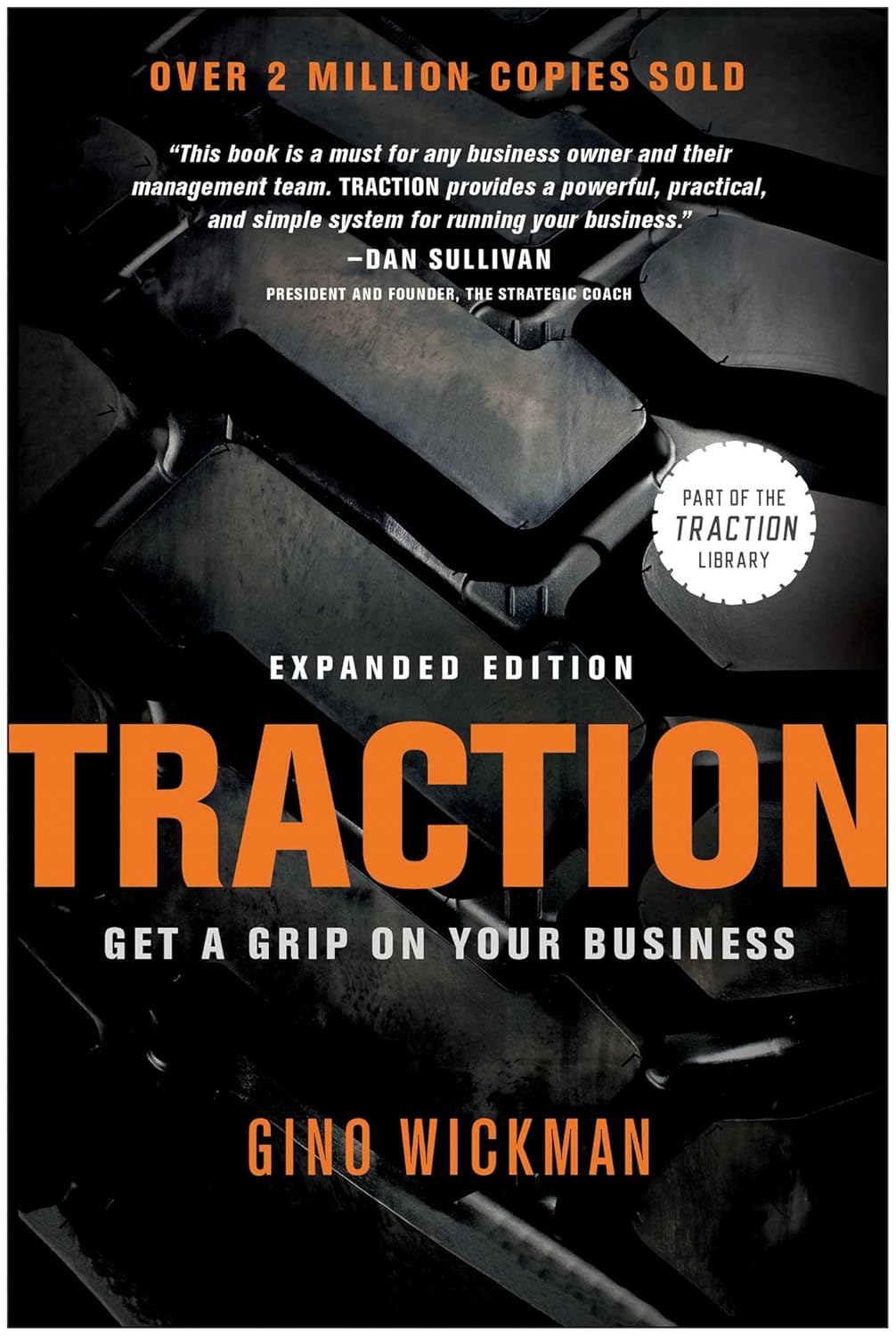
Traction
Gino Wickman


 Apple Books


 41 Min Reading Time
 Audio Version Available
About this book
Is your business running you, or are you running your business?
Entrepreneurs and business leaders often grapple with common frustrations: personnel conflicts, profit concerns, and stalled growth. Decisions stall, and implementation falters. But there's a solution that's neither complicated nor theoretical.
Traction introduces the Entrepreneurial Operating System (EOS), a practical, real-world method for achieving the business success you've always envisioned. Discover the secrets to strengthening the six key components of your business, unlocking simple yet powerful tools that will bring more focus, growth, and enjoyment to you and your leadership team.
Join the thousands of companies worldwide that are using Traction to build profitable, frustration-free businesses.
Summary of Key Ideas
- •
Mastering the Entrepreneurial Operating System (EOS)
The Entrepreneurial Operating System (EOS) is a holistic management system designed to help businesses gain traction and achieve their vision. It provides a structured framework encompassing various tools and processes to improve all aspects of the business, from clarifying vision to enhancing accountability. EOS aims to instill discipline and consistency in how the business operates, ensuring everyone is working towards the same goals. Implementing EOS involves mastering its six key components, ultimately leading to a more focused, efficient, and profitable organization.
- •
Defining a Clear and Compelling Vision
A clearly defined vision is the cornerstone of a successful business. 'Traction' emphasizes the importance of establishing a Vision/Traction Organizer (V/TO) to articulate the company's core values, core focus, 10-year target, marketing strategy, and a 1-year plan. The V/TO serves as a roadmap, guiding decision-making and ensuring everyone is aligned with the long-term goals. This clarity of vision enables the business to attract the right people, make strategic decisions, and stay focused on achieving its ultimate objectives. Without a well-defined vision, businesses often lack direction and struggle to maintain consistency.
- •
Right People, Right Seats
Having the right people in the right seats is crucial for effective execution. This means ensuring that each employee's skills and talents align with their job responsibilities and the company's core values. 'Traction' introduces the 'People Analyzer,' a tool for evaluating whether individuals fit the company culture and possess the necessary competencies for their roles. When employees are well-suited to their positions, they are more engaged, productive, and contribute positively to the overall success of the organization. Addressing people issues promptly and decisively is essential for maintaining a high-performing team.
- •
Data-Driven Decision Making with Scorecards
Data-driven decision-making is essential for identifying trends, tracking progress, and making informed choices. 'Traction' advocates for establishing a scorecard with a handful of key performance indicators (KPIs) that provide a real-time snapshot of the business's health. Regularly monitoring these metrics allows leaders to quickly identify and address potential problems, make data-backed adjustments to strategies, and ensure the business stays on track towards its goals. The emphasis on objective data promotes accountability and reduces reliance on guesswork or intuition.
- •
Solving Problems with the IDS Process
Addressing and resolving issues effectively is critical for continuous improvement. 'Traction' introduces the Issues Component, which provides a structured process for identifying, discussing, and solving problems. This involves creating an 'Issues List,' prioritizing the most pressing concerns, and systematically working through them using the IDS (Identify, Discuss, Solve) process. By proactively addressing issues, businesses can prevent them from escalating into larger problems and create a culture of continuous improvement and problem-solving.
- •
Documenting and Following Core Processes
Documenting and following core processes ensures consistency and scalability. The Process Component in 'Traction' emphasizes the importance of identifying and documenting the key processes that drive the business. This includes defining the specific steps involved in each process, assigning responsibilities, and ensuring everyone follows the established procedures. By standardizing processes, businesses can improve efficiency, reduce errors, and create a more predictable and consistent customer experience. Process documentation also facilitates training and onboarding of new employees.
- •
Gaining Traction Through Practical Tools
Gaining traction involves implementing practical tools and disciplines to execute the vision effectively. This includes setting clear priorities, conducting regular meetings, and fostering accountability. 'Traction' provides a range of tools and techniques for driving execution, such as the weekly Level 10 Meeting, which focuses on reviewing progress, addressing issues, and ensuring everyone is aligned. By consistently applying these tools and practices, businesses can improve their ability to execute strategies and achieve their goals.
- •
The Power of Level 10 Meetings
Level 10 Meetings are a cornerstone of the EOS system, designed to foster transparency, accountability, and efficient problem-solving. These weekly meetings follow a structured agenda, beginning with a review of key metrics, followed by a discussion of any pressing issues, and concluding with a clear set of to-dos for the week. The name 'Level 10' reflects the goal of making each meeting as productive and valuable as possible. These meetings ensure consistent communication, rapid issue resolution, and a collective focus on achieving company objectives.
- •
Fostering Accountability at All Levels
Accountability is a cornerstone of EOS, ensuring that every team member understands their responsibilities and is held responsible for achieving results. Clear roles, expectations, and metrics are defined, fostering a culture of ownership and commitment. Regular check-ins and performance reviews reinforce accountability, allowing for timely feedback and course correction. By emphasizing accountability at all levels, EOS promotes a high-performance environment where individuals are empowered to take initiative and contribute to the company's success.
Chapter Recap

About The Author
Gino Wickman
Main Quotes
"Vision without traction is merely hallucination."
"The underlying issue is always a few layers down. Most of the time, the stated problem is a symptom of the real issue, so you must find the root of the matter."
"If you cannot risk, you cannot grow. If you cannot grow, you cannot become your best."
"Most people are sitting on their own diamond mines. The surest way to find yours is through service."
"Problems are like mushrooms: When it's dark and rainy, they multiply."
"Clarify your vision and your values."
"You can't build a great organization on multiple operating systems—you must choose one."
"Accountability is the state or condition of being accountable. That is, being obliged to answer, explain, or justify one's actions and conduct."
"The more you pursue great ideas and execute them well, the better your organization becomes."
"A winning culture is the foundation for a winning company."
Who Should Read This Book
Owners and leaders of small to mid-sized businesses (SMBs)
Entrepreneurs seeking a structured business management system
Leadership teams looking to improve execution and accountability
Businesses experiencing growing pains and needing a scalable framework
Companies seeking to clarify their vision and improve team alignment
Managers aiming to implement a practical operating system
Organizations wanting to increase focus and efficiency
Businesses ready to move beyond hard work and determination to a more strategic approach
Book Summaries Like
Traction
FAQ

Free Access to LitNotes