




 DISCORD
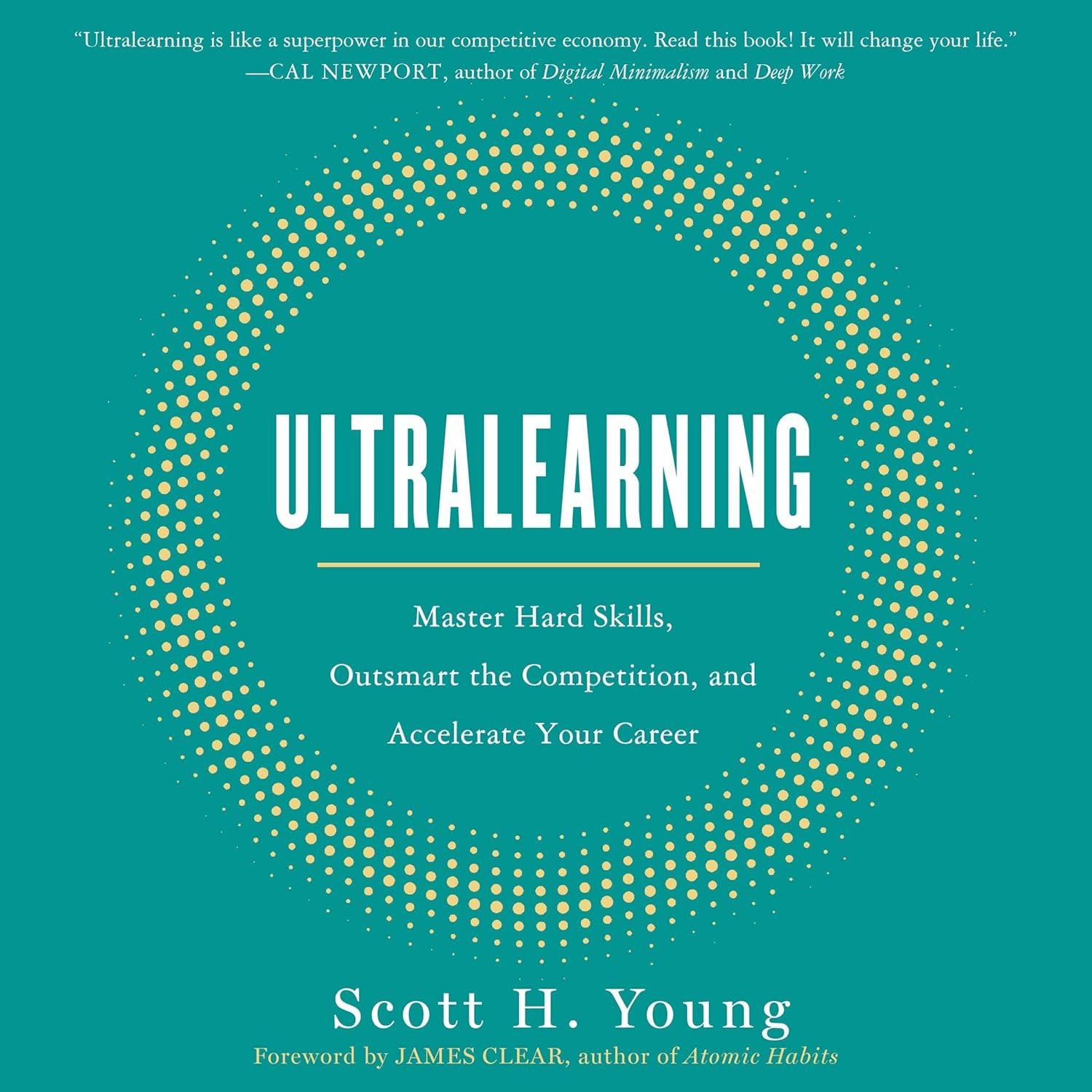
Ultralearning
Scott H. Young, Scott H Young


 Apple Books


 56 Min Reading Time
 Audio Version Available
About this book
In a world of rapid change, continuous learning is the ultimate competitive advantage. Ultralearning provides the strategies and mindset to master new skills quickly and deeply. Whether you aim to future-proof your career, reinvent yourself, or simply stand out, Scott H. Young unveils a powerful framework for self-education.
Drawing on cutting-edge research and inspiring stories of ultralearners—from Benjamin Franklin to a French Scrabble champion who didn't speak French—Young distills nine core principles for achieving rapid mastery. Learn how to break free from ineffective learning habits, design your own curriculum, and conquer complex subjects without traditional classrooms or exorbitant costs.
Whether your goal is to speak multiple languages, gain the equivalent of a college degree in record time, or build a business from scratch, Ultralearning is your guide to unlocking your full potential and thriving in the age of lifelong learning.
Summary of Key Ideas
- •
Map Your Learning Journey with Metalearning
Metalearning: Learn How to Learn. Before diving into a new subject, invest time in understanding the landscape. Research different learning methods, identify key resources, and understand the fundamental concepts. This initial investment allows you to create a roadmap, optimizing your learning path and avoiding common pitfalls. Effective metalearning involves asking questions like: What are the core concepts? What resources are available? What are the common challenges learners face? By answering these questions upfront, you can tailor your approach and accelerate your progress.
- •
Cultivate Laser-Like Focus
Focus: Sharpen Your Concentration. Ultralearning demands intense focus to maximize learning efficiency. Eliminate distractions, create a dedicated learning environment, and practice techniques to improve concentration. This might involve time blocking, using productivity tools, or simply training yourself to resist the urge to multitask. Deep focus allows you to absorb information more effectively and retain it for longer periods, leading to a more profound understanding of the subject matter. Purposefully designing your environment and habits will allow for dedicated focus and improve retention.
- •
Embrace Active Learning
Directness: Learn by Doing. The most effective way to learn is by directly engaging with the subject matter. Avoid passive learning methods like simply reading or watching videos. Instead, prioritize active learning techniques such as problem-solving, practicing skills, and applying knowledge in real-world scenarios. Directness forces you to confront your weaknesses and solidify your understanding through practical experience. By actively engaging, you're not just memorizing information; you're developing a deep, intuitive understanding of the subject.
- •
Attack Your Weak Spots with Focused Drills
Drill: Target Your Weaknesses. Identify and address your weakest points through targeted practice. Don't shy away from challenging areas; instead, break them down into smaller, manageable components and focus on mastering each one. Use techniques like spaced repetition and deliberate practice to reinforce your understanding and improve your skills. By systematically addressing your weaknesses, you can build a strong foundation and overcome obstacles that might otherwise hinder your progress.
- •
Boost Retention Through Regular Retrieval
Retrieval: Test Yourself Constantly. Regularly test yourself to reinforce learning and identify areas where you need further review. Use techniques like flashcards, practice questions, and self-testing to actively retrieve information from memory. Retrieval practice strengthens neural connections and improves long-term retention. By making testing a regular part of your learning process, you can ensure that you're not just passively absorbing information, but actively encoding it into your long-term memory.
- •
Harness the Power of Feedback
Feedback: Seek and Utilize Constructive Criticism. Actively solicit feedback from experts, peers, or mentors to identify areas for improvement. Be open to constructive criticism and use it to refine your approach and enhance your skills. Feedback provides valuable insights into your strengths and weaknesses, allowing you to make targeted adjustments and accelerate your learning. Don't be afraid to ask for help; feedback is an essential tool for growth and development.
- •
Master Long-Term Retention
Retention: Don't Just Learn, Remember. Employ strategies to ensure long-term retention of the material. Use techniques like spaced repetition, mnemonic devices, and interleaving to reinforce your understanding and prevent forgetting. Regularly review previously learned material to keep it fresh in your mind. Retention is crucial for building a strong foundation of knowledge and applying it effectively in the future.
- •
Embrace Experimentation and Innovation
Experimentation: Explore Beyond the Conventional. Don't be afraid to experiment with different learning techniques and approaches to find what works best for you. Try new resources, explore alternative perspectives, and challenge conventional wisdom. Experimentation fosters creativity, critical thinking, and a deeper understanding of the subject matter. By embracing a spirit of experimentation, you can personalize your learning journey and discover new and effective ways to acquire knowledge and skills.
- •
Strive for Conceptual Understanding
Deeper Knowledge: Go Beyond Memorization. Aim for a deep, conceptual understanding of the subject matter, rather than simply memorizing facts and formulas. Explore the underlying principles, connect different concepts, and develop a holistic view of the subject. Deeper knowledge allows you to apply your learning in novel situations, solve complex problems, and think critically about the information you encounter. This involves asking 'why' not just 'what'.
Chapter Recap

About The Author
Scott H. Young
Main Quotes
"Ultralearning is both a strategy for, and a mindset about, acquiring skills and knowledge."
"The more one learns, the greater the craving to learn more. The better one gets, the more one recognizes how much better one could become."
"The best ultralearners are those who blend the practical reasons for learning a skill with an inspiration that comes from something that excites them."
"Directness means learning by doing."
"Cultivate the ability to concentrate."
"Metalearning is, first, a map of the terrain. Second, it's a set of tools for navigation."
"Intentionality is about defining why you’re learning something, how the structure of your learning will help you get to that goal, and how you’ll know you’ve reached it."
"The opposite of learning isn’t forgetting, it’s failing to use."
"Retrieval is more potent for cementing memories than review."
"Feedback isn’t just about fixing mistakes, it’s about tuning your perception."
Who Should Read This Book
Students seeking accelerated learning techniques
Professionals aiming to upskill or reskill rapidly
Lifelong learners interested in self-directed education
Individuals pursuing personal development and mastery
Entrepreneurs and innovators needing to acquire new skills quickly
Educators and trainers looking for effective learning strategies
People interested in optimizing their learning processes for efficiency
Anyone seeking a competitive edge in their field through rapid skill acquisition
Individuals who enjoy self-experimentation and unconventional learning methods
Readers of self-help and productivity books focused on learning and skill development
Book Summaries Like
Ultralearning



FAQ

Free Access to LitNotes