




 DISCORD
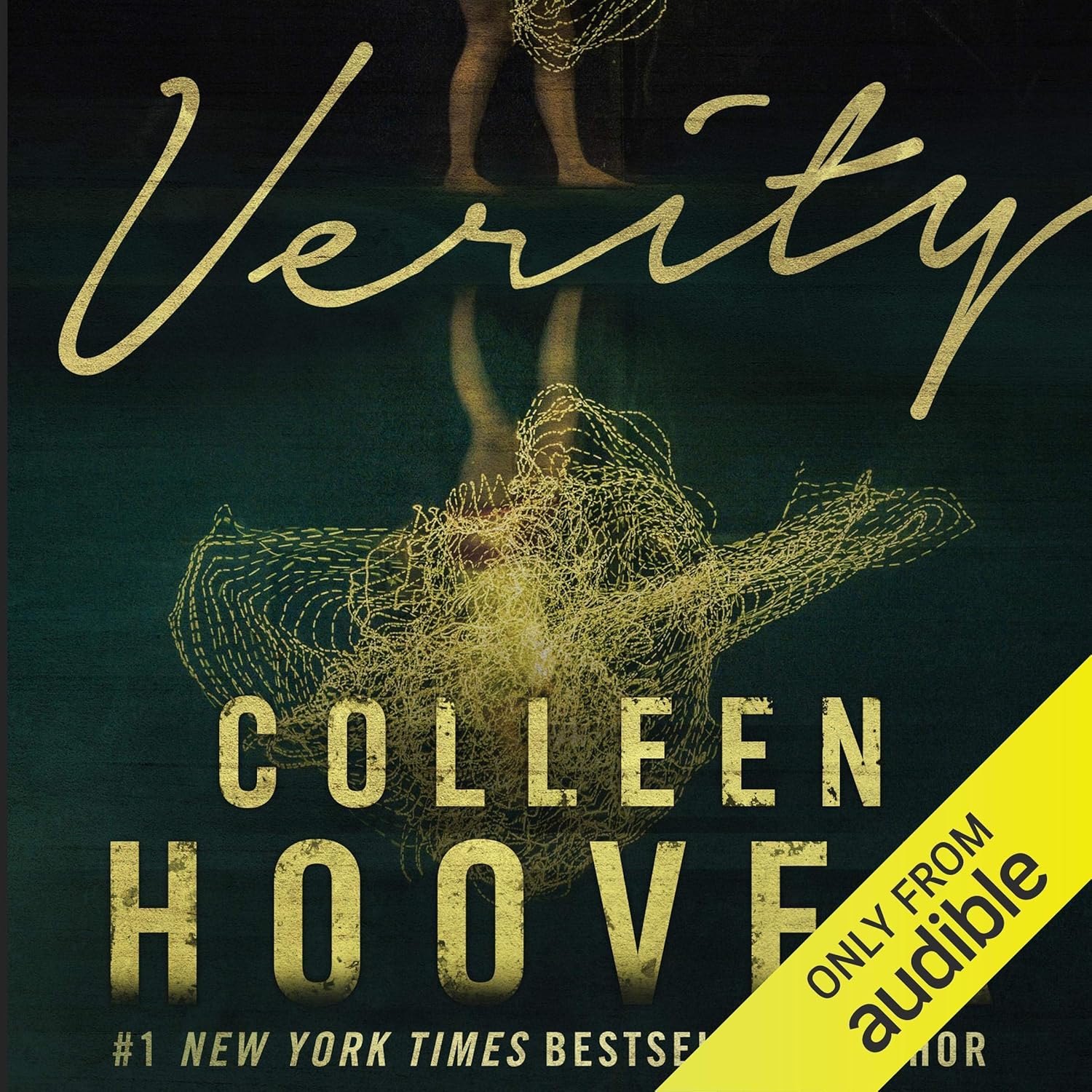
Verity
Colleen Hoover


 Amazon Best Sellers
 The New York Times Best Sellers


 78 Min Reading Time
 Audio Version Available
About this book
Lowen Ashleigh is a struggling writer on the brink of financial ruin when she receives the opportunity of a lifetime. Jeremy Crawford, husband of bestselling author Verity Crawford, hires Lowen to complete the remaining books in a successful series his injured wife is unable to finish.
Lowen arrives at the Crawford home, ready to sort through years of Verity's notes and outlines, hoping to get inside the mind of the author. What Lowen doesn't expect to uncover in the chaotic office is an unfinished autobiography Verity never intended for anyone to read. Page after page of chilling admissions, recounting horrific events and twisted perspectives from a woman unlike any she's ever encountered.
Now faced with a moral dilemma, Lowen wonders if she should reveal this disturbing manuscript to Jeremy. Or if she doesn't, can she live with keeping the secrets of a woman she's starting to believe is truly a monster? Compounding matters is Lowen's growing attraction to Jeremy, an attraction that could destroy them all.
Summary of Key Ideas
- •
Truth vs. Deception: The Elusive Nature of Reality
The blurred lines between truth and deception are central to the novel. The reader is constantly questioning what is real and what is a fabrication created by Verity. This theme is explored through the contrasting narratives of Verity's autobiography and the letter Lowen discovers, forcing the reader to consider the subjective nature of truth and how easily it can be manipulated. The story shows how appearances can be deceiving and how people are capable of constructing elaborate lies to protect themselves or achieve their desires. Ultimately, the novel suggests that discerning the truth is a complex and often impossible task.
- •
The Destructive Nature of Obsession
Obsession is a powerful and destructive force that drives much of the plot. Verity's obsession with Jeremy manifests in her manipulative behavior and attempts to control his life, even after the accident. Lowen, too, becomes consumed by Jeremy and the mystery surrounding Verity, blurring the lines of her professional assignment and personal desires. This theme explores the dark side of love and admiration, showcasing how it can warp one's sense of morality and lead to dangerous actions. The novel suggests that unchecked obsession can lead to tragic consequences, impacting not only the obsessed individual but also those around them.
- •
The Weight of Grief and Loss
Grief and loss permeate the narrative, shaping the characters' actions and motivations. Jeremy grapples with the loss of his daughters and the changes in Verity after the accident. Verity's writings reveal her perspective on these losses and how they have affected her mental state. Lowen's own past losses influence her interactions with Jeremy and his son. This theme highlights the complexities of dealing with grief, showing how it can manifest in different ways, from denial and anger to acceptance and healing. The novel explores how individuals cope with loss and how these experiences can shape their perceptions of the world and their relationships with others.
- •
Writing as a Tool for Manipulation
The power of writing and its potential for manipulation is a key element. Verity's ability to craft compelling narratives allows her to control the perceptions of those around her, even when her actions are questionable. The manuscript Lowen discovers becomes a tool for unraveling the truth, but also a source of further deception. This theme explores the responsibility of authors and the impact their words can have on readers. It raises questions about the ethics of storytelling and the potential for fiction to blur the lines between reality and fantasy, ultimately altering the course of people's lives.
- •
Moral Ambiguity and Shades of Gray
The novel explores the complexities of morality and the gray areas that exist between right and wrong. The characters face difficult choices that challenge their values and force them to confront their own capacity for both good and evil. Verity's actions, in particular, raise questions about the limits of acceptable behavior when driven by love, fear, or desperation. Lowen's choices also reflect this theme, as she navigates her attraction to Jeremy and her growing suspicion of Verity. Ultimately, the novel suggests that morality is not always clear-cut and that individuals are capable of both virtuous and reprehensible acts.
- •
Control and Power Dynamics
The concept of control and power dynamics is woven throughout the story. Verity attempts to exert control over Jeremy and her family, manipulating situations to maintain her desired outcome. Jeremy, in turn, struggles with his role as a caregiver and his desire to protect his son. Lowen's presence disrupts these established power dynamics, creating a new tension and forcing the characters to re-evaluate their positions. This theme explores the ways in which individuals seek to control their environments and relationships, and the consequences that arise when those power structures are challenged or subverted.
Chapter Recap

About The Author
Colleen Hoover
Colleen Hoover is the #1 New York Times and International bestselling author of multiple novels and novellas. She lives in Texas with her husband and their three boys. She is the founder of The Bookworm Box, a non-profit book subscription service and bookstore in Sulphur Springs, Texas. For more information and for a schedule of events, please visit colleenhoover.com. To contact Colleen and her team (Her team's name is Stephanie), please email hooverink@outlook.com
Main Quotes
"“I wasn’t heroic. I wasn’t simple. I was difficult. An emotionally challenging puzzle he wasn’t up for solving.”"
"“I feel like the ocean. I’m calm, steady. But beneath the surface, there’s a world of chaos I’m hiding.”"
"“Love isn’t always pretty. Sometimes you spend all your time hoping it’ll eventually be something different. Something better. Then, before you know it, you’re back to square one, and you’ve lost your heart somewhere along the way.”"
"“That's the thing about books. They let you travel without moving your feet.”"
"“Maybe that’s what love does. Maybe it wipes away all the things you thought were important. Maybe it makes you see things differently.”"
"“Here, I’m invisible. Unimportant. Manhattan is too crowded to give a shit about me, and I love her for it.”"
"“I’ve learned that people are much more complex than I ever thought. I used to think there was black and white, good and evil. Now I see that most people are gray. A thousand shades of it.”"
"“I want you to admit you felt something for me. Something real. Something that would have changed everything if I hadn't been too much of a coward to admit it.”"
"“Find what you love and let it kill you.”"
"“I think that’s the real reason we’re drawn to dark things. We like to feel the weight of them in our hands, test their edges, turn them over in our fingers to see if they’re really as sharp as we think they are.”"
Who Should Read This Book
Readers of psychological thrillers
Fans of dark romance
Readers interested in suspenseful stories with twists
New adult fiction readers
Readers who enjoy books with morally grey characters
Those who appreciate complex relationship dynamics in fiction
Readers of domestic thrillers
Book Summaries Like
Verity

![The Tenant [Large Print].](https://altauri-public.s3.amazonaws.com/litnotes/BookCover/gbs_686aee471d4dee74794ba556.jpeg)
FAQ

Free Access to LitNotes