




 DISCORD
Vlad the Impaler
Hourly History

 Apple Books


 7 Min Reading Time
 Audio Version Available
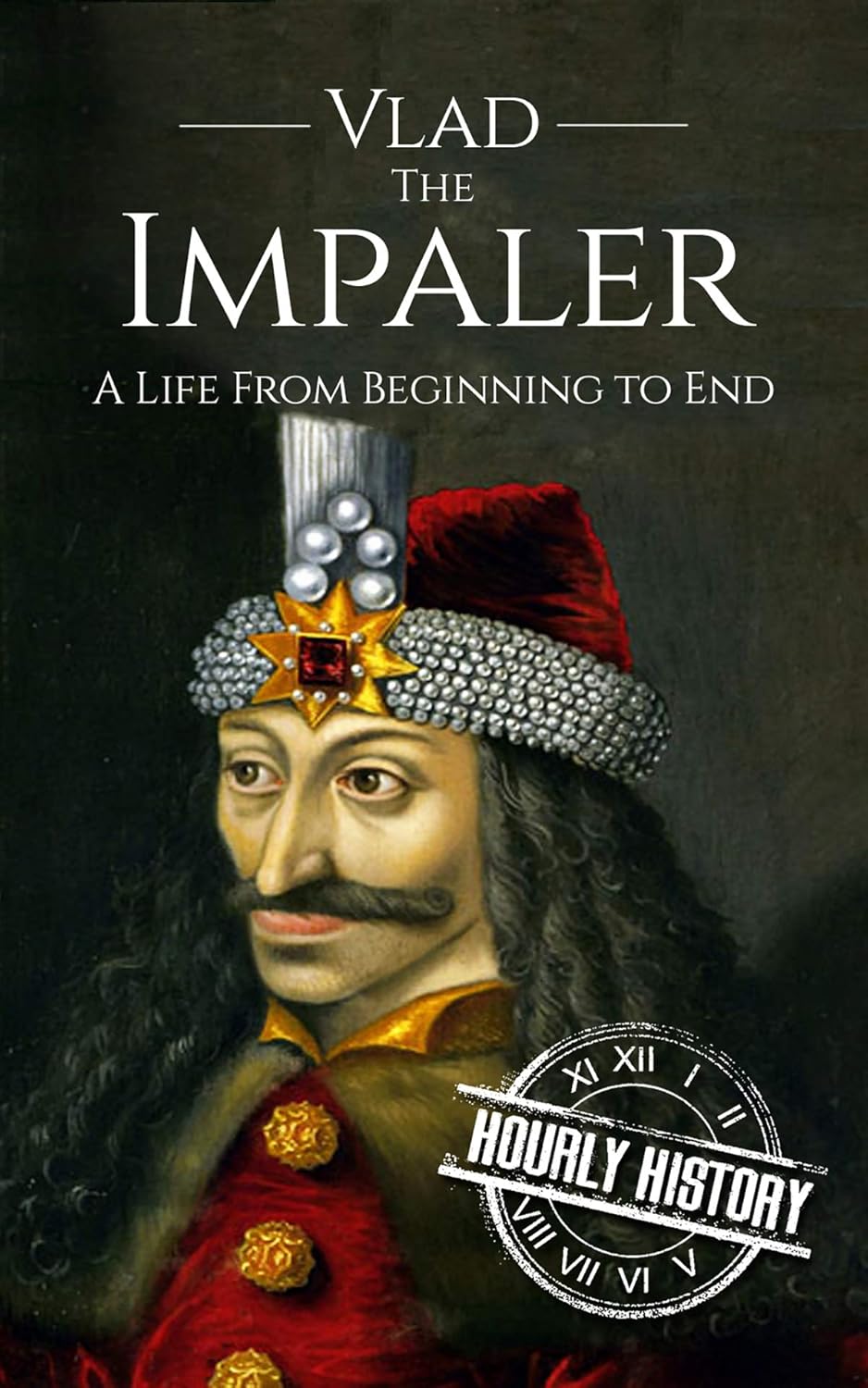
About this book
Uncover the truth behind the legend. Count Dracula, the dark, seductive figure of Bram Stoker's creation, has captivated imaginations for over a century. But is there a real-life counterpart to this immortal villain?
Many historians believe the answer lies with Vlad III Dracula, also known as Vlad the Impaler. Feared throughout Western Europe for his brutal methods, particularly his infamous penchant for impaling his enemies, Vlad is estimated to have killed between 40,000 and 100,000 people in his ruthless defense against the expanding Ottoman Empire. He spared no one, ruling his own people with an iron fist and reportedly reveling in their torment.
But the story of Vlad the Impaler is far more complex than the gruesome tales suggest. A product of his turbulent times, he was both a cruel tyrant and a celebrated hero in Romania, revered as a protector of his people.
Delve into the life and times of this controversial figure and discover:
- Vlad's formative years and family history.
- His ascent to power and first reign.
- His brutal war against the Ottomans.
- Imprisonment, his third reign, and death.
- Vlad Dracula's lasting legacy.
- The link between Vlad the Impaler and the fictional Count Dracula.
Explore the dichotomy of Vlad the Impaler, the man, the myth, and the legend that inspired one of literature's most iconic villains.
Summary of Key Ideas
- •
Early Life and Ottoman Captivity: Forging a Ruthless Ruler
Vlad's early life was marked by political intrigue and captivity, significantly shaping his future ruthlessness. Born into a volatile region, he and his brother Radu were held hostage by the Ottoman Empire as collateral for their father's loyalty. This experience exposed him to the inner workings of Ottoman politics and warfare, while also instilling a deep-seated resentment and a pragmatic understanding of power. This period of captivity was crucial in molding his character and influencing his later decisions as a ruler, contributing to his reputation for both brutality and strategic acumen. The constant threat of betrayal and violence during his time as a hostage cultivated a survivalist mindset that would define his reign.
- •
Defense Against the Ottoman Empire: A Reign of Resistance and Brutality
Vlad's primary reign was characterized by his relentless defense of Wallachia against the expanding Ottoman Empire. Facing a vastly superior military force, Vlad employed unconventional tactics, including scorched earth policies, guerrilla warfare, and psychological warfare, to weaken and demoralize the invaders. His most infamous tactic was impalement, which he used to create a horrifying spectacle that instilled fear in his enemies and deterred further advances. This period highlights Vlad's military genius and his unwavering commitment to protecting his homeland, even at the cost of immense cruelty. His resistance, though ultimately unsuccessful in permanently halting Ottoman expansion, cemented his legacy as a fierce defender of Wallachia.
- •
Internal Reforms and Consolidation of Power: Enforcing Order Through Impalement
Vlad implemented strict and often brutal measures to restore order and stability within Wallachia. He targeted corrupt nobles, rebellious boyars, and common criminals, using impalement as his primary method of execution. These actions, while undeniably cruel, were intended to consolidate his power, eliminate threats to his rule, and create a sense of justice and security among the general population. By ruthlessly suppressing dissent and enforcing his laws, Vlad aimed to establish a strong, centralized authority and ensure the prosperity of his realm. This internal consolidation was crucial for enabling Wallachia to resist external threats, particularly from the Ottoman Empire.
- •
The Psychology of Impalement: Warfare as Spectacle
Vlad's infamous use of impalement as a form of punishment and warfare contributed significantly to his terrifying reputation. The sheer scale of the impalements, often involving thousands of victims displayed outside city walls, was intended to strike fear into his enemies and deter any opposition. While this tactic was undeniably brutal, it also served as a powerful tool of psychological warfare, effectively disrupting enemy morale and deterring potential invaders. The image of forests of impaled victims became synonymous with Vlad's name, ensuring his place in history as a figure of unparalleled cruelty and inspiring the legend of Dracula.
- •
A Complex Legacy: Hero or Villain?
Vlad's complex legacy is marked by the contrast between his cruelty and his role as a defender of Christendom. While his methods were undeniably brutal, he was also viewed by many as a staunch protector of Wallachia and a bulwark against Ottoman expansion into Europe. His actions, though extreme, were often seen as necessary to safeguard his people and preserve their independence. This duality has contributed to the enduring fascination with Vlad the Impaler, as historians and popular culture continue to grapple with the question of whether he was a hero, a villain, or simply a product of his turbulent times.
- •
The Inspiration for Dracula: Fact and Fiction
The historical Vlad the Impaler served as a primary inspiration for Bram Stoker's fictional character, Count Dracula. Stoker drew upon Vlad's reputation for cruelty, his association with Wallachia (which became Transylvania in the novel), and his alleged bloodthirsty nature to create the iconic vampire. However, Stoker's Dracula is a highly fictionalized and romanticized figure, bearing little resemblance to the actual historical figure. The connection between Vlad and Dracula has contributed to the enduring popularity of both figures, blurring the lines between history and legend and solidifying Vlad's place in popular culture.
Chapter Recap

About The Author
Hourly History
Main Quotes
"Death must be so beautiful. To lie in the soft brown earth with the grasses waving above one's head and listen to silence. To have no yesterday and no tomorrow. To forget time. To forgive life."
"Vlad Tepes, or Vlad the Impaler, remains a controversial figure to this day."
"His methods were brutal, but they were also effective."
"Whether he was a hero or a villain depends on one’s perspective."
"He was a product of his time, a time of constant warfare and political intrigue."
"The line between justice and cruelty was often blurred."
"His image has been both demonized and romanticized."
"The name “Dracula” itself has become synonymous with evil and darkness."
"The legend of Vlad the Impaler continues to fascinate and horrify."
"History remembers him as a ruthless ruler who stopped at nothing to defend his land."
Who Should Read This Book
Readers interested in concise historical biographies
Individuals fascinated by Vlad the Impaler and the history behind the Dracula legend
Those seeking an accessible introduction to medieval history, particularly Romanian history
Readers who enjoy quick, informative reads on historical figures
Individuals interested in the history of Transylvania and the Ottoman Empire's influence in Europe
History enthusiasts looking for an overview before diving into more in-depth studies
Book Summaries Like
Vlad the Impaler
FAQ

Free Access to LitNotes