




 DISCORD
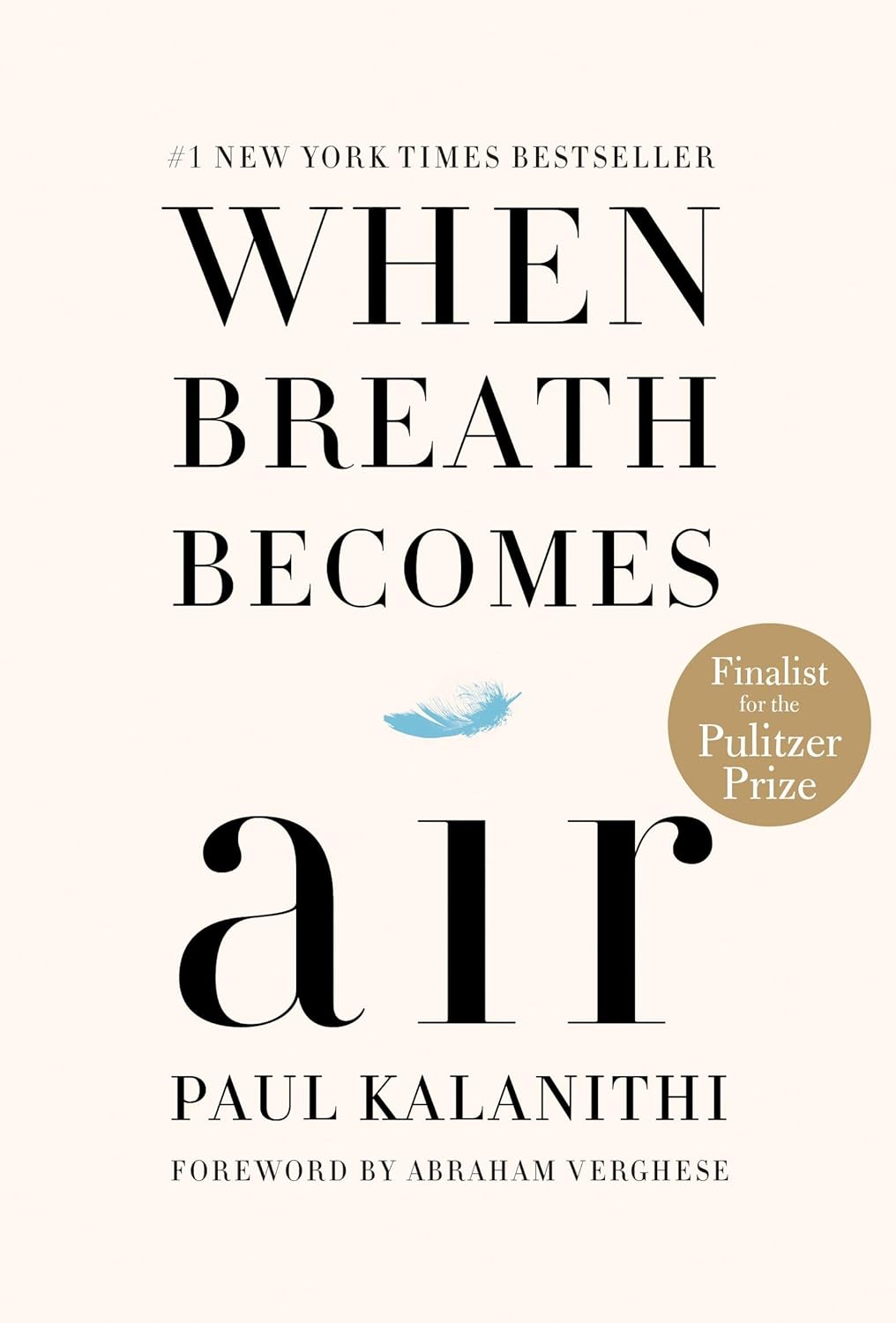
When Breath Becomes Air
Paul Kalanithi


 Amazon Best Sellers
 The New York Times Best Sellers


 30 Min Reading Time
 Audio Version Available
About this book
A #1 New York Times Bestseller and Pulitzer Prize Finalist, "When Breath Becomes Air" is an unforgettable exploration of life, death, and what it means to truly live. Dr. Paul Kalanithi, a brilliant neurosurgeon on the cusp of a promising career, is diagnosed with stage IV lung cancer at the age of thirty-six.
Suddenly, he transitions from treating the dying to facing his own mortality. With his future irrevocably altered, Kalanithi grapples with profound questions: What gives life meaning in the face of death? How does one navigate a future that has dissolved into an unending present? And what does it mean to embrace new life as his own fades away?
In this deeply moving and exquisitely written memoir, Kalanithi chronicles his transformation from a driven medical student to a doctor, and finally, to a patient and a new father confronting his own mortality. His words, penned as he faced his final days, offer a powerful and life-affirming reflection on the relationship between doctor and patient, and the challenge of living a meaningful life, even in the face of death. "When Breath Becomes Air" is a guide and a gift, a testament to the enduring power of the human spirit.
Summary of Key Ideas
- •
Redefining a Life Worth Living
The book explores the fundamental question of what makes a life worth living. Before his diagnosis, Kalanithi sought answers in literature, philosophy, and neuroscience, searching for meaning in knowledge and achievement. After being diagnosed with terminal cancer, he was forced to confront this question in a deeply personal and immediate way. He grapples with how to redefine his purpose and find value in his remaining time, shifting from the pursuit of professional success to cherishing relationships, experiencing simple joys, and leaving a legacy for his daughter. The memoir invites readers to reflect on their own values and consider what truly matters when facing life's finitude.
- •
The Physician as Patient
Kalanithi's journey highlights the complex relationship between the physician and the patient. As a neurosurgeon, he was accustomed to being the healer, the one in control. However, his diagnosis reverses this role, placing him in the vulnerable position of a patient. This shift provides him with a unique perspective, allowing him to empathize with his patients on a deeper level. He gains a profound understanding of the fear, uncertainty, and loss of control that patients experience. The book underscores the importance of compassion, empathy, and human connection in medical practice, reminding doctors to see beyond the disease and treat the whole person.
- •
Confronting Mortality with Grace
The confrontation with mortality is a central theme. Kalanithi faces his impending death with honesty and introspection. He explores the emotional and psychological challenges of accepting his fate, including fear, grief, and a sense of lost potential. However, he also finds moments of peace, acceptance, and even joy. He learns to appreciate the beauty of the present moment and to find meaning in the face of suffering. His writing offers a raw and unflinching look at the process of dying, providing insights into how to navigate this universal human experience with grace and dignity. He transforms his fear into a motivation to live each day to the fullest.
- •
Finding Meaning in Suffering
The memoir delves into the search for meaning in suffering. Kalanithi grapples with the existential questions raised by his illness: Why me? What is the purpose of suffering? He finds solace not in easy answers but in human connection, love, and the act of creating. Writing becomes a way for him to make sense of his experience and leave a legacy. The book suggests that meaning is not something to be found but something to be created, even in the midst of immense suffering. By sharing his story, Kalanithi offers hope and inspiration to others facing their own challenges.
- •
The Shifting Sands of Time
The importance of time and its perceived value undergoes a significant transformation in the book. Before his diagnosis, Kalanithi viewed time as a resource to be maximized, filled with accomplishments and career advancements. After his diagnosis, his perception of time drastically shifts. He realizes the preciousness and fragility of each moment. He learns to prioritize experiences and relationships over achievements, savoring simple pleasures and finding joy in the everyday. The book invites readers to reflect on how they spend their time and to consider what truly matters to them.
- •
The Enduring Power of Legacy
Legacy and the desire to leave something behind are powerful motivators for Kalanithi. As a doctor, he sought to impact his patients' lives directly. Faced with his own mortality, he turns to writing as a means of leaving a lasting impact. He wants to share his story, his insights, and his love with the world, especially with his newborn daughter, Cady. His book becomes his legacy, a testament to his life, his thoughts, and his enduring spirit. It explores the human need to make a difference and to be remembered, even after death.
Chapter Recap

About The Author
Paul Kalanithi
Main Quotes
"“You can’t ever reach perfection, but you can believe in an asymptote toward which you are ceaselessly striving.”"
"“There is a moment, a cusp, when the sum of gathered experience is worn like a suit, and the world slows, and silence falls, and for a fraction of a second, you see – before you act.”"
"“The tricky part of illness is that, as you go through it, your values are constantly changing. You try to figure out what matters, and then you keep figuring it out.”"
"“Science may not be the complete answer to life’s big questions, but science supplies the best and only tools to determine what is true.”"
"“Will having a newborn distract from the dying? I didn’t want to be distracted. On the other hand, I very much wanted to be distracted.”"
"“The days when I was too sick to get out of bed were unspeakably gloomy. But my wife would come in, hug me, and say, “I love you,” as if these were the most important words in the world.”"
"“Before my cancer was diagnosed, I knew that someday I would die, but I didn't know when. After the diagnosis, I knew that someday I would die, but I didn't know when. But now I knew it acutely.”"
"“What makes life meaningful enough to go on living?”"
"“Even if I’m dying, until I actually die, I am still living.”"
"“I began to realize that coming face to face with my own mortality, in a sense, had changed nothing and everything.”"
Who Should Read This Book
Readers interested in memoirs and autobiographies
Individuals dealing with or affected by terminal illness, cancer, or grief
Medical professionals, especially doctors, surgeons, and those in training
Readers interested in philosophical questions about life, death, and meaning
Those who appreciate thoughtful and introspective writing
Readers of literary nonfiction
People interested in stories about resilience and facing adversity
Individuals interested in healthcare, medical ethics, and the patient-physician relationship
Book Summaries Like
When Breath Becomes Air




FAQ

Free Access to LitNotes