




 DISCORD
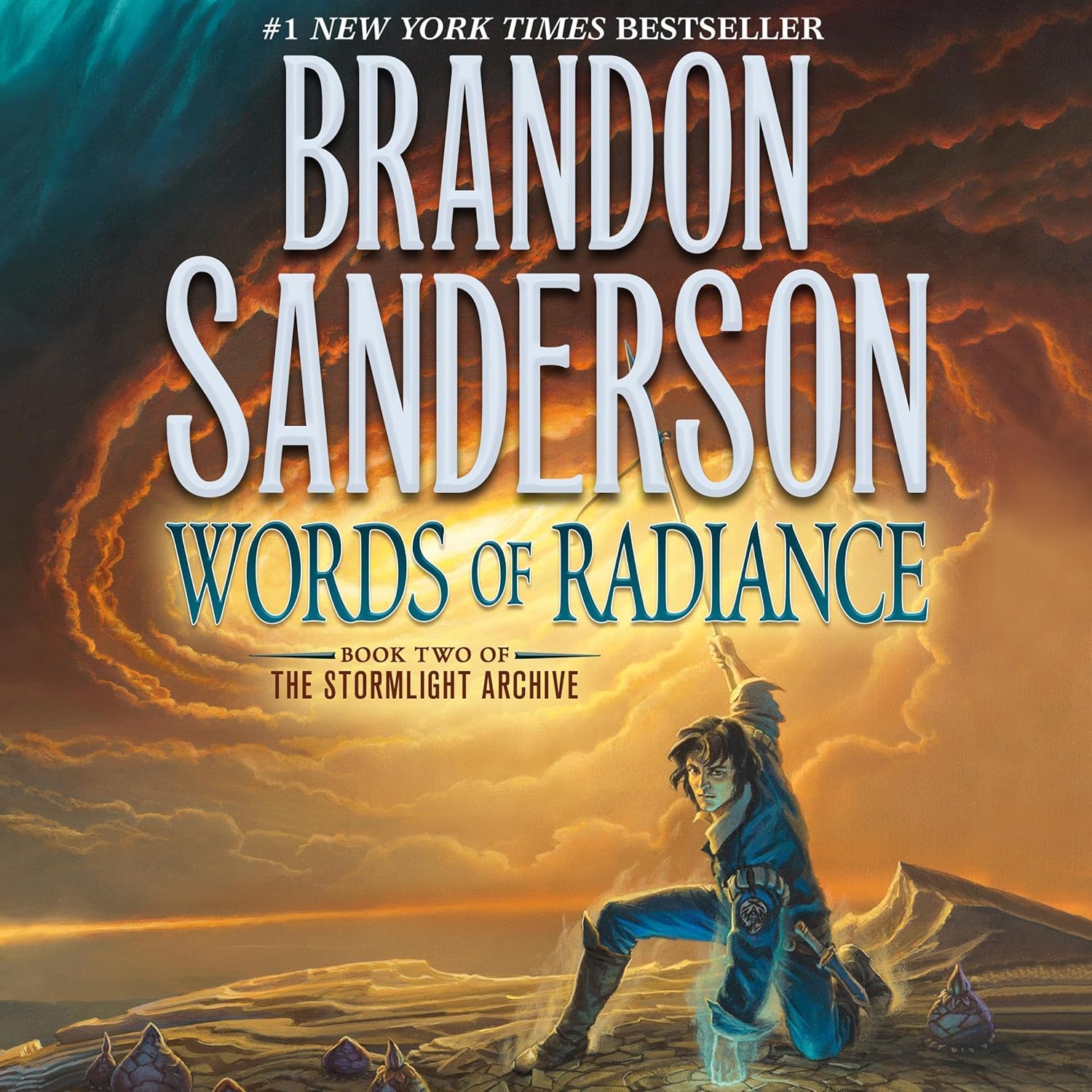
Words of Radiance
Brandon Sanderson


 Goodreads Choice Awards
 Apple Books


 303 Min Reading Time
 Audio Version Available
About this book
The world of Roshar is on the brink. As Highprince Dalinar Kholin leads the Alethi armies into a brutal war against the Parshendi on the Shattered Plains, a sinister Assassin stalks the globe, leaving a trail of murdered rulers in his wake. His prime target? Dalinar himself.
Against this backdrop of war and intrigue, three figures grapple with their destinies: Kaladin, the former slave who now commands the royal bodyguards, must master his burgeoning powers to protect the king while battling prejudice and the secrets of his past. Shallan Davar, haunted by a broken past, seeks ancient knowledge in the hopes of preventing the return of the Voidbringers, a cataclysmic event that could destroy all of civilization. And at the heart of the Shattered Plains, the Parshendi face extinction and make a desperate gamble with the very powers they once sought to escape.
In this second volume of the Stormlight Archive, alliances will be tested, secrets revealed, and the fate of Roshar hangs in the balance.
Summary of Key Ideas
- •
Confronting and Overcoming Trauma
The core of Words of Radiance revolves around confronting and overcoming personal trauma. Each main character—Kaladin, Shallan, and Dalinar—grapples with past experiences that significantly influence their present actions and decisions. Kaladin battles the psychological scars of his past failures and the loss of those he swore to protect, leading to his distrust of leadership and internal conflict. Shallan uses her fractured identity to hide from the traumatic events of her childhood, creating multiple personas to cope with the pain. Dalinar struggles with visions and the fading memories of his wife, forcing him to confront his past actions and question his sanity. The journey of these characters highlights the importance of acknowledging and processing trauma as a necessary step towards healing and personal growth.
- •
The Dichotomy of Truth and Deception
Words of Radiance delves into the complexities of truth and deception, both on a personal and societal level. Shallan's ability to Soulcast and create illusions embodies this theme, as she often uses deception as a means of survival and control. Her internal struggle with her true identity reflects the broader conflict between appearance and reality. The political machinations within the Alethi high command also showcase the deceptive nature of power, where alliances are fragile and hidden agendas abound. The novel suggests that while deception may offer short-term advantages, ultimately, embracing truth and authenticity is essential for building genuine relationships and fostering a just society. This exploration of truth versus deception adds depth to the characters' moral dilemmas and the overarching narrative.
- •
The Burdens of Leadership and Responsibility
Leadership and responsibility are central themes in Words of Radiance, particularly as demonstrated through the actions and decisions of Dalinar Kholin. His attempts to unite the highprinces and reinstate the Knights Radiant underscore the burdens and challenges of leadership. Dalinar's commitment to honor, even when it clashes with political expediency, highlights the moral obligations that come with wielding power. Kaladin's role as a protector and leader of Bridge Four further explores this theme, showcasing the sacrifices and difficult choices required to safeguard others. The novel suggests that true leadership is not about personal gain or authority, but about serving the greater good and upholding ethical principles, even in the face of adversity. This theme encourages a critical examination of the qualities that define effective and responsible leadership.
- •
The Fluidity and Fragmentation of Identity
The concept of identity is intricately explored in Words of Radiance, especially through the character of Shallan Davar. Her struggle with Dissociative Identity Disorder (DID) leads her to create multiple personas, each serving a different purpose in coping with her traumatic past. This internal fragmentation raises questions about the nature of self and the fluidity of identity. Kaladin's journey also touches on this theme, as he grapples with his identity as a darkeyes and his evolving role as a leader and Radiant. The novel suggests that identity is not fixed but rather a dynamic construct shaped by experiences, relationships, and personal choices. By examining the complexities of identity, Words of Radiance encourages readers to reflect on their own sense of self and the various factors that contribute to its formation.
- •
The Guiding Power of Ideals
The ideals of the Knights Radiant, particularly the oaths they swear, form a moral compass for the characters in Words of Radiance. These oaths—Life before Death, Strength before Weakness, Journey before Destination—guide their actions and decisions, often challenging them to prioritize the well-being of others and uphold their values. Kaladin's adherence to the First Ideal, even when it conflicts with his desire for revenge, exemplifies the importance of these principles. Shallan's struggle to live up to the ideals reflects the difficulty of applying abstract concepts to real-world situations. The novel suggests that these ideals provide a framework for ethical behavior and personal growth, encouraging individuals to strive for a higher standard of conduct. This emphasis on the Knights Radiant's ideals underscores the power of moral principles in shaping individual and societal behavior.
- •
The Path to Redemption and Forgiveness
Redemption and forgiveness are powerful undercurrents in Words of Radiance, explored through the journeys of multiple characters. Dalinar seeks to atone for his violent past, grappling with the consequences of his past actions and striving to become a more honorable leader. Kaladin confronts his own internal struggles, learning to forgive himself for past failures and extend compassion to those who have wronged him. Even characters like Amaram are presented with opportunities for redemption, though their choices ultimately determine their fate. The novel suggests that redemption is possible, but it requires genuine remorse, a willingness to make amends, and a commitment to change. This theme highlights the transformative power of forgiveness, both for the individual seeking redemption and for those who are willing to offer it.
Chapter Recap

About The Author
Brandon Sanderson
Main Quotes
"“Sometimes, a hypocrite is nothing more than a person who is in the process of changing.”"
"“You cannot have my pain!”"
"“A woman's strength should not be in her role, whatever she chooses it to be, but in the power to choose that role.”"
"“Life is a journey, not a destination.”"
"“Expectations were like fine pottery. The harder you held them, the more likely they were to crack.”"
"“Sometimes the prize is not worth the costs. The means by which we achieve victory are as important as the victory itself.”"
"“We are all broken, Shallan. Every one of us. Are you?”"
"“I will protect those who I hate, even if the one I hate most is myself.”"
"“The only time you seem honest is when you're insulting someone!” “The only honest things I can say to you are insults.”"
"“To be human is to seek beauty, Shallan. Do not despair, do not end the hunt because thorns grow in your way. Tell me, what is the most beautiful thing you can imagine?”"
Who Should Read This Book
Fans of epic fantasy
Readers who enjoy complex world-building and intricate magic systems
Readers of Brandon Sanderson's other works (Mistborn, etc.)
Readers interested in character-driven stories with themes of personal growth and overcoming adversity
Young adults and adults who appreciate lengthy, immersive novels
Readers who enjoy fantasy series with strong female characters
Those seeking books with philosophical and moral themes explored within a fantasy setting
Readers who appreciate detailed and consistent magic systems
Book Summaries Like
Words of Radiance



FAQ

Free Access to LitNotes