




 DISCORD
Wuthering Heights
Emily Brontë


 Apple Books


 127 Min Reading Time
 Audio Version Available
About this book
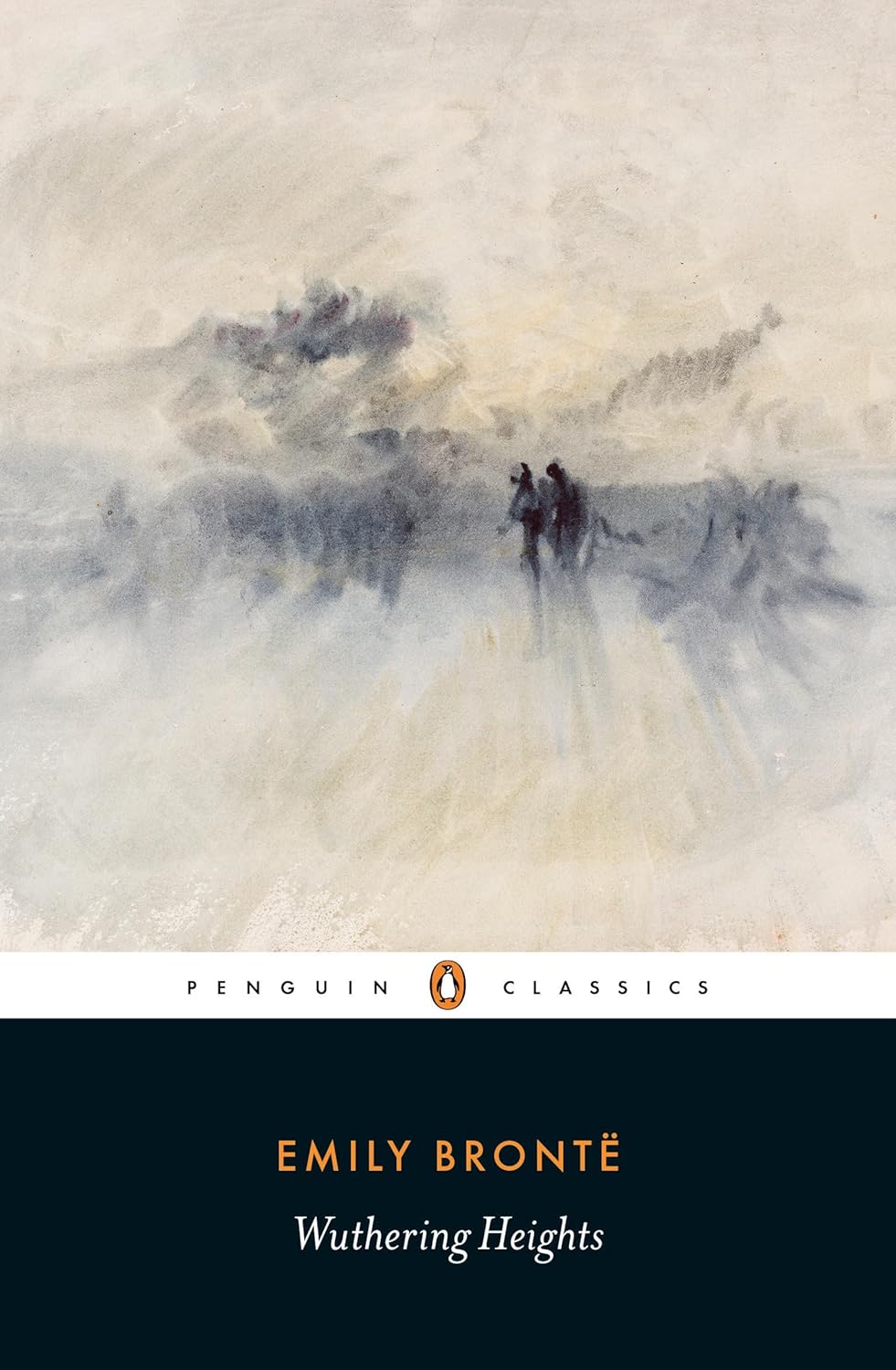
On the tempestuous Yorkshire moors, where the wind whispers secrets of the past, stands Wuthering Heights. Within its walls lies a tale of consuming love and vengeful obsession that transcends generations.
Orphaned Heathcliff and the fiery Catherine Earnshaw forge an unbreakable bond, a love wild and untamed as the moors themselves. But Catherine's ambition leads her to a marriage of social convenience, igniting a lifelong inferno of retribution in Heathcliff's heart.
As Heathcliff plots his ruthless revenge, the innocent heirs of Wuthering Heights and Thrushcross Grange become pawns in a tragic game orchestrated by the ghosts of their parents' choices. Can they escape the sins of the past, or are they doomed to repeat them?
Emily Brontë's masterpiece explores the destructive power of passion, the constraints of society, and the enduring legacy of choices made in the name of love and vengeance. Plunge into a world of gothic grandeur and haunting romance, where the line between love and hate blurs, and the consequences echo through eternity.
Summary of Key Ideas
- •
The Destructive Power of Passionate Love
The destructive power of passionate love is central to Wuthering Heights. Catherine and Heathcliff's intense bond transcends social boundaries but ultimately leads to their downfall and the suffering of those around them. Their love is portrayed as both sublime and ruinous, highlighting the dangers of unchecked emotion and obsession. This passionate connection contrasts sharply with other forms of love in the novel, such as the more conventional and socially acceptable relationships that often lack the same depth and intensity but prove more stable and less destructive. Their consuming passion becomes a force of nature, shaping their destinies and casting a long shadow over the lives of future generations inhabiting Wuthering Heights and Thrushcross Grange.
- •
The Constraints of Social Class
Social class and its constraints significantly influence the characters' lives and relationships in Wuthering Heights. Heathcliff's ambiguous social status and subsequent mistreatment fuel his desire for revenge and upward mobility. Catherine's choice to marry Edgar Linton for social advancement rather than Heathcliff, whom she deeply loves, underscores the societal pressures of the time. The novel critiques the rigid social hierarchy and demonstrates how it can stifle genuine emotions and lead to tragic consequences. Characters like Heathcliff challenge the established social order, while others, like the Lintons, embody its values. The interplay between social class and personal desires drives much of the plot and shapes the characters' fates.
- •
The Cycle of Revenge
Revenge is a powerful and recurring motif in Wuthering Heights, driving many of the characters' actions. Heathcliff's thirst for revenge against those who wronged him, particularly Hindley Earnshaw and the Linton family, consumes him and perpetuates a cycle of violence and misery. His relentless pursuit of retribution extends to future generations, demonstrating the long-lasting and destructive consequences of holding onto anger and resentment. The novel explores the futility of revenge, as it ultimately brings more pain and suffering than satisfaction. Heathcliff's transformation into a cruel and vengeful figure highlights the corrupting influence of bitterness and the importance of forgiveness.
- •
Nature as a Mirror to Emotion
Nature plays a vital role in Wuthering Heights, mirroring the characters' emotions and shaping the atmosphere of the story. The wild and untamed moors reflect the passionate and unrestrained nature of Heathcliff and Catherine, while the more cultivated and orderly landscapes around Thrushcross Grange represent civilization and social control. The stark contrast between these settings underscores the tension between raw emotion and social convention. Nature also serves as a source of solace and connection for the characters, particularly Catherine, who feels a deep affinity with the moors. The changing seasons and weather patterns often foreshadow or reflect the emotional states of the characters, creating a powerful and symbolic connection between the natural world and human experience.
- •
The Presence of the Supernatural
The supernatural permeates Wuthering Heights, adding an element of mystery and unease to the narrative. Catherine's ghost haunts Heathcliff, symbolizing the enduring power of their love and the impossibility of escaping the past. Dreams, omens, and superstitions also contribute to the novel's gothic atmosphere. The blurring of the boundaries between the natural and supernatural worlds raises questions about the nature of reality and the limits of human understanding. These supernatural elements enhance the emotional intensity of the story and underscore the themes of love, loss, and revenge. The presence of the supernatural also reflects the folklore and beliefs of the rural Yorkshire setting, adding to the novel's sense of place.
- •
The Significance of Doubles
The concept of doubling, or the presence of similar characters and situations, is a recurring motif in Wuthering Heights. Catherine Earnshaw and Catherine Linton share the same name and face similar choices regarding love and social status. Heathcliff's son, Linton, mirrors aspects of Edgar Linton's character, while Hareton Earnshaw bears a resemblance to Heathcliff in his youth. These parallels highlight the cyclical nature of history and the ways in which the past repeats itself. The doubling motif also underscores the themes of inheritance, fate, and the interconnectedness of the characters' lives. By exploring these mirrored relationships, Brontë suggests that individuals are often shaped by forces beyond their control and that the consequences of past actions can reverberate through generations.
- •
Complex Narrative Structure
The narrative structure of Wuthering Heights is complex, employing multiple narrators and a fragmented timeline. The story is primarily told through the perspectives of Mr. Lockwood and Nelly Dean, who offer different interpretations of events and characters. This narrative technique creates a sense of distance and ambiguity, forcing the reader to piece together the truth from multiple viewpoints. The use of flashbacks and digressions disrupts the chronological order of events, mirroring the chaotic and unpredictable nature of the characters' lives. This intricate narrative structure adds depth and complexity to the novel, challenging the reader to actively engage with the story and consider different perspectives on the events unfolding.
- •
Challenging Gender Roles
Wuthering Heights explores the complex interplay between masculinity and femininity, challenging traditional gender roles of the Victorian era. Catherine Earnshaw possesses a strong will and a rebellious spirit, defying societal expectations for women. Heathcliff embodies both masculine and feminine traits, displaying both brutality and vulnerability. The novel questions the limitations imposed by gender stereotypes and explores the fluidity of identity. The relationships between men and women are often characterized by power struggles and emotional intensity, reflecting the societal tensions of the time. By subverting conventional gender roles, Brontë offers a nuanced and critical perspective on the social norms of the 19th century.
Chapter Recap

About The Author
Emily Brontë
Emily Jane Brontë was an English novelist and poet, now best remembered for her novel [Wuthering Heights][1], a classic of English literature. Emily was the second eldest of the three surviving Brontë sisters, between Charlotte and Anne. She published under the androgynous pen name Ellis Bell. ([Source][2].) [1]: http://upstream.openlibrary.org/works/OL10427528W/Wuthering_Heights [2]: http://en.wikipedia.org/wiki/Emily_Bronte
Main Quotes
""He's more myself than I am. Whatever our souls are made of, his and mine are the same.""
""I am Heathcliff!""
""If all else perished, and he remained, I should still continue to be; and if all else remained, and he were annihilated, the universe would turn to a mighty stranger.""
""Be with me always – take any form – drive me mad! only do not leave me in this abyss, where I cannot find you!""
""I cannot live without my life! I cannot live without my soul!""
""My love for Linton is like the foliage in the woods. Time will change it, I’m well aware, as winter changes the trees. My love for Heathcliff resembles the eternal rocks beneath: a source of little visible delight, but necessary.""
""I have not broken your heart - you have broken it; and in breaking it, you have broken mine.""
""It is strange how custom can mould our tastes and ideas; many a time I have cried myself sick for home; but now I am glad to be away.""
""I lingered round them, under that benign sky; watched the moths fluttering among the heath and harebells, listened to the soft wind breathing through the grass, and wondered how anyone could ever imagine unquiet slumbers for the sleepers in that quiet earth.""
""You loved me—then what right had you to leave me? What right—answer me—for the poor fancy you felt for Linton? Because misery and degradation are in your own heart? Because you preferred me to ruin and degradation of all mankind, through you, to невежество, however honourable, and to общение with him?""
Who Should Read This Book
Readers interested in classic literature, particularly Victorian novels
Readers who enjoy gothic romances and tragic love stories
Students and academics studying English literature
Readers interested in themes of social class, revenge, and morality
Readers who appreciate complex characters and psychological dramas
Fans of Emily Brontë and the Brontë sisters
Book Summaries Like
Wuthering Heights

FAQ

Free Access to LitNotes