




 DISCORD
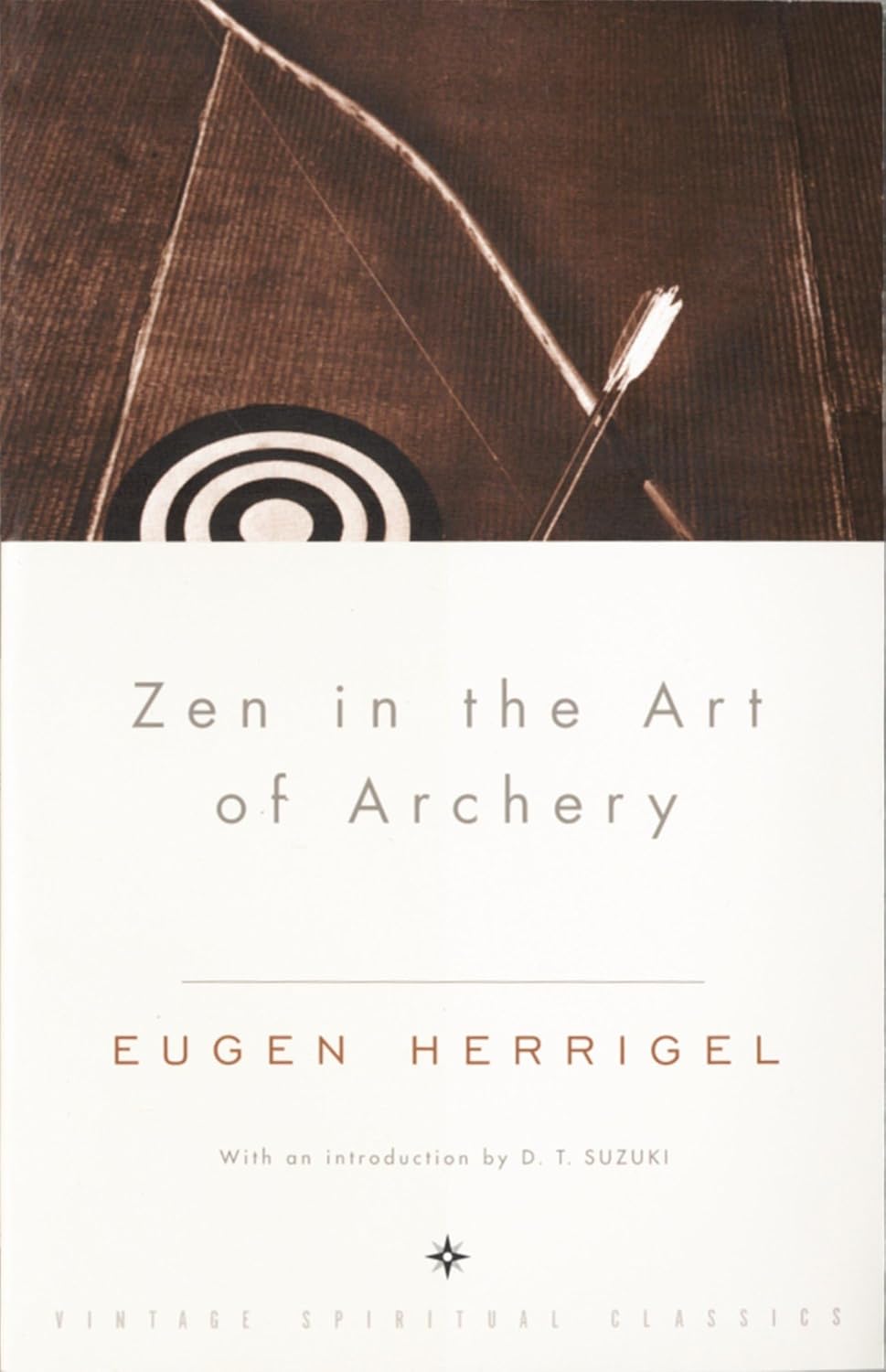
Zen in the Art of Archery
Eugen Herrigel


 Apple Books


 17 Min Reading Time
 Audio Version Available
About this book
In "Zen in the Art of Archery," Eugen Herrigel, a German philosophy professor in Tokyo, embarks on a profound journey to understand Zen Buddhism through the practice of Kyudo, the art of archery. This captivating account chronicles his six-year apprenticeship under a renowned Japanese master, revealing his struggles to transcend Western thought and embrace a new way of seeing. More than a manual on archery, this timeless classic explores the principles of Zen, guiding readers toward a deeper awareness of the self and the seamless integration of mind, body, and spirit. Herrigel's illuminating experience offers invaluable lessons for practitioners and novices alike, inviting us to discover the path to intuitive wisdom and effortless action.
Summary of Key Ideas
- •
Archery as a Spiritual Path
Archery as a Path to Zen Enlightenment: The book details Herrigel's journey not simply to master archery, but to use it as a means to achieve Zen enlightenment. Archery becomes a vehicle for self-discovery and spiritual growth, emphasizing that the physical practice is secondary to the mental and spiritual discipline it cultivates. The goal transcends hitting the target; it's about achieving a state of 'mushin' or 'no-mind'.
- •
Effortless Action (Wu-Wei)
The Art of 'Effortless Doing': Herrigel explores the concept of 'effortless doing,' or 'wu-wei,' where actions arise spontaneously from a state of inner stillness and non-attachment. This involves transcending conscious thought and will, allowing the body to act intuitively and naturally. The archer doesn't force the shot but allows it to happen, embodying a state of relaxed readiness.
- •
Non-Attachment to Results
Detachment from Outcome: A core principle is the detachment from the outcome of the shot. The archer must focus on the process and form, rather than fixating on hitting the target. By releasing the desire for a specific result, one eliminates anxiety and allows for a more natural and effective performance. This detachment mirrors the Zen concept of non-attachment, crucial for inner peace and enlightenment.
- •
The Master-Student Bond
The Importance of the Master-Student Relationship: The book highlights the traditional master-student dynamic in Japanese arts, emphasizing the master's role in guiding the student beyond mere technique. The master imparts not only physical skills but also spiritual wisdom, fostering a deep connection that facilitates the student's inner transformation. The relationship is built on respect, patience, and trust.
- •
Achieving 'No-Mind' (Mushin)
Cultivating 'Mushin' (No-Mind): 'Mushin,' or 'no-mind,' is a state of consciousness where the mind is free from thoughts, emotions, and self-consciousness. Achieving 'mushin' allows the archer to act purely from instinct and intuition, unburdened by mental interference. This state is cultivated through rigorous practice and meditation, leading to a profound sense of presence and clarity.
- •
Ritual and Form as Discipline
The Significance of Ritual and Form: The book emphasizes the importance of ritual and form in archery training. These structured practices are not mere formalities but serve to discipline the mind and body, creating a framework for deeper learning. By adhering to precise forms, the archer cultivates focus, concentration, and a sense of reverence for the art.
- •
The Virtue of Patience
Patience and Perseverance: Herrigel's journey underscores the necessity of patience and perseverance in mastering any art, especially one intertwined with Zen principles. The path to enlightenment is not quick or easy, requiring unwavering dedication and a willingness to confront one's own limitations. The slow, deliberate process of archery training mirrors the gradual unfolding of spiritual understanding.
- •
The Power of Letting Go
Letting Go and Waiting: A key concept involves learning to 'let go' and 'wait' for the opportune moment. The archer must release conscious control and allow the shot to occur spontaneously, trusting in their training and intuition. This involves cultivating a state of relaxed readiness and surrendering to the natural flow of events, a core principle in Zen practice.
Chapter Recap

About The Author
Eugen Herrigel
Main Quotes
"The archer ceases to be conscious of himself as the one who is shooting the bow."
"The right shot at the right moment does not come because you do not let go of yourself."
"The artless art, the egoless action."
"The more obstinately you try to learn how to shoot the arrow for the sake of hitting the goal, the less you will succeed in the one and the further the other will recede."
"It is all so simple, one could say that anybody ought to be able to do it."
"You must learn to wait properly."
"When I bend the bow, I become one with the bow."
"The quieter you become, the more you can hear."
"The art of archery, as practiced by the Zen masters, is not an exercise in marksmanship, but a means of spiritual growth."
"To be completely self- Empty."
Who Should Read This Book
Individuals interested in Zen Buddhism and Eastern philosophy
Martial arts enthusiasts seeking a deeper understanding of their practice
Readers interested in self-improvement and personal growth through mindfulness
Those exploring the connection between physical disciplines and mental/spiritual development
People fascinated by Japanese culture and traditions
Students of comparative religion and philosophy
Readers seeking accessible introductions to Zen concepts
Individuals interested in the history of Zen's introduction to the West
Those interested in the philosophy of skill acquisition and mastery
Readers looking for metaphorical insights into life and learning
Book Summaries Like
Zen in the Art of Archery



FAQ

Free Access to LitNotes